
When a patient asks me about red light therapy, the first thing I notice is the look on their face: part curiosity, part skepticism. They’ve seen it advertised at spas and wellness shops, sometimes alongside claims that feel too good to be true. I get it. The name itself sounds almost too simple — just light?
But here is what I tell them: this is one of the most well-studied non-invasive therapies in physical medicine. The mechanism is specific, the research is substantial, and the clinical applications keep expanding. What’s held it back from mainstream recognition isn’t the evidence — it’s the name. “Red light therapy” sounds like something you’d find in a wellness influencer’s bathroom. The scientific term, photobiomodulation, more accurately captures what’s actually happening at the cellular level.
So let’s start there.
What Photobiomodulation Actually Does
Your cells run on ATP — adenosine triphosphate — a molecule that acts as the primary energy currency of every biological process your body carries out. When cells are stressed, injured, inflamed, or simply fatigued, their mitochondria (the organelles that manufacture ATP) become less efficient. Less energy means slower repair, more inflammation, and a harder time returning to normal function.
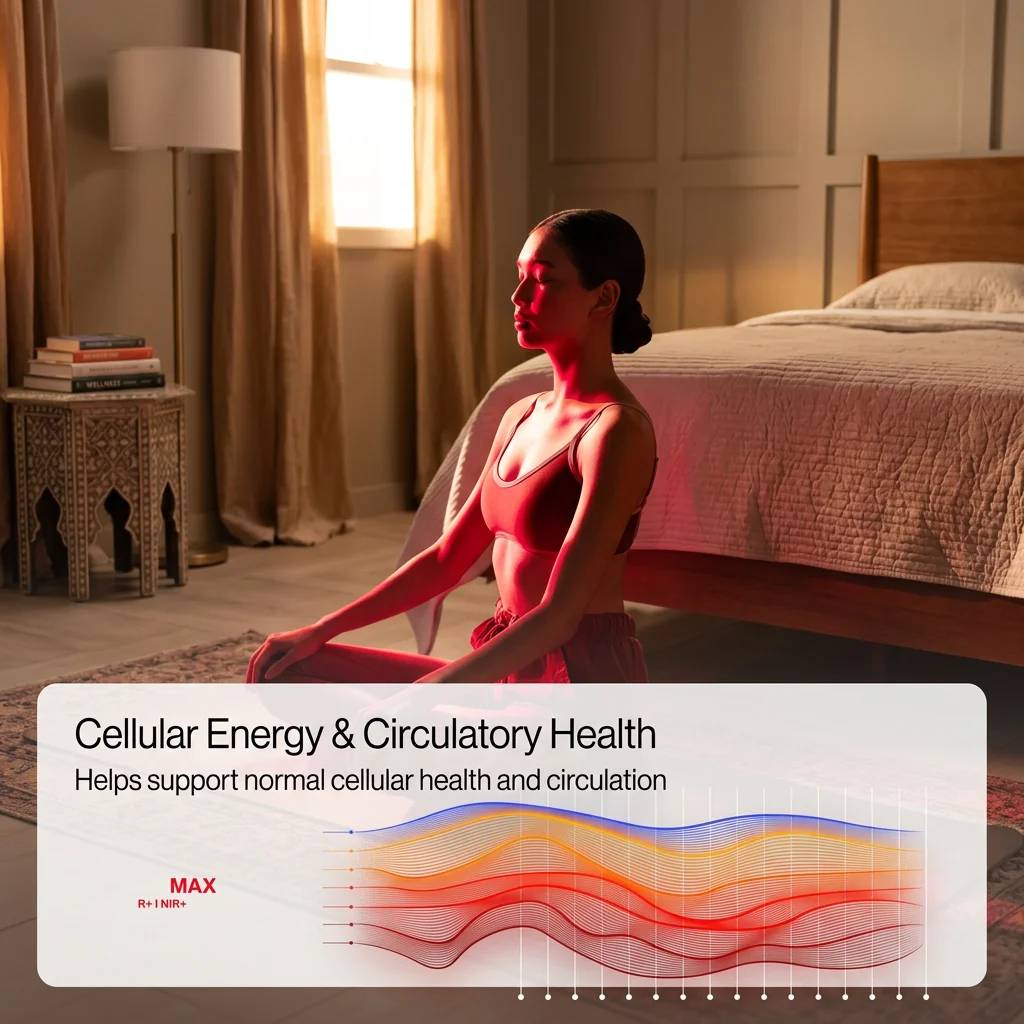
Red and near-infrared light — at specific wavelengths in the 630 to 850 nanometer range — penetrate the skin and reach those mitochondria directly. The key target is an enzyme called cytochrome c oxidase, which sits in the mitochondrial membrane and is involved in the final step of ATP synthesis. When it absorbs photons at the right wavelength, it becomes more active. ATP production goes up. And from that single upstream change, a cascade follows: reduced oxidative stress, decreased inflammatory signaling, improved cellular repair, increased collagen synthesis, and better circulation to healing tissue.
This isn’t conjecture. It’s the mechanism described across thousands of published studies in the NIH PubMed database — and it’s the reason that red light therapy is FDA-cleared for multiple therapeutic indications, from wound healing to pain management.
Red vs. Near-Infrared: Why Both Matter
Not all light is the same, and the distinction between the red and near-infrared spectrums has real clinical relevance.
Red light (630–680 nm) is visible and penetrates primarily into surface tissues — the skin and superficial musculature. It’s the wavelength most directly responsible for skin health applications: stimulating fibroblasts to produce more collagen, reducing acne-causing bacteria, improving circulation to the dermis, and accelerating surface wound healing.
Near-infrared light (800–850 nm) is invisible to the naked eye and penetrates significantly deeper — reaching joint tissue, deep muscles, tendons, nerves, and even intervertebral discs. This is the range most relevant to musculoskeletal applications: disc injuries, joint arthritis, nerve pain, deep muscle tension, and post-surgical healing.
Most therapeutic devices deliver both wavelengths simultaneously, which is why a single session can address both surface and deep tissue concerns.
What It’s Actually Useful For
I want to be precise here, because the wellness industry has a tendency to overclaim. So here is my honest clinical assessment of where the evidence is strongest.
Musculoskeletal pain and injury. This is where the case is most solid. Multiple randomized controlled trials support the use of photobiomodulation for neck pain, low back pain, tendinopathies (including Achilles and patellar tendon issues), osteoarthritis of the knee and hip, and post-exercise muscle recovery. The mechanism makes direct sense: reducing inflammation and accelerating cellular repair is exactly what injured tissue needs.
Motor vehicle accident recovery. We integrate red light therapy into our MVA care protocols specifically because of its effect on soft tissue: whiplash injuries involve strained ligaments, inflamed facet joints, and irritated nerve roots — all of which respond to the anti-inflammatory and tissue-repair effects of photobiomodulation. It works particularly well alongside chiropractic adjustments and therapeutic massage, because each modality addresses a different layer of the injury.
Disc injuries and nerve pain. Near-infrared light can reach the intervertebral discs and the nerve roots that pass nearby. For patients with herniated discs, sciatica, or cervical radiculopathy, adding photobiomodulation to a treatment plan can help reduce the inflammatory component of nerve compression — often one of the most painful aspects of these conditions.
Skin health. The collagen-stimulating effects of red light are well-documented. For patients dealing with acne, rosacea, early wrinkles, or post-inflammatory hyperpigmentation, a consistent course of red light therapy produces measurable improvements in skin texture and tone. This isn’t cosmetic fluff — collagen synthesis is a biological process we can directly stimulate.
Sleep and mood. This is the newest frontier, and I want to be appropriately cautious about overstating the evidence here. Early research suggests that red light exposure may help regulate circadian rhythms and support serotonin production. Some studies on shift workers and athletes show improved sleep quality with regular red light treatment. The mechanism is plausible — light exposure influences the same biological pathways as melatonin and cortisol regulation. But I’d call this “emerging evidence” rather than established fact.
What It Won’t Do
Honest medicine requires saying this clearly: red light therapy is not a standalone cure for any condition. It is a physiological accelerant — it speeds and supports processes that the body is already capable of but is doing inefficiently due to injury, aging, or stress.
It also requires consistency. The effects are cumulative. One session produces some acute benefit — reduced pain, improved circulation — but meaningful tissue-level changes require a course of treatment, typically 2–3 sessions per week over several weeks, with more sessions for chronic or complex conditions.
And there are contraindications. We don’t use red light therapy over active malignancies, directly over the thyroid, during pregnancy without careful consideration, or over areas with photosensitizing medications in effect. A proper intake and assessment is always the first step.
What a Session Looks Like at Our Clinic
I often describe it to patients this way: you lie down, fully clothed, while medical-grade panels are positioned over the treatment area. You feel mild warmth — not heat, not discomfort. Most people find the session quite relaxing. It lasts 10 to 20 minutes depending on the condition and area being treated. There’s no recovery period, no downtime, and most patients return to their normal activities immediately.
We offer red light therapy as a standalone service and as an integrated component of comprehensive treatment plans. For patients recovering from car accidents, dealing with chronic pain, or working through a musculoskeletal injury, it slots naturally alongside adjustments, massage, and physical rehabilitation — each modality addressing the problem from a different angle.
Is It Right for You?
The honest answer is: probably, for a wider range of patients than most people expect. If you have pain, an injury that isn’t resolving as quickly as you’d like, a skin concern, or simply want to support your body’s recovery capacity, red light therapy is worth a conversation.
The best starting point is an assessment. We look at your health history, current symptoms, and goals, then build a protocol that makes sense for your situation — not a one-size-fits-all approach.
If you have questions or want to find out whether red light therapy is a good fit for your care plan, we’re easy to reach. That’s what we’re here for.
Dr. Tristan Santiago Maceiras is a Doctor of Chiropractic at Gentle Care Chiropractic in West Linn, Oregon, specializing in musculoskeletal medicine, MVA recovery, and integrated care. Learn more about red light therapy at our clinic or book a consultation.