
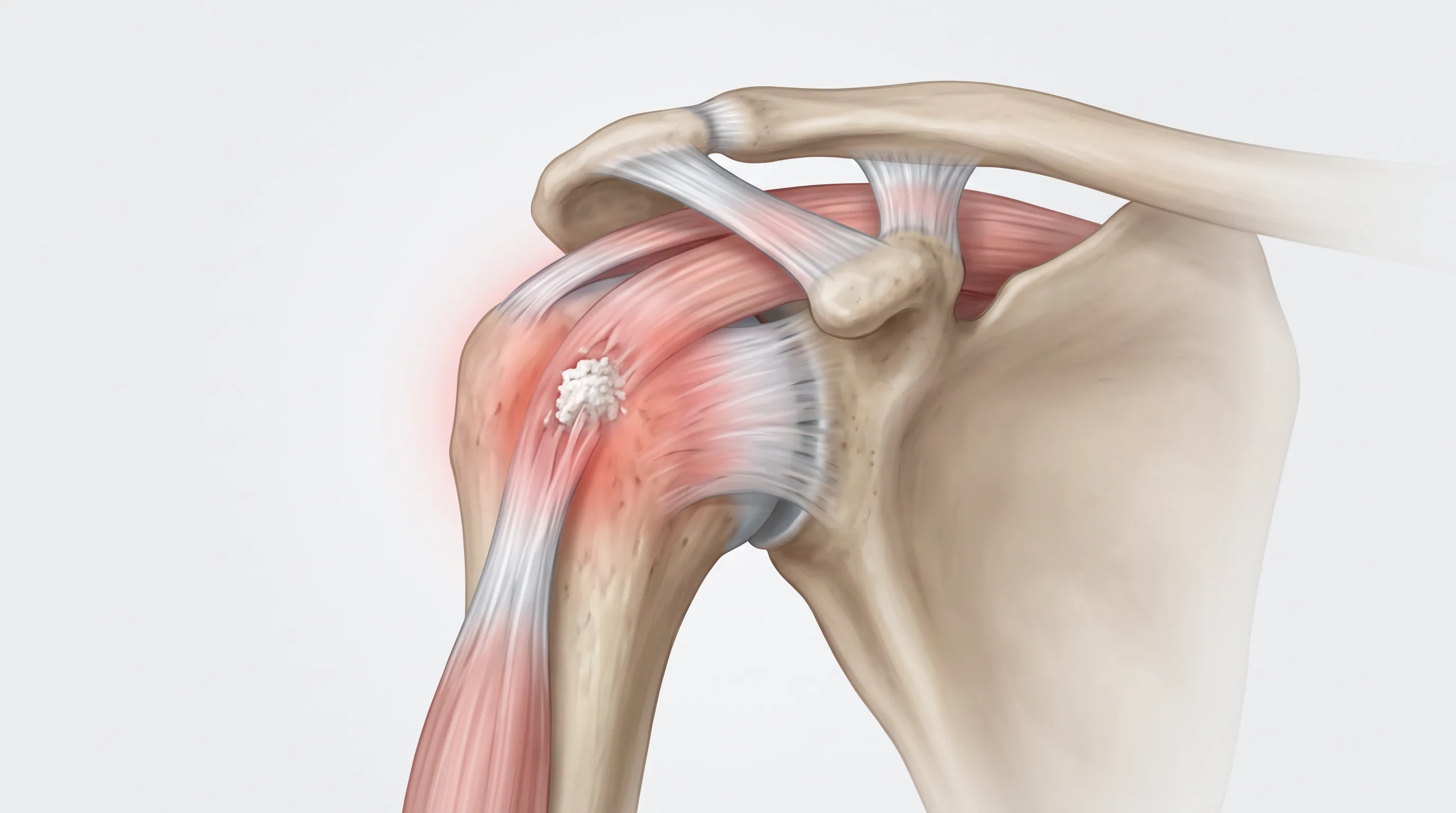
Most patients are surprised to learn that the sharp, grinding shoulder pain keeping them up at night is not arthritis and not a tear. It is calcium. Specifically, it is a condition called calcific tendinitis: a buildup of calcium hydroxyapatite crystals inside the tendon itself, most commonly in the supraspinatus tendon of the rotator cuff. The calcium does not belong there, and the body knows it. That awareness produces some of the most intense pain I see in practice. If you have been searching for a calcific tendinitis treatment near me, I want to explain what is actually happening in your tissue and why SoftWave therapy has become one of my first-line tools for addressing it.
Why Calcium Forms Inside a Tendon
Healthy tendons do not normally calcify. The process begins with a localized failure in blood supply, which shifts the tissue environment toward lower oxygen levels. In response, tendon cells called tenocytes undergo a change more common in bone-forming cells than in tendon tissue. They begin depositing calcium salts in an attempt to adapt to the hypoxic environment. Over time, these deposits harden into chalky plaques visible on X-ray and ultrasound.
The body eventually tries to reabsorb them on its own, and during that reabsorption phase the pain is often at its worst. Immune cells flood the area, inflammatory cytokines spike, and the tendon swells around a deposit it is actively trying to break apart. That is when patients typically end up in my office.
How SoftWave Therapy Treats Calcific Tendinitis
SoftWave therapy, a form of extracorporeal shockwave therapy (ESWT) using unfocused acoustic pressure waves, acts on calcific deposits through two distinct mechanisms.
The first is mechanical. The acoustic waves generate a pressure differential at the boundary between hard calcium and soft tendon tissue. This creates microshear forces that begin to fragment the crystalline structure of the deposit. Over a series of treatments, a dense, well-defined plaque becomes a looser, granular cluster that the body can reabsorb far more efficiently.
The second mechanism is biological. The acoustic energy activates mechanoreceptors on tendon cells, a process called mechanotransduction. This triggers a cascade of cellular events: upregulation of vascular endothelial growth factor (VEGF), proliferation of new capillaries into the tendon (neovascularization), and modulation of pro-inflammatory cytokines including TNF-alpha and IL-1beta. In plain language: SoftWave tells the tissue to heal itself, improves local blood supply, and dials down the inflammatory response that is producing so much of the pain.
What the Research Shows
The evidence base for shockwave therapy in calcific tendinitis is robust and has been building for over two decades. A landmark randomized controlled trial published in JAMA by Gerdesmeyer and colleagues demonstrated that high-energy ESWT produced significantly greater reduction in calcium deposit size and pain scores at six months compared to sham treatment in patients with chronic calcific tendinitis. That study helped establish ESWT as a guideline-recommended option.
More recent work has refined the picture. A 2024 systematic review in the Journal of Shoulder and Elbow Surgery analyzed outcomes across 18 trials and found that patients receiving ESWT showed calcium resorption rates between 60 and 80 percent at one-year follow-up, with corresponding improvements in function and pain that substantially exceeded both corticosteroid injection and physical therapy alone. The authors noted that patients with dense, well-defined deposits on ultrasound tended to respond even more favorably than those with diffuse or fluffy deposits.
A 2025 prospective cohort study from Maastricht University Medical Center tracked 94 patients over 24 months after a standardized ESWT protocol. At two-year follow-up, 74 percent had complete or near-complete radiographic resolution of their deposits, and 81 percent reported being satisfied or very satisfied with their outcomes. Crucially, only 8 percent ultimately required surgical intervention, compared to historical surgical rates closer to 20 to 30 percent in untreated or conservatively managed cohorts.
For patients in West Linn, Oregon dealing with persistent shoulder pain, this matters: well-executed SoftWave therapy offers a realistic, evidence-supported path to resolution that does not require an operating room.
What to Expect During Calcific Tendinitis Treatment
At Gentle Care Chiropractic in West Linn, I typically recommend a series of three to five SoftWave sessions spaced one week apart for calcific tendinitis. The handpiece is applied directly over the affected tendon, guided by the anatomical landmarks and, when appropriate, correlated with imaging findings.
Patients often experience a temporary increase in soreness during the first day or two after treatment. This is expected and reflects the inflammatory process being reactivated in a controlled, healing-oriented direction. By the third session most patients begin noticing meaningful reductions in their baseline pain level and improved range of motion.
Significant calcium resorption typically shows up on imaging between six weeks and six months after completing the treatment series. I recommend post-treatment imaging at three months for patients who want to track structural progress.
What SoftWave Will Not Do, and Who Should Not Have It
Honesty here matters. SoftWave therapy will not deliver overnight results. The biological process of calcium resorption takes time, and patients who expect dramatic improvement after one session will be disappointed.
SoftWave will not replace surgery in every case. A subset of patients with very large deposits, concurrent rotator cuff tears, or no response after a complete treatment series will still need surgical referral. I tell every patient this upfront.
Contraindications for SoftWave therapy include: active infection or open wounds in the treatment area, blood clotting disorders or anticoagulant therapy that cannot be temporarily modified, pregnancy, malignancy in or near the treatment area, and implanted devices such as pacemakers or nerve stimulators near the shoulder. If any of these apply to you, we discuss alternatives during your initial evaluation.
When Conservative Care Has Already Failed
Many patients arrive at my practice in West Linn having already completed months of physical therapy and multiple corticosteroid injections with incomplete or short-lived relief. For this group, SoftWave therapy often represents a genuinely different mechanism of action rather than more of the same. Injections reduce inflammation temporarily but do not address the deposit itself. SoftWave does both.
Frequently Asked Questions
How many SoftWave sessions are needed for calcific tendinitis treatment near me? Most patients with calcific tendinitis complete three to five sessions over three to five weeks. The exact number depends on deposit size, symptom severity, and your response to initial treatments. I reassess after each session and adjust accordingly.
Will shockwave therapy for calcium deposit in the shoulder hurt? The treatment produces a firm, sometimes intense pressure sensation over the deposit site. It is not comfortable, but it is well tolerated. The brief discomfort during the session is followed by the longer-term goal of resolving the deposit itself.
How long does it take to see results after SoftWave for calcific tendinitis? Pain often begins improving within two to four weeks of starting treatment. Calcium resorption on imaging typically becomes visible between six weeks and six months after completing the series. Both timelines vary between patients.
Is SoftWave therapy covered by insurance for calcific tendinitis? Coverage varies significantly by plan and provider. We can help you verify your benefits before starting treatment. Many patients find the out-of-pocket cost worthwhile given the evidence for calcium resorption and the alternative of surgery.
Can SoftWave therapy prevent calcific tendinitis from coming back? The biological changes SoftWave produces, including improved tendon vascularity and healthier cellular activity, support long-term tendon health. Recurrence after full resorption is uncommon. Addressing the underlying biomechanical and postural contributors to poor shoulder mechanics further reduces the risk.
If you have questions or want to find out whether SoftWave therapy is a good fit for your care plan, we’re easy to reach. That’s what we’re here for.
Dr. Tristan Santiago Maceiras is a Doctor of Chiropractic at Gentle Care Chiropractic in West Linn, Oregon, specializing in musculoskeletal medicine, SoftWave therapy, and integrated care.
Dealing with this in West Linn, Lake Oswego or Oregon City?
Same-week appointments. PIP and most insurance accepted.