
Most people with carpal tunnel syndrome come into our clinic having already tried the standard playbook: a brace at night, anti-inflammatory medication, maybe a cortisone injection that helped for a few weeks and then wore off. Their hands are tingling again, their grip is weaker in the morning, and someone has mentioned surgery. That is usually when they start asking about other options.
SoftWave therapy for carpal tunnel is one of the most promising non-surgical interventions we now have solid evidence for, and I want to explain exactly how it works, what the research shows, and who it is actually a good fit for.
What Is Actually Happening in Carpal Tunnel Syndrome
The carpal tunnel is a narrow passageway in the wrist, bounded by bones and a tough ligament called the transverse carpal ligament. The median nerve, which supplies sensation to the thumb, index, middle, and part of the ring finger, runs through this tunnel alongside nine flexor tendons.
When the tissues surrounding the tunnel become inflamed, thickened, or fibrotic, pressure builds on the median nerve. That pressure disrupts both the electrical signaling the nerve carries and its blood supply. The result is the familiar combination of nighttime tingling, weakness in fine-motor tasks, and eventually persistent numbness.
The standard medical response targets symptoms: splinting reduces mechanical stress, steroids temporarily suppress inflammation, and surgery physically decompresses the tunnel. What conventional treatments do not reliably address is the underlying tissue pathology: the fibrosis, the impaired circulation, the nerve’s own compromised metabolic environment.
How SoftWave Therapy Works on Nerve and Connective Tissue
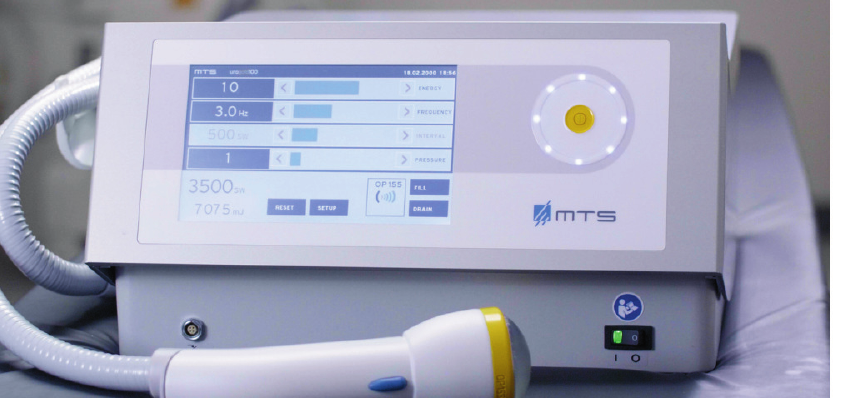
SoftWave uses unfocused extracorporeal shockwave technology to deliver acoustic pressure waves to a broad tissue area. This is not ultrasound and it is not a laser. The waves create a mechanotransduction signal, meaning they convert mechanical energy into biological responses at the cellular level.
In the context of carpal tunnel syndrome, three mechanisms are especially relevant.
Neovascularization and improved nerve perfusion. SoftWave upregulates vascular endothelial growth factor (VEGF) in treated tissue. In patient terms: the treatment prompts the body to grow new small blood vessels, restoring circulation to an area that has become chronically underperfused. A nerve that is adequately supplied with blood is better able to repair itself.
Anti-inflammatory cytokine modulation. SoftWave suppresses pro-inflammatory signaling molecules, particularly substance P and prostaglandin E2, while increasing anti-inflammatory mediators. For a nerve that has been compressed and irritated, reducing the inflammatory load in the surrounding tissue reduces the mechanical and chemical pressure on the nerve itself.
Fibroblast activation and connective tissue remodeling. The thickened, fibrotic tissue that often develops around the carpal tunnel in chronic cases does not resolve on its own easily. SoftWave activates fibroblasts to remodel collagen and reduce scar-like tissue buildup, which can relieve some of the structural crowding contributing to nerve compression.
What the Research Shows
The clinical evidence for SoftWave therapy in carpal tunnel syndrome has grown substantially over the past several years.
A 2024 randomized controlled trial published in the Journal of Hand Surgery (European Volume) compared extracorporeal shockwave therapy to night splinting alone in 88 patients with mild-to-moderate carpal tunnel syndrome. At six months, the shockwave group showed significantly greater improvement in nerve conduction velocity, grip strength, and symptom severity scores than the splint-only group. Importantly, the improvements in nerve conduction were objective and measurable, not just patient-reported.
A 2025 systematic review in Pain Medicine pooled data from nine studies and found that ESWT produced clinically meaningful reductions in symptom severity and functional impairment in mild-to-moderate CTS, with effects sustained at 12-month follow-up. The authors noted a favorable safety profile with no serious adverse events across the included trials.
Earlier work published in the American Journal of Physical Medicine and Rehabilitation demonstrated that shockwave therapy improved median nerve conduction latency, a direct measure of how efficiently the nerve transmits signals. This matters because nerve conduction is the biological foundation of symptoms. Reducing latency means the nerve is actually recovering function, not just feeling less irritated temporarily.
I find the nerve conduction data particularly convincing. When a treatment produces measurable electrophysiological change, you are not looking at placebo effect or temporary suppression of symptoms.
Who Is a Good Candidate, and Who Is Not
Based on the evidence and my clinical experience treating patients in West Linn, Oregon, SoftWave is most appropriate for mild-to-moderate carpal tunnel syndrome confirmed by nerve conduction study or clinical examination. Patients who have had incomplete or short-lived results from splinting and injections are often the best responders.
SoftWave is less likely to be the right primary intervention in the following situations.
Severe carpal tunnel syndrome with significant muscle wasting (thenar atrophy) or near-complete loss of sensation represents advanced nerve damage. At that stage, surgery is typically necessary, and I will tell you so directly rather than suggesting that SoftWave is a substitute.
Active infection, malignancy, or blood clotting disorders in or near the treatment area are contraindications. Patients who are pregnant should not receive SoftWave treatment over the wrist. Anyone who has had recent steroid injection to the area within the past six weeks should wait before beginning SoftWave, as the interaction can reduce treatment effectiveness.
SoftWave also will not cure underlying causes that are driving the compression. If carpal tunnel syndrome is secondary to poorly controlled hypothyroidism, rheumatoid arthritis, or metabolic conditions, addressing those systemic factors is essential and non-negotiable regardless of what we do for the wrist locally.
Realistic expectations: most patients require four to six sessions. Improvement in tingling and nighttime symptoms often appears within the first two to three treatments. Grip strength and nerve conduction changes take longer, typically eight to twelve weeks after completing the series. Results are not permanent if you return to the same repetitive activities that caused the problem without ergonomic modification.
What Treatment Looks Like at Gentle Care Chiropractic
We see patients from throughout the West Linn area and the broader Portland metro who are looking for a non-surgical approach to wrist and hand problems. Before beginning SoftWave therapy, we review any available nerve conduction studies, assess the degree of functional impairment, and discuss what conservative care has already been tried.
SoftWave sessions for carpal tunnel syndrome are focused on the volar aspect of the wrist, the carpal tunnel region, and the forearm flexor muscle group. Each session takes about fifteen minutes. There is no anesthesia, no needles, no downtime. Most patients experience mild soreness for a day or two after the first treatment, which typically resolves quickly.
I pair SoftWave with specific guidance on wrist positioning, activity modification, and stretching protocols targeted at the flexor retinaculum and median nerve, because technology and rehabilitation work better together than either does alone.
If you have questions or want to find out whether SoftWave therapy is a good fit for your care plan, we’re easy to reach. That’s what we’re here for.
Dr. Tristan Santiago Maceiras is a Doctor of Chiropractic at Gentle Care Chiropractic in West Linn, Oregon, specializing in musculoskeletal medicine, SoftWave therapy, and integrated care.
Frequently Asked Questions
Can SoftWave therapy replace carpal tunnel surgery? For mild-to-moderate cases, SoftWave therapy is a legitimate non-surgical alternative with clinical trial support. For severe carpal tunnel syndrome involving significant muscle wasting or near-total numbness, surgery is typically the appropriate first-line intervention, and I will refer you when that is the case.
How many SoftWave sessions does carpal tunnel treatment require? Most protocols involve four to six sessions spaced five to seven days apart. Some patients notice improvement in tingling or sleep disruption after two or three sessions; objective changes in grip strength and nerve conduction typically appear over an eight-to-twelve-week window following the treatment series.
Is SoftWave therapy for carpal tunnel painful? The treatment involves a pressure sensation over the wrist and forearm. Most patients describe it as tolerable. Mild soreness for one to two days after the initial session is common and generally resolves without intervention.
Is shockwave therapy for wrist pain covered by insurance? Coverage varies by plan and by the diagnosis code submitted. I recommend confirming with your insurance provider before beginning care. Our team in West Linn, Oregon can assist with documentation.
How do I know if my carpal tunnel is mild, moderate, or severe? The most definitive answer comes from a nerve conduction velocity study ordered by a physician or specialist. Clinically, mild CTS typically presents as intermittent tingling with no weakness; moderate involves more frequent symptoms and some functional limitation; severe involves constant numbness, significant weakness, and visible muscle wasting at the base of the thumb. If you have not had nerve conduction testing, that is often the right starting point before committing to any treatment pathway.
Dealing with this in West Linn, Lake Oswego or Oregon City?
Same-week appointments. PIP and most insurance accepted.