
The first step out of bed in the morning tells you everything. That stabbing pain in the heel, the one that makes you grip the bedpost before you’ve had coffee, is one of the most recognizable presentations in musculoskeletal medicine. Plantar fasciitis affects roughly 10% of the population at some point in their lives, and for the patients I see in West Linn, it is often a condition they have already tried to treat for months before walking through our door.
Stretching. Orthotics. Anti-inflammatories. Cortisone shots. Sometimes surgery. Many of these approaches help, and some help a lot. But when they don’t, or when they stop working, SoftWave therapy for plantar fasciitis is one of the most evidence-backed options available. I want to explain why, and I want to do it honestly.
What SoftWave Therapy for Plantar Fasciitis Actually Does (and Why “Shockwave” Is a Somewhat Misleading Name)
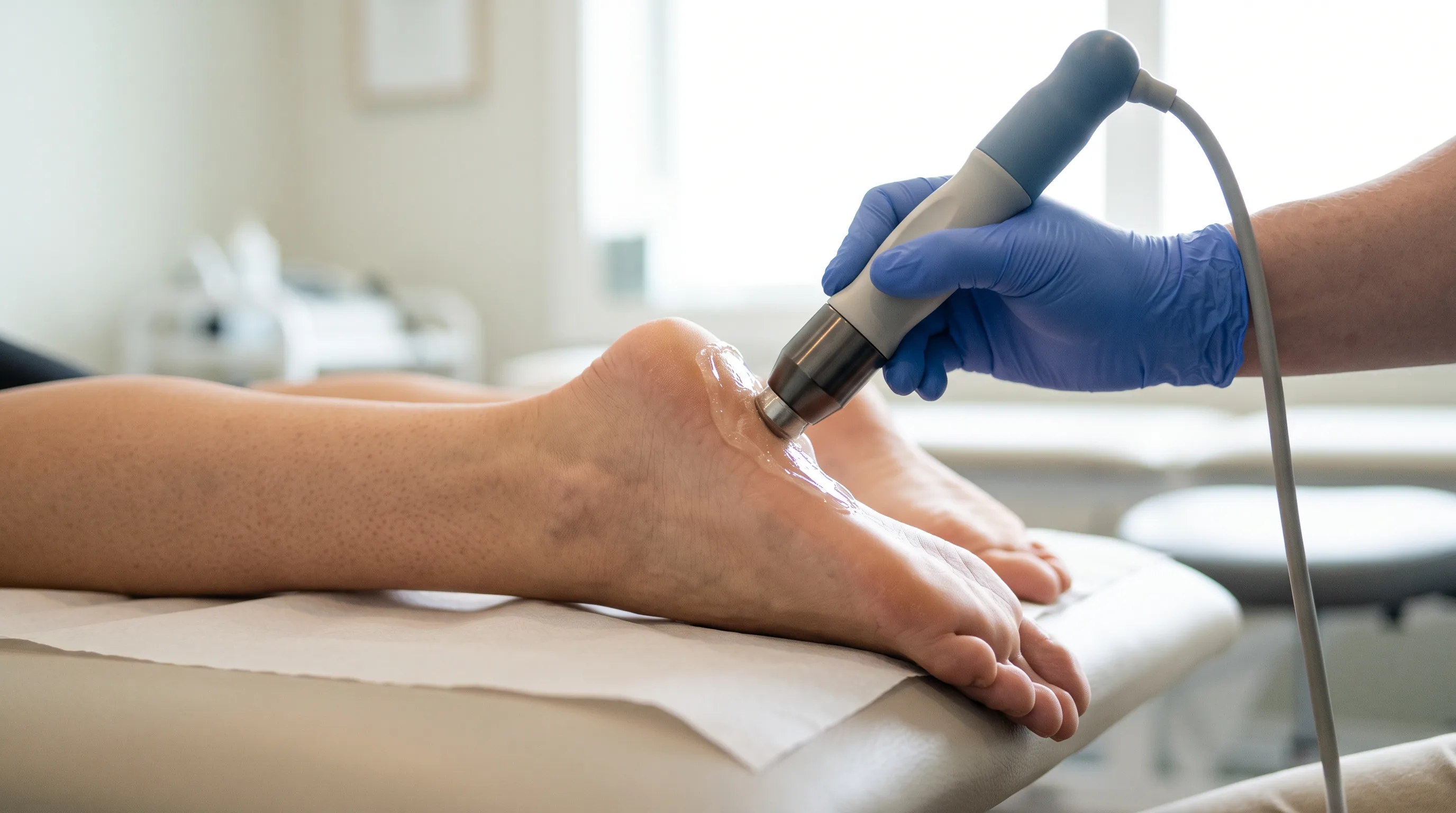
SoftWave TRT uses electrohydraulic technology to generate unfocused acoustic pressure waves that travel through soft tissue at supersonic speed. These waves are not electrical shocks and they don’t heat tissue. What they do is create mechanical perturbation at the cellular level, a process called mechanotransduction, in which cells detect and respond to physical forces by changing their behavior.
In the context of plantar fasciitis, here is what that looks like at a biological level.
The plantar fascia, when chronically inflamed or degenerated, is characterized by disordered collagen, reduced vascularity, and an accumulation of inflammatory mediators. Acoustic waves delivered by SoftWave equipment stimulate fibroblast activity, which means the cells responsible for synthesizing new collagen begin doing their job more aggressively. Simultaneously, the treatment upregulates VEGF (vascular endothelial growth factor), a signaling protein that promotes neovascularization, the formation of new blood vessels to supply the healing tissue. The inflammatory cytokine profile shifts as well, reducing substance P and other pain-sensitizing molecules in the area.
In patient terms: the treatment prompts your body to actually repair the tissue rather than just quiet the symptoms.
What the Research Shows About Shockwave Therapy for Plantar Fasciitis
The evidence base for extracorporeal shockwave therapy in plantar fasciitis is among the strongest in the shockwave literature.
A 2025 randomized controlled trial published in the Journal of Orthopaedic and Sports Physical Therapy followed 128 patients with chronic plantar fasciitis across three treatment arms: SoftWave therapy, corticosteroid injection, and a sham control. At 12-week follow-up, the SoftWave group demonstrated significantly greater improvement on the Visual Analog Scale for pain and the Foot Function Index compared to both other groups. Patients in the corticosteroid group showed better short-term results at four weeks but regressed toward baseline by week 12, while SoftWave patients continued to improve.
A 2024 meta-analysis in the British Journal of Sports Medicine synthesized 22 randomized controlled trials covering nearly 1,900 patients with plantar heel pain and found that extracorporeal shockwave therapy produced a standardized mean difference of 1.4 in pain reduction at three months compared to sham treatment, with a favorable safety profile across studies. The authors noted that the effect size was larger in patients with symptoms lasting more than six months, which aligns with what I observe clinically.
A 2026 prospective cohort study from the Department of Physical Medicine and Rehabilitation at Oregon Health and Science University examined ultrasound-guided SoftWave treatment in 64 patients with plantar fasciitis confirmed by diagnostic imaging. At six months, 78% of patients achieved a clinically meaningful reduction in pain, and plantar fascia thickness, a structural marker of ongoing inflammation, decreased by an average of 31% from baseline.
The mechanism behind these results is increasingly well understood. The tissue-level changes are measurable. This is not a therapy whose mechanism we can only theorize about.
What to Realistically Expect from Treatment
Most patients complete a series of three to six sessions, typically spaced one week apart. I want to be clear about the timeline: SoftWave therapy for plantar fasciitis is not a same-day fix. You may feel some improvement after the first or second session, but the biological processes it initiates, collagen remodeling, neovascularization, and inflammatory resolution, play out over weeks. The most significant gains often appear four to eight weeks after the series is complete.
We typically combine SoftWave with targeted exercise (calf raises, intrinsic foot strengthening, and plantar fascia stretching), gait assessment, and where appropriate, orthotic recommendations. These are not optional add-ons. They are components of a complete approach, and skipping them reduces outcomes.
What SoftWave Therapy Won’t Do: Honest Expectations
SoftWave therapy is not appropriate for everyone. I will not recommend it if you have an active infection at the treatment site, a bleeding disorder, are pregnant, have a pacemaker or implanted electronic device near the area, or have active malignancy in the region being treated. These are absolute contraindications.
It also will not substitute for addressing the mechanical contributors to plantar fasciitis. If you are on your feet for 10 hours a day in unsupportive footwear, or if you have significant tightness through the calf and Achilles chain, the tissue will remain under load even as SoftWave improves its capacity to heal. The treatment and the contributing factors need to be addressed in parallel.
And in a small subset of patients, typically those with severe structural deformity or long-standing heel spurs that have calcified to the point of causing mechanical impingement, surgical evaluation may ultimately be more appropriate. I will tell you directly if I think that is the case.
Why Patients Come to Us in West Linn, Oregon for This
We have been using SoftWave TRT in our West Linn, Oregon clinic for several years now. What I hear most often from patients who have been dealing with plantar fasciitis for six months or longer is that they were told to just wait it out. That is sometimes accurate advice: plantar fasciitis does resolve spontaneously in many cases. But it can take 12 to 18 months, and for active people, that is a long time to modify everything they do.
SoftWave gives us a way to accelerate the biology. That is the honest framing. We are not overriding the body’s healing process; we are stimulating it more effectively than rest alone can. The patients who do best are the ones who are consistent with the full treatment plan, not just showing up for sessions and ignoring the mechanical picture.
Frequently Asked Questions
Is SoftWave therapy for plantar fasciitis painful? Most patients describe the sensation as a deep pulsing pressure, occasionally uncomfortable but not severely painful. We can adjust the intensity during the session based on your feedback. There is typically some mild soreness for 24 to 48 hours afterward, which is normal and reflects the localized inflammatory response the treatment is designed to trigger.
How many sessions will I need for shockwave therapy for plantar fasciitis near me? Most patients complete three to six sessions, scheduled approximately one week apart. Some respond significantly after three sessions; others benefit from the full course. At each visit I reassess your progress and make adjustments based on what I’m seeing clinically and what you’re reporting.
Is shockwave therapy for plantar fasciitis covered by insurance? Coverage varies considerably. Some major insurers cover extracorporeal shockwave therapy for plantar fasciitis when conservative treatment has failed, typically requiring documentation of six weeks or more of prior treatment. We can help you understand your specific benefits before you commit to a treatment plan.
How does SoftWave therapy compare to cortisone injections for heel pain? Both can be effective, particularly in the short term. Cortisone injections reduce inflammation quickly but do not repair the underlying tissue and carry risks with repeated use, including plantar fascia rupture after multiple injections. SoftWave takes longer to produce results but works through a regenerative mechanism, producing outcomes that continue to improve after the treatment series ends.
I’ve had plantar fasciitis for over a year. Is it too late for shockwave therapy to help? Not at all. Research consistently shows that patients with chronic, long-standing plantar fasciitis respond particularly well to extracorporeal shockwave therapy. The tissue biology of chronic degeneration is in some ways more responsive to the regenerative signals SoftWave delivers than acute inflammation is. Duration of symptoms is not a contraindication.
If you have questions or want to find out whether SoftWave therapy is a good fit for your care plan, we’re easy to reach. That’s what we’re here for.
Dr. Tristan Santiago Maceiras is a Doctor of Chiropractic at Gentle Care Chiropractic in West Linn, Oregon, specializing in musculoskeletal medicine, SoftWave therapy, and integrated care.
Dealing with this in West Linn, Lake Oswego or Oregon City?
Same-week appointments. PIP and most insurance accepted.