

Cervical Disc Herniation
Expert care for Cervical Disc Herniation at Gentle Care Chiropractic in West Linn, Oregon.
Understanding Cervical Disc Herniation
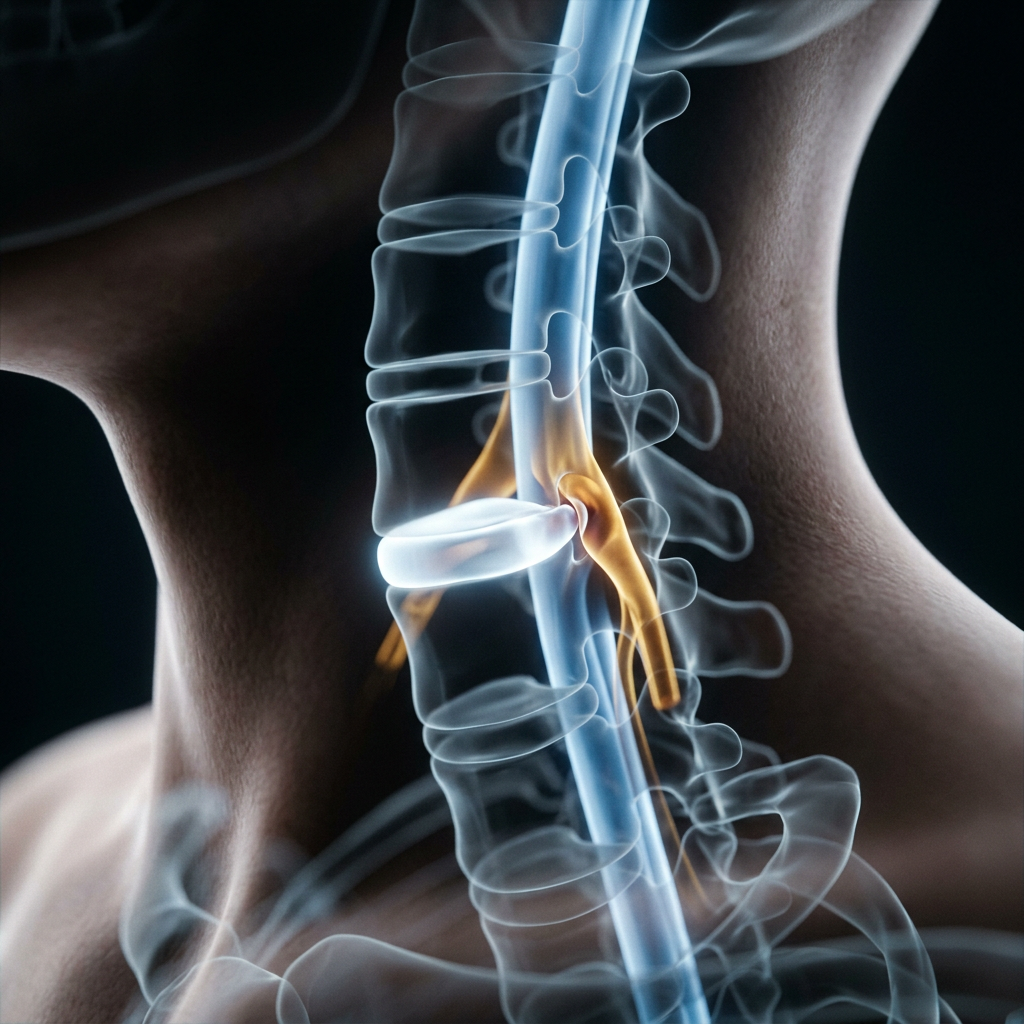
Also known as: Herniated Neck Disc, Cervical HNP, Bulging Disc in Neck A cervical disc herniation is the neck's equivalent of a lumbar disc herniation, but in a region where the anatomy is more compact and precision matters more. When the inner material of a disc in the neck pushes through its outer wall and contacts a nerve root (most commonly at C5-C6 or C6-C7) that nerve sends pain into the shoulder, arm, and hand. The cervical spine houses structures close together: nerve roots, the spinal cord, and blood vessels are all in tight proximity. That's why we're deliberate with technique here, favoring gentle approaches and traction-based methods that decompress the nerve without aggravating it.
One useful clue to recognize: many patients with cervical disc herniation find relief by resting their hand on top of their head (what clinicians call Bakody's sign), because this position reduces tension on the affected nerve root. You may feel neck pain that radiates down one arm into the hand, with numbness or tingling following a specific pattern, often the thumb and index finger for C6, or the middle finger for C7. Weakness in specific arm movements can develop as compression continues. Symptoms typically worsen with looking down at a phone or computer, sitting for long drives, or sneezing.
Most cervical herniations develop gradually from disc degeneration, sustained forward-head posture, repetitive cervical flexion, and accumulated wear. Prior whiplash is a meaningful contributor. Heavy lifting with a twisted neck and contact sports are less common but important triggers. Age-related disc drying begins in the third decade of life, which is earlier than most people realize.
We use cervical traction (manual or mechanical) and motorized decompression as cornerstones, they open the foraminal space and take mechanical pressure off the nerve root. When a disc is acutely inflamed, we use gentler techniques (Activator instrument adjusting or gentle mobilization) rather than high-velocity rotation, advancing to more traditional cervical manipulation as the nerve calms. Thoracic adjustments relieve compensatory load on the neck. Nerve gliding exercises help the irritated nerve move more freely through its channel.
Deep neck flexor training and scapular strengthening stabilize the region for the long term. Class IV laser accelerates inflammation resolution. Most patients improve within six to twelve weeks. We refer for MRI and surgical consultation for progressive weakness or failed conservative care.
We may recommend: cervical/lumbar traction, spinal decompression, Activator, myofascial release, Class IV laser, corrective exercise, ergonomic coaching Seek immediate care if: You develop rapidly progressing arm or hand weakness, loss of coordination, trouble walking, or bowel/bladder changes: these may indicate cervical myelopathy or severe cord compression requiring urgent evaluation.
How We Can Help
At Gentle Care Chiropractic, we take a multi-disciplinary approach, addressing the root cause of your condition, not just the symptoms.
Chiropractic Adjustments
Precise spinal and joint corrections to restore alignment, relieve nerve pressure, and reduce pain. Manual or instrument-assisted based on your needs.
Massage Therapy
Therapeutic massage releases muscle tension, improves circulation to injured tissue, and works synergistically with adjustments for faster recovery.
Physical Rehabilitation
Customized exercise programs strengthen supporting muscles, restore range of motion, and help prevent future flare-ups.
Laser Therapy
Cold laser therapy uses targeted light wavelengths to stimulate cellular healing, reduce inflammation, and relieve deep tissue pain without heat or discomfort.
Electrical Stimulation
E-stim therapy reduces pain and muscle spasm, improves circulation, and supports the healing process. Especially effective for acute injuries.
Personalized Care Plan
Every patient is different. We combine these therapies in a plan tailored to your diagnosis, goals, and lifestyle for the best possible outcome.
Frequently Asked Questions
Common questions about Cervical Disc Herniation, answered by our team.
Why does raising my arm above my head relieve the arm pain from my neck?
That's Bakody's sign, and it's a clinically meaningful finding. When you rest your hand on top of your head, you reduce tension on the affected nerve root by shortening the path it has to travel and slightly widening the foramen (the bony tunnel where the nerve exits the spine). It's one of the more specific clinical tests for cervical nerve root compression, and when a patient demonstrates it spontaneously before they've even heard of the test, it tells us a great deal about what's happening. We use traction-based techniques that reproduce this same mechanical decompression therapeutically.
I've heard that neck manipulation is dangerous with a disc herniation — is chiropractic safe for my condition?
It's a fair question and worth addressing directly. High-velocity rotational thrust manipulation applied to an acutely herniated and inflamed cervical disc does carry more risk than low-force approaches, which is why we don't use that technique in the early stages. Instead, we use cervical traction, gentle Activator instrument adjusting, and carefully graded mobilization that decompress the nerve without stressing the disc wall. As the nerve calms over weeks, we progressively normalize the techniques. The clinical evidence supports traction-based decompression and gentle mobilization as safe and effective for cervical disc herniation.
How long will the numbness and tingling in my arm and hand last?
That depends on how long the nerve has been compressed and how well the underlying disc responds to decompression. Tingling that arrived recently tends to resolve faster than symptoms that have been present for months. Most patients see clear improvement in arm and hand symptoms within six to twelve weeks of consistent conservative care. Numbness typically lags behind pain improvement — the nerve needs time to recover its conduction. If sensory symptoms are improving, even slowly, that's a good prognostic sign. If they're worsening or if weakness is developing, that changes the urgency and may warrant MRI and specialist review.
What sleeping position is best when I have a cervical disc herniation?
Back sleeping with a supportive cervical contour pillow that maintains the natural curve of the neck is generally the most comfortable and mechanically neutral position. Side sleeping is acceptable with a pillow that keeps your ear over your shoulder — too thin and the neck droops, too thick and it's pushed too far up. Stomach sleeping is the most problematic because it requires sustained neck rotation and extension throughout the night, which compresses the very structures causing your symptoms. A cervical traction pillow or rolled towel inside your pillowcase can help hold the curve during back sleeping.
Is there a difference between a bulging disc and a herniated disc in the neck — and does it matter for treatment?
Yes, though the terms are often used interchangeably. A bulge is a diffuse, symmetrical widening of the disc wall without breach of the outer ring. A herniation involves the inner gel actually pushing through a weak point in the outer ring, creating a more focal protrusion. Herniations typically produce more acute and specific neurological symptoms because the displaced material contacts the nerve root directly. The distinction matters because herniations are somewhat more likely to cause compression-related weakness and are the focus of decompression techniques. That said, both are treated with the same general conservative approach — traction, gentle mobilization, nerve mobilization, and stabilization exercise — adjusted to the severity of your presentation.
Ready to Find Relief?
You don't have to live with Cervical Disc Herniation. Our team at Gentle Care Chiropractic is here to help you recover and get back to doing what you love.