

Cervical Radiculopathy post-MVA
Expert care for Cervical Radiculopathy post-MVA at Gentle Care Chiropractic in West Linn, Oregon.
Understanding Cervical Radiculopathy post-MVA
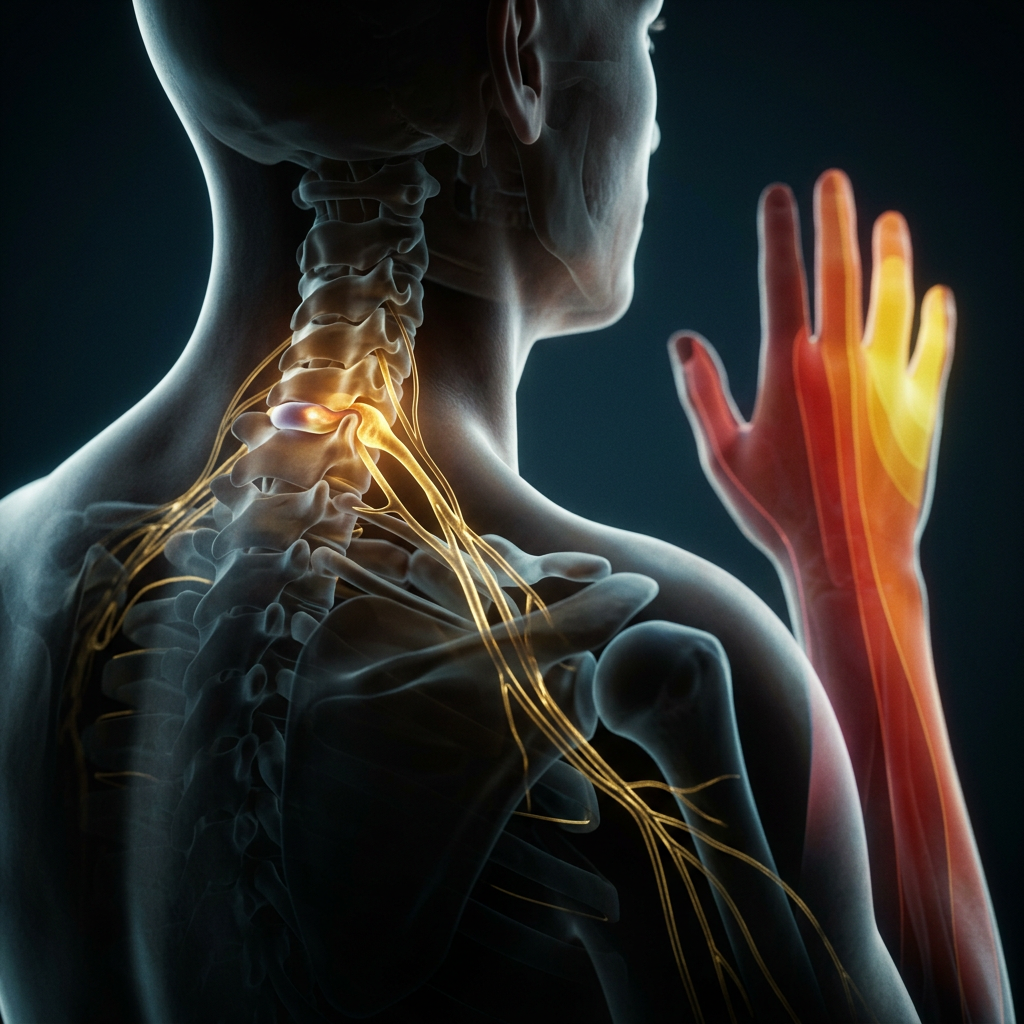
Also known as: Pinched Nerve in the Neck, Cervical Nerve Root Compression, Post-Accident Arm Pain Cervical radiculopathy after an MVA is nerve-root irritation producing pain and neurologic symptoms down the arm, caused by the combination of disc herniation, foraminal swelling, and post-traumatic facet hypertrophy. The specific nerve root involved determines where you feel symptoms, C6 affects the thumb side, C7 the middle finger, C8 the pinky side. Worth noting: even without frank herniation on imaging, edema alone can compress a nerve root after an MVA. And pre-existing but asymptomatic degenerative changes often become fully symptomatic after a crash when added inflammation tips the balance, the crash is the clinically and legally relevant cause of your symptoms.
Sharp, burning, or electrical pain shoots from the neck into the shoulder, down the arm, and into the hand in a stripe-like (dermatomal) pattern. Looking up, turning toward the painful side, or coughing worsens symptoms; the Bakody position often relieves them. Like other disc-related injuries, symptoms may appear days to weeks after the crash. Roughly 75-90% of cervical radiculopathy patients improve with conservative care over four to six months.
Your exam includes Spurling's test, the upper limb tension test, and detailed dermatomal and myotomal mapping, all documented for your case. Treatment combines cervical traction, flexion-distraction, nerve flossing, postural correction, and graduated therapeutic exercise. Class IV laser, electrical stimulation, and soft-tissue therapy support the process. When symptoms are severe or progressive, we coordinate with neurology and pain management for imaging and potential epidural injection.
We may recommend: cervical traction, flexion-distraction/Cox, spinal decompression, McKenzie protocol, Class IV laser, corrective exercise, TENS/e-stim Seek immediate care if: You experience rapidly progressive arm weakness, loss of fine motor control, gait disturbance, or bladder/bowel changes: these raise concern for myelopathy needing urgent surgical evaluation.
How We Can Help
At Gentle Care Chiropractic, we take a multi-disciplinary approach, addressing the root cause of your condition, not just the symptoms.
Chiropractic Adjustments
Precise spinal and joint corrections to restore alignment, relieve nerve pressure, and reduce pain. Manual or instrument-assisted based on your needs.
Massage Therapy
Therapeutic massage releases muscle tension, improves circulation to injured tissue, and works synergistically with adjustments for faster recovery.
Physical Rehabilitation
Customized exercise programs strengthen supporting muscles, restore range of motion, and help prevent future flare-ups.
Laser Therapy
Cold laser therapy uses targeted light wavelengths to stimulate cellular healing, reduce inflammation, and relieve deep tissue pain without heat or discomfort.
Electrical Stimulation
E-stim therapy reduces pain and muscle spasm, improves circulation, and supports the healing process. Especially effective for acute injuries.
Personalized Care Plan
Every patient is different. We combine these therapies in a plan tailored to your diagnosis, goals, and lifestyle for the best possible outcome.
Frequently Asked Questions
Common questions about Cervical Radiculopathy post-MVA, answered by our team.
I have arm pain and tingling after the crash — how do I know if it's a pinched nerve or something else?
Cervical radiculopathy produces pain, numbness, and sometimes weakness that follows a specific pattern down the arm — the exact distribution depends on which nerve root is involved. C6 affects the thumb and index finger, C7 the middle finger, C8 the ring and pinky fingers and inner forearm. That stripe-like pattern is different from the referred aching of a facet joint (which doesn't follow a clear path) or the circulatory symptoms of thoracic outlet syndrome (typically tingling in the whole hand or pinky side). A structured exam with Spurling's test, upper limb tension testing, and dermatomal mapping will clarify the source.
Can pre-existing arthritis or degeneration in my neck affect my injury claim?
Having pre-existing degenerative disc disease or spondylosis does not eliminate your claim — it often makes your injury more significant. Degeneration narrows the foramina (the openings where nerve roots exit), so the added swelling and inflammation from the crash tips an already-compromised space into full-blown nerve compression. The legal doctrine of the "eggshell plaintiff" (or "thin skull rule") holds that a defendant takes a plaintiff as they find them — your pre-existing vulnerability doesn't reduce the at-fault driver's responsibility. The crash is the clinically relevant trigger, and we document the pre-accident baseline against post-accident symptom onset clearly.
What is nerve flossing and why is it used for this condition?
Nerve mobilization, sometimes called neural flossing or nerve gliding, is a gentle movement technique that mobilizes the nerve root through its surrounding tissue rather than compressing it further. When a nerve root is irritated and inflamed, it can become adherent to surrounding structures, which limits its normal gliding motion and amplifies pain. By carefully tensioning and then releasing the nerve through specific arm and neck movements, we improve circulation to the nerve and reduce mechanical tethering. It's a cornerstone of cervical radiculopathy rehab and typically produces a noticeable reduction in arm symptoms over several sessions.
If 75–90% of patients improve without surgery, what does the remaining 10–25% look like?
Surgery becomes the appropriate recommendation when arm weakness is progressive, fine motor control is deteriorating, or pain remains severe and unresponsive after four to six months of quality conservative care. The most common surgical procedure for post-MVA cervical radiculopathy is anterior cervical discectomy and fusion (ACDF), which removes the offending disc and fuses the segment — generally a straightforward procedure with good outcomes. We monitor neurological signs at every visit specifically because progressive motor deficit is the clearest signal that the conservative window has closed and specialist evaluation is urgent.
How soon after the crash should I start treatment, and does waiting hurt my recovery?
Starting within the first one to two weeks of symptom onset gives you the best chance of full recovery. Early treatment reduces inflammation around the nerve root before scar tissue and chronic sensitization set in. Waiting months to begin care doesn't make the diagnosis disappear, but it does make the nerve injury harder to fully resolve and increases the risk of persistent symptoms. Oregon PIP covers care from day one — there's no financial reason to delay, and there's a meaningful medical reason to start promptly.
Ready to Find Relief?
You don't have to live with Cervical Radiculopathy post-MVA. Our team at Gentle Care Chiropractic is here to help you recover and get back to doing what you love.