

Cervicogenic Headache
Expert care for Cervicogenic Headache at Gentle Care Chiropractic in West Linn, Oregon.
Understanding Cervicogenic Headache
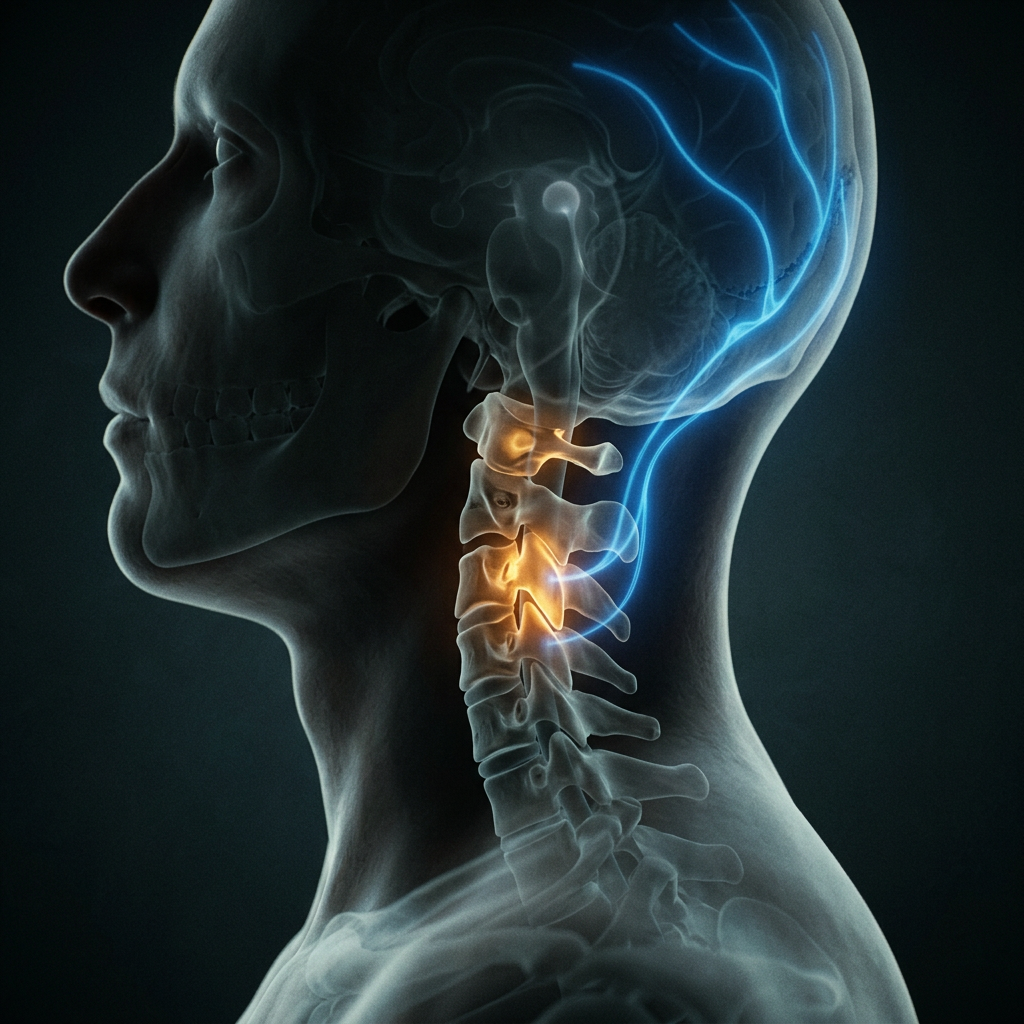
Also known as: Neck-Related Headache, Cervical Headache Cervicogenic headache is one of the most satisfying conditions to treat in chiropractic — because the source is genuinely mechanical, the response to targeted care is often dramatic and specific. The head pain originates in the upper cervical spine — the joints, discs, and soft tissues of C1, C2, and C3 — and is referred into the head via shared nerve pathways through the trigeminocervical nucleus, a relay center in the brainstem where upper neck and facial sensation converge. Because the source is mechanical, the condition responds especially well to targeted chiropractic care, and current clinical guidelines specifically support spinal manipulation plus exercise for this condition. The symptom pattern is characteristic: unilateral (one-sided) headache starting at the base of the skull or along one side of the neck, spreading forward over the same side of the head, sometimes reaching behind the eye.
Headaches are triggered or worsened by neck movements, sustained postures, or pressure on specific spots along the upper cervical spine — a feature that distinguishes this from migraine. Range of motion is commonly restricted, particularly rotation to the painful side. Previous whiplash or head trauma, desk-based work, prolonged forward head posture, and upper cervical joint dysfunction are the primary contributors. Weakness of the deep neck flexors shifts load onto the upper cervical joints.
Poor sleeping position and unsupportive pillows commonly amplify symptoms overnight. Upper cervical specific adjustments — targeting C1-C2 and C2-C3 — have strong evidence for cervicogenic headache relief, and this is the core of our approach. We select the most appropriate technique based on your exam. Thoracic manipulation adds benefit through regional interdependence.
Suboccipital release and trigger point therapy address the muscular referral component. Deep neck flexor retraining — chin nods and craniocervical flexion exercises — is essential for long-term results because it's the muscular weakness that keeps the upper cervical joints overloaded. Most patients see significant headache frequency and intensity reduction within four to eight weeks of combined manipulation and exercise. We may recommend: diversified adjustments, Activator, trigger point therapy, myofascial release, dry needling, Class IV laser, corrective exercise Seek immediate care if: You experience a sudden severe headache, neurological changes, weakness, difficulty speaking, loss of coordination, or headache following significant trauma — these require urgent evaluation to rule out vascular or structural emergencies.
How We Can Help
At Gentle Care Chiropractic, we take a multi-disciplinary approach — addressing the root cause of your condition, not just the symptoms.
Chiropractic Adjustments
Precise spinal and joint corrections to restore alignment, relieve nerve pressure, and reduce pain — manual or instrument-assisted based on your needs.
Massage Therapy
Therapeutic massage releases muscle tension, improves circulation to injured tissue, and works synergistically with adjustments for faster recovery.
Physical Rehabilitation
Customized exercise programs strengthen supporting muscles, restore range of motion, and help prevent future flare-ups.
Laser Therapy
Cold laser therapy uses targeted light wavelengths to stimulate cellular healing, reduce inflammation, and relieve deep tissue pain without heat or discomfort.
Electrical Stimulation
E-stim therapy reduces pain and muscle spasm, improves circulation, and supports the healing process — especially effective for acute injuries.
Personalized Care Plan
Every patient is different. We combine these therapies in a plan tailored to your diagnosis, goals, and lifestyle for the best possible outcome.
Ready to Find Relief?
You don't have to live with Cervicogenic Headache. Our team at Gentle Care Chiropractic is here to help you recover and get back to doing what you love.