

Costovertebral and Rib Dysfunction
Expert care for Costovertebral and Rib Dysfunction at Gentle Care Chiropractic in West Linn, Oregon.
Understanding Costovertebral and Rib Dysfunction
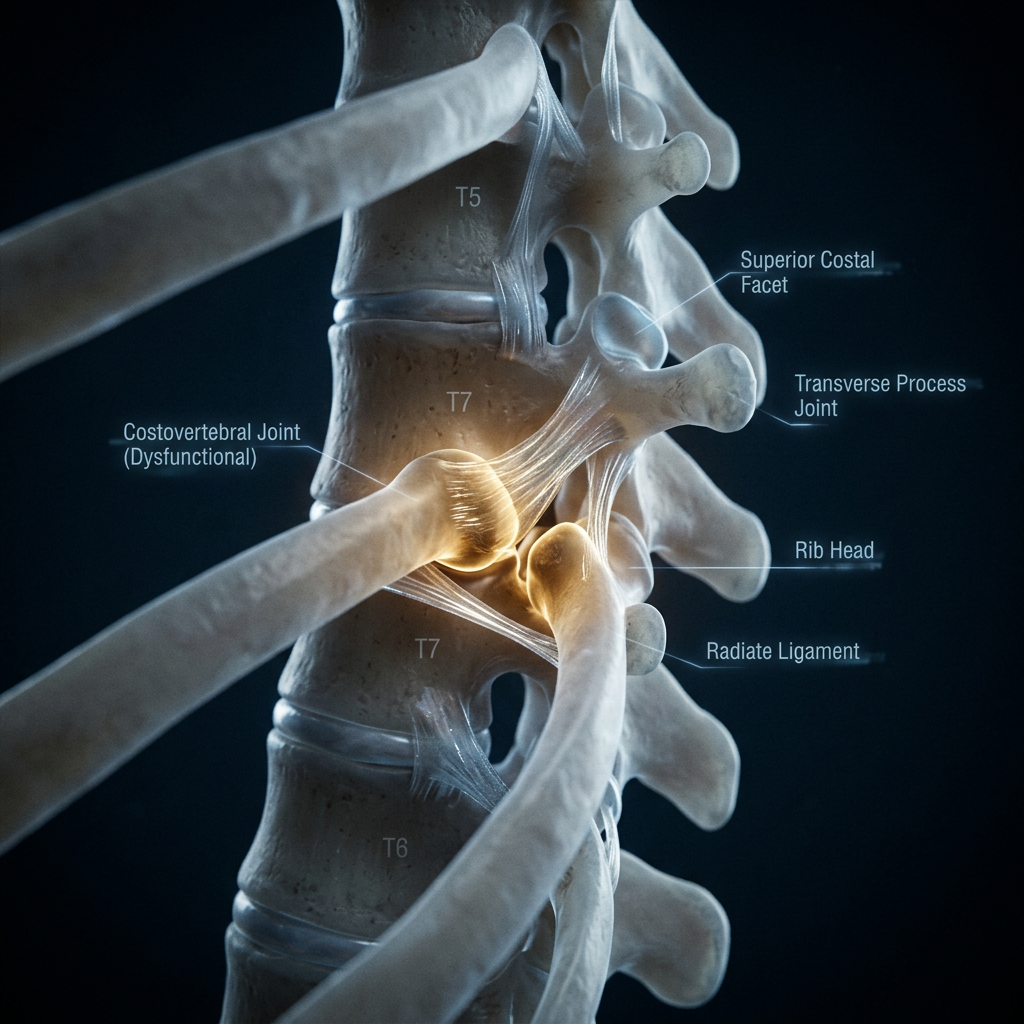
Also known as: Rib Head Dysfunction, Costochondritis (anterior rib variant), "Rib Out of Place" People are often surprised to learn that their chest wall pain has a mechanical explanation. Every rib attaches to the spine at two small joints — the costovertebral and costotransverse joints — and connects to the sternum at the front via flexible costal cartilage. When one of these joints becomes restricted, inflamed, or irritated, the result is sharp, localized pain that worsens dramatically with breathing, coughing, or twisting. Costochondritis is inflammation specifically at the rib-cartilage junction at the front of the chest.
Both conditions are common and both are frequently mistaken for cardiac or pulmonary problems — which means they warrant careful evaluation before treatment begins. The hallmark is pain that you can reproduce by pressing on a specific spot — along the back, side, or front of the ribs — with a sharp worsening on deep breath, cough, sneeze, or rotation. Some patients feel a "stuck" or "locked" sensation that seems to catch with each inhale. This reproducibility on palpation is actually a useful distinguishing feature from cardiac pain, which typically isn't palpably tender.
Symptoms can arrive suddenly after a heavy lift or a prolonged cough from a respiratory illness, or creep in gradually after sustained postural loading. Sustained poor posture, heavy lifting with a twist, prolonged coughing, direct chest trauma, and contact sports are common causes. Stress-driven shallow breathing and the protective guarding that develops after an initial injury can perpetuate the dysfunction long after the original trigger has resolved. Targeted costovertebral and thoracic adjustments restore rib motion — often producing immediate relief with an improved breath quality that surprises patients.
We use diversified, Gonstead, or drop-table techniques depending on your presentation. Intercostal soft-tissue work, cupping, and instrument-assisted mobilization address the surrounding muscle guarding. Diaphragmatic breathing retraining — learning to breathe into the belly rather than the upper chest — reduces the tension that holds the rib locked. Class IV laser can ease costochondritis inflammation at the anterior chest wall.
Most patients respond within two to six visits, though we always screen carefully for cardiac, pulmonary, aortic, or visceral causes of chest pain before treating. We may recommend: diversified adjustments, Gonstead, cupping, Graston/IASTM, Class IV laser, corrective exercise, posture program Seek immediate care if: Your chest pain is associated with shortness of breath, sweating, pain radiating to the jaw or arm, irregular heartbeat, fainting, tearing back pain, fever, or a productive cough — these require emergency evaluation.
How We Can Help
At Gentle Care Chiropractic, we take a multi-disciplinary approach — addressing the root cause of your condition, not just the symptoms.
Chiropractic Adjustments
Precise spinal and joint corrections to restore alignment, relieve nerve pressure, and reduce pain — manual or instrument-assisted based on your needs.
Massage Therapy
Therapeutic massage releases muscle tension, improves circulation to injured tissue, and works synergistically with adjustments for faster recovery.
Physical Rehabilitation
Customized exercise programs strengthen supporting muscles, restore range of motion, and help prevent future flare-ups.
Laser Therapy
Cold laser therapy uses targeted light wavelengths to stimulate cellular healing, reduce inflammation, and relieve deep tissue pain without heat or discomfort.
Electrical Stimulation
E-stim therapy reduces pain and muscle spasm, improves circulation, and supports the healing process — especially effective for acute injuries.
Personalized Care Plan
Every patient is different. We combine these therapies in a plan tailored to your diagnosis, goals, and lifestyle for the best possible outcome.
Ready to Find Relief?
You don't have to live with Costovertebral and Rib Dysfunction. Our team at Gentle Care Chiropractic is here to help you recover and get back to doing what you love.