

Golfer's Elbow
Expert care for Golfer's Elbow at Gentle Care Chiropractic in West Linn, Oregon.
Understanding Golfer's Elbow
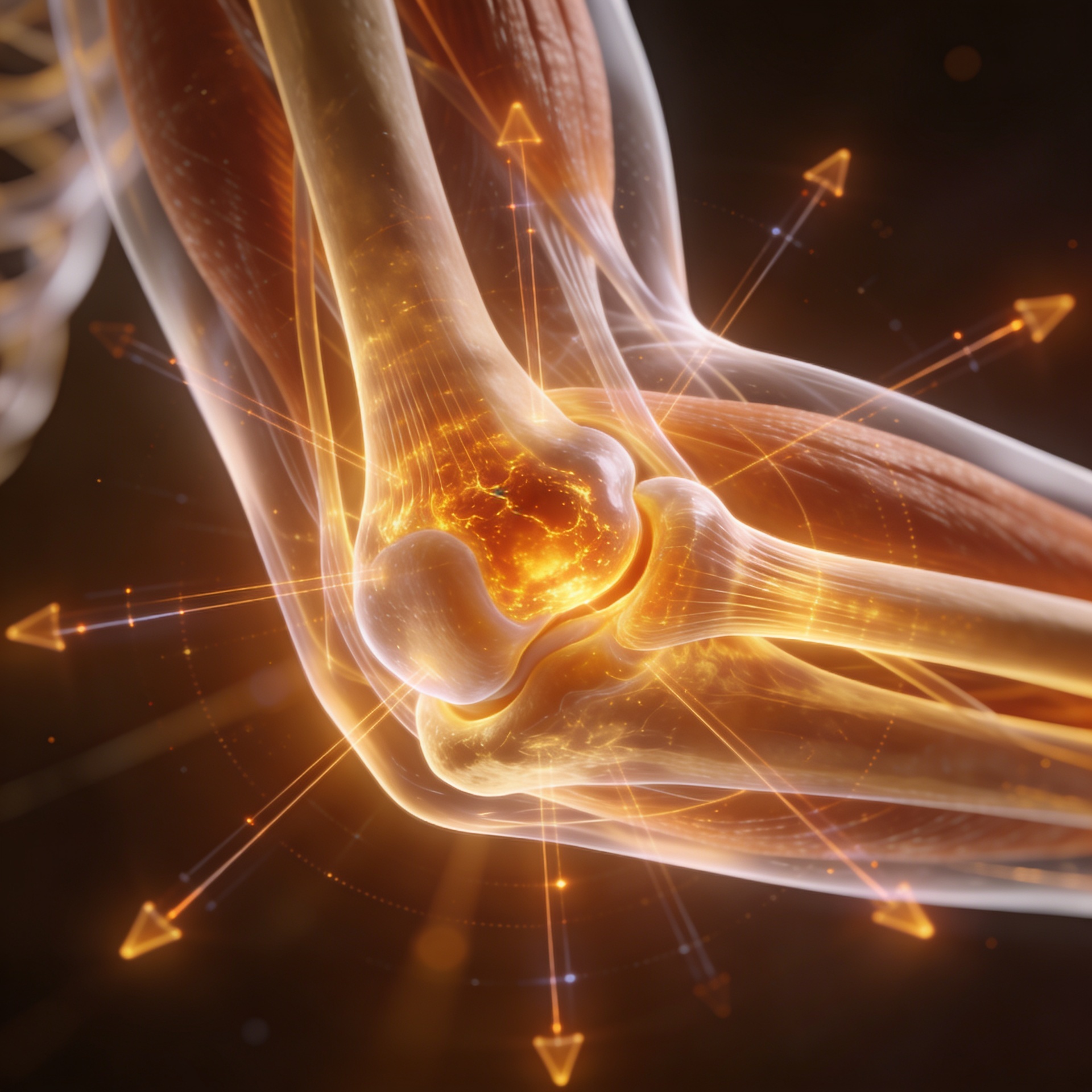
Also known as: Medial Epicondylitis, Medial Epicondylosis, Pitcher's Elbow, Common Flexor Tendinopathy Golfer's elbow is the medial (inner) counterpart to tennis elbow — same tendinopathy mechanism, different tendon. It affects the common flexor tendon where the wrist and finger flexors and forearm pronators attach to the medial epicondyle. Repetitive gripping, wrist-flexion, and pronation activities overload the tendon gradually. Worth noting: the adjacent ulnar nerve is close to the medial epicondyle, and when it becomes irritated alongside the tendon, tingling in the ring and pinky fingers can accompany the elbow pain — a finding that changes the picture somewhat.
Tender, achy inside-elbow pain that flares with gripping a grocery bag palm-up, swinging a golf club, throwing, or typing is typical. Symptoms may radiate down the inner forearm. Golfers, baseball players (especially pitchers), manual laborers, and workers who grip tools all day are at highest risk. Our care mirrors tennis elbow treatment but targets the medial tendon.
A progressive eccentric wrist flexor and pronator loading program drives healing. Graston/IASTM and ART along the flexor group, elbow and wrist mobilization, and cervical and thoracic spine adjustments address the nerve contribution. Shockwave therapy is effective for persistent cases. Counterforce bracing and kinesio taping help during return to activity.
Most patients improve within six to ten weeks. We may recommend: Graston/IASTM, ART, extremity adjustments, mobilization, shockwave therapy, eccentric loading protocol, corrective exercise, kinesio taping Seek immediate care if: You experience progressive numbness, tingling, or weakness in the ring and little fingers, or elbow pain follows significant trauma.
How We Can Help
At Gentle Care Chiropractic, we take a multi-disciplinary approach — addressing the root cause of your condition, not just the symptoms.
Chiropractic Adjustments
Precise spinal and joint corrections to restore alignment, relieve nerve pressure, and reduce pain — manual or instrument-assisted based on your needs.
Massage Therapy
Therapeutic massage releases muscle tension, improves circulation to injured tissue, and works synergistically with adjustments for faster recovery.
Physical Rehabilitation
Customized exercise programs strengthen supporting muscles, restore range of motion, and help prevent future flare-ups.
Laser Therapy
Cold laser therapy uses targeted light wavelengths to stimulate cellular healing, reduce inflammation, and relieve deep tissue pain without heat or discomfort.
Electrical Stimulation
E-stim therapy reduces pain and muscle spasm, improves circulation, and supports the healing process — especially effective for acute injuries.
Personalized Care Plan
Every patient is different. We combine these therapies in a plan tailored to your diagnosis, goals, and lifestyle for the best possible outcome.
Ready to Find Relief?
You don't have to live with Golfer's Elbow. Our team at Gentle Care Chiropractic is here to help you recover and get back to doing what you love.