

Lumbar Radiculopathy
Expert care for Lumbar Radiculopathy at Gentle Care Chiropractic in West Linn, Oregon.
Understanding Lumbar Radiculopathy
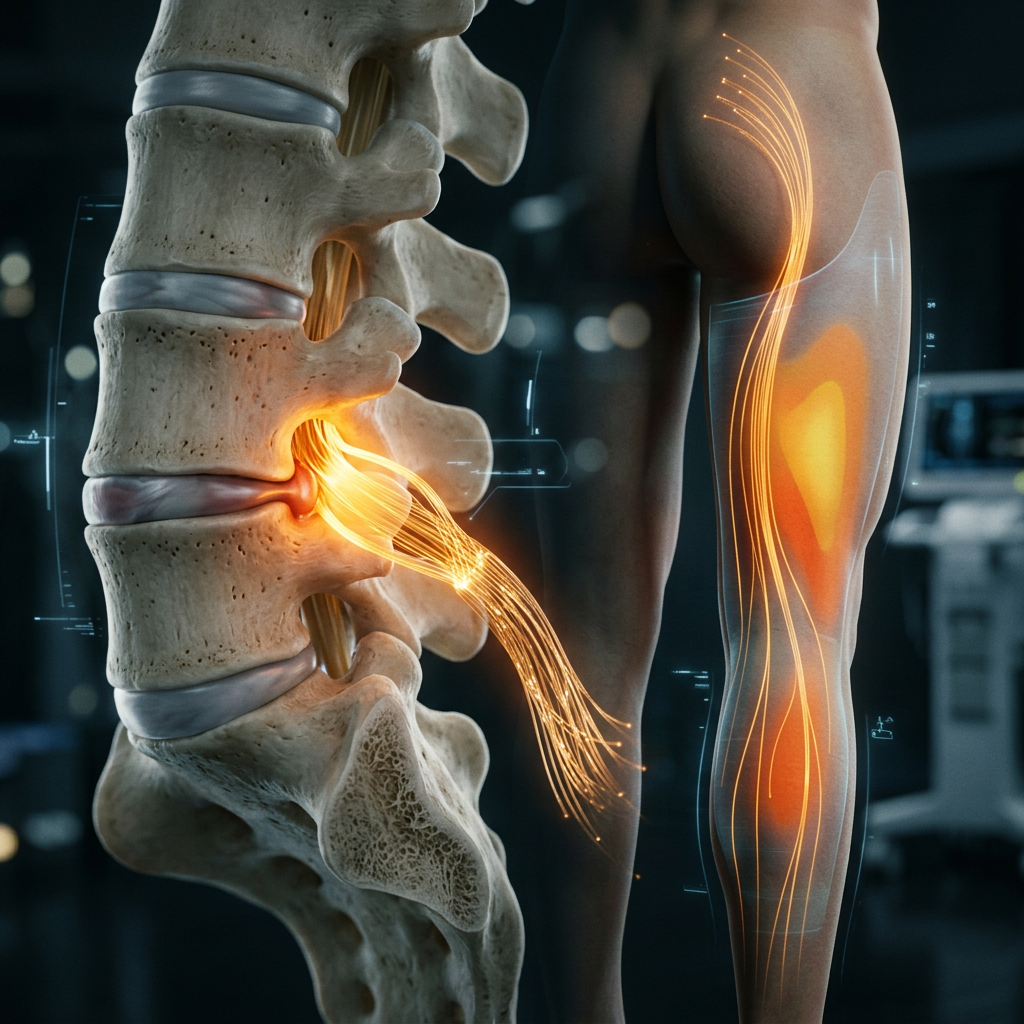
Also known as: Pinched Nerve in Low Back, Lumbar Nerve Root Impingement Lumbar radiculopathy is the more specific term for what many people call a "pinched nerve in the back" — it means a nerve root in the low back is being irritated, producing pain, numbness, or weakness in a mapped distribution down the leg. Whereas sciatica is a general symptom (leg pain along the sciatic nerve's path), radiculopathy points clearly to the nerve root as the source. The common levels are L4, L5, and S1, and identifying which one is involved — through your symptom pattern, reflex changes, and strength testing — guides precise, effective care. The leg pain follows a stripe-like path corresponding to the affected nerve: the front of the thigh and shin for L4, the side of the leg and top of the foot for L5, or the back of the leg and bottom of the foot for S1.
Specific weakness patterns follow: difficulty lifting the big toe or clearing the foot (L5), or rising on tiptoes (S1). Reflexes at the knee or ankle may be diminished. Sitting and forward bending typically worsen symptoms, which is why long drives are often the most provocative activity. Disc herniation is the leading cause, followed by foraminal stenosis and spondylolisthesis.
Risk factors mirror disc disease: age, heavy lifting, prolonged sitting, smoking, genetics, and deconditioning. Diabetes can amplify nerve sensitivity, making minor compression more symptomatic than it might otherwise be. Motorized spinal decompression and flexion-distraction are our workhorses — both create sustained, controlled traction that can reduce disc pressure and retract nerve compression over time. Neural mobilization restores nerve gliding through its channel.
Lumbar stabilization exercises protect the segment. Soft-tissue work addresses the secondary muscle guarding that develops around a compressed nerve root. Class IV laser and PEMF calm inflammation. We track serial strength and reflex findings at each visit to confirm you're progressing.
Typical timelines are six to twelve weeks. We coordinate with orthopedics or pain management for persistent radiculopathy, progressive motor loss, or when imaging reveals significant structural compromise. We may recommend: spinal decompression, flexion-distraction/Cox, McKenzie directional exercises, corrective exercise, Class IV laser, PEMF, ergonomic coaching Seek immediate care if: You develop rapidly progressive leg weakness, foot drop, loss of bowel or bladder control, or saddle numbness — these may require urgent surgical evaluation.
How We Can Help
At Gentle Care Chiropractic, we take a multi-disciplinary approach — addressing the root cause of your condition, not just the symptoms.
Chiropractic Adjustments
Precise spinal and joint corrections to restore alignment, relieve nerve pressure, and reduce pain — manual or instrument-assisted based on your needs.
Massage Therapy
Therapeutic massage releases muscle tension, improves circulation to injured tissue, and works synergistically with adjustments for faster recovery.
Physical Rehabilitation
Customized exercise programs strengthen supporting muscles, restore range of motion, and help prevent future flare-ups.
Laser Therapy
Cold laser therapy uses targeted light wavelengths to stimulate cellular healing, reduce inflammation, and relieve deep tissue pain without heat or discomfort.
Electrical Stimulation
E-stim therapy reduces pain and muscle spasm, improves circulation, and supports the healing process — especially effective for acute injuries.
Personalized Care Plan
Every patient is different. We combine these therapies in a plan tailored to your diagnosis, goals, and lifestyle for the best possible outcome.
Ready to Find Relief?
You don't have to live with Lumbar Radiculopathy. Our team at Gentle Care Chiropractic is here to help you recover and get back to doing what you love.