

Lumbar Sprain/Strain from MVA
Expert care for Lumbar Sprain/Strain from MVA at Gentle Care Chiropractic in West Linn, Oregon.
Understanding Lumbar Sprain/Strain from MVA
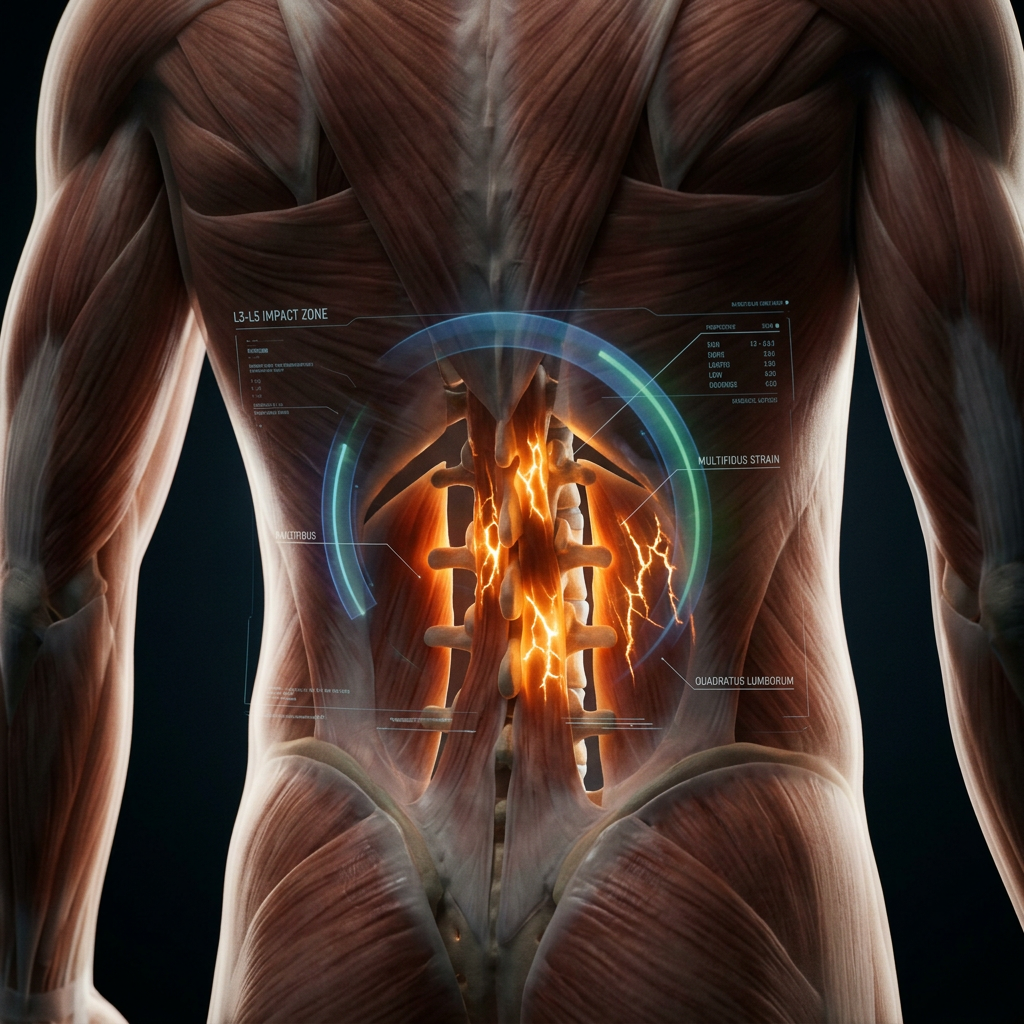
Also known as: Lower Back Strain, Lumbar Sprain, Low Back Pain After Car Accident, Lumbosacral Strain Lumbar sprain/strain is the most common post-MVA lumbar diagnosis, and while the term sounds minor, the pain can be significant and the recovery can stretch over weeks, particularly when undertreated. A lumbar sprain is injury to the ligaments of the lower back; a strain involves the muscles or tendons, most commonly the paraspinals and quadratus lumborum. The key clinical distinction from disc-related injury: the pain stays in the back or spreads only into the buttock or hip, no leg pain, numbness, or weakness. Many patients don't feel their back the day of the crash.
The pain arrives 24-72 hours later as inflammation peaks. Bending, twisting, getting out of a car, and transitioning from sit to stand are worst. Long drives reliably reproduce the pain. In a rear-end collision, the pelvis is driven forward by the seat while the torso lags, producing flexion-distraction through the lumbar spine.
Side-impact adds rotational shear, particularly damaging to the ligaments. Evidence strongly supports early active care, bed rest delays recovery. Our approach includes lumbar manipulation or mobilization, flexion-distraction, McKenzie exercises when indicated, motor control training, soft-tissue therapy, and modalities including Class IV laser, electrical stimulation, or PEMF. About 10-20% of lumbar sprains become chronic without appropriate care, which is why we push for full recovery rather than just symptom relief, and why documentation at every visit matters.
We may recommend: diversified adjustments, flexion-distraction/Cox, McKenzie protocol, myofascial release, Graston/IASTM, Class IV laser, corrective exercise Seek immediate care if: You develop new leg weakness, numbness in the groin or inner thighs, loss of bladder or bowel control, or severe escalating pain: these may indicate cauda equina syndrome requiring emergency evaluation.
How We Can Help
At Gentle Care Chiropractic, we take a multi-disciplinary approach, addressing the root cause of your condition, not just the symptoms.
Chiropractic Adjustments
Precise spinal and joint corrections to restore alignment, relieve nerve pressure, and reduce pain. Manual or instrument-assisted based on your needs.
Massage Therapy
Therapeutic massage releases muscle tension, improves circulation to injured tissue, and works synergistically with adjustments for faster recovery.
Physical Rehabilitation
Customized exercise programs strengthen supporting muscles, restore range of motion, and help prevent future flare-ups.
Laser Therapy
Cold laser therapy uses targeted light wavelengths to stimulate cellular healing, reduce inflammation, and relieve deep tissue pain without heat or discomfort.
Electrical Stimulation
E-stim therapy reduces pain and muscle spasm, improves circulation, and supports the healing process. Especially effective for acute injuries.
Personalized Care Plan
Every patient is different. We combine these therapies in a plan tailored to your diagnosis, goals, and lifestyle for the best possible outcome.
Dealing with this in West Linn, Lake Oswego or Oregon City?
Same-week appointments. PIP and most insurance accepted.
Frequently Asked Questions
Common questions about Lumbar Sprain/Strain from MVA, answered by our team.
My low back didn't hurt at all right after the accident — now it's excruciating two days later. What happened?
The 24–72 hour delayed onset pattern is extremely common with lumbar sprain/strain. During the collision, your pelvis was driven forward by the seat while your torso lagged behind, creating a rapid flexion-distraction stress through the lumbar spine. Tissue inflammation accumulates over the following 24–72 hours, and the protective muscle spasm that locks down the spine in response can intensify significantly overnight. The fact that you felt fine initially is both expected and does not weaken the connection to the accident — your symptoms unfolding on that timeline is entirely consistent with the biology of this injury.
How do I know if this is a muscle problem or a disc problem in my lower back?
The clearest distinguishing feature is whether you have leg symptoms. Lumbar sprain/strain stays in the back, spreading at most into the buttock or hip — no shooting pain down the leg, no numbness, no weakness below the knee. The moment symptoms travel down the leg in a specific path (the back of the thigh, the calf, the foot), nerve involvement — typically from a disc — becomes the more likely diagnosis. Pain that worsens purely with movement and is relieved by lying still also suggests soft tissue rather than disc. We assess this distinction carefully because treatment is different for the two conditions.
Should I be resting, or is it okay to keep moving after a lumbar sprain?
Movement is better, within tolerable limits. The evidence strongly favors early active care over bed rest for lumbar sprain/strain — prolonged rest weakens the stabilizing muscles, promotes scar tissue formation, and is consistently associated with worse long-term outcomes. That doesn't mean pushing through severe pain. For the first 24–48 hours, limiting the most provocative activities makes sense. After that, graded return to normal movement, supported by chiropractic manipulation, core motor control exercises, and pain-level monitoring, produces faster and more complete recovery than extended rest.
What percentage of lumbar sprain/strain injuries become chronic, and how do I avoid that outcome?
Research suggests 10–20% of lumbar sprains develop into chronic pain when undertreated. The strongest predictors of chronicity are high initial pain intensity, passive-only treatment (rest and medications without active rehabilitation), early development of fear-avoidance behaviors (avoiding movement because it might hurt), and psychological distress from the accident. Early active care that includes motor control retraining of the deep stabilizers — not just pain management — is the most reliable way to drive a full recovery. This is why we push for functional restoration, not just symptom reduction, and why consistent attendance in the early weeks matters.
Oregon requires PIP coverage — what exactly does that mean for my chiropractic bills after the accident?
Oregon law mandates that every auto insurance policy include Personal Injury Protection (PIP) coverage of at least $15,000 per person. PIP covers medically necessary treatment — including chiropractic care, diagnostic imaging, and specialist referrals — regardless of who caused the accident, with no copay and no deductible required in most policies. You file the claim with your own insurance company, and they pay your providers directly. Oregon PIP benefits are available for up to two years from the date of the accident. We work with your adjuster and attorney from the first visit and submit documentation in the format that streamlines the process.
Ready to Find Relief?
You don't have to live with Lumbar Sprain/Strain from MVA. Our team at Gentle Care Chiropractic is here to help you recover and get back to doing what you love.