

Meralgia Paresthetica
Expert care for Meralgia Paresthetica at Gentle Care Chiropractic in West Linn, Oregon.
Understanding Meralgia Paresthetica
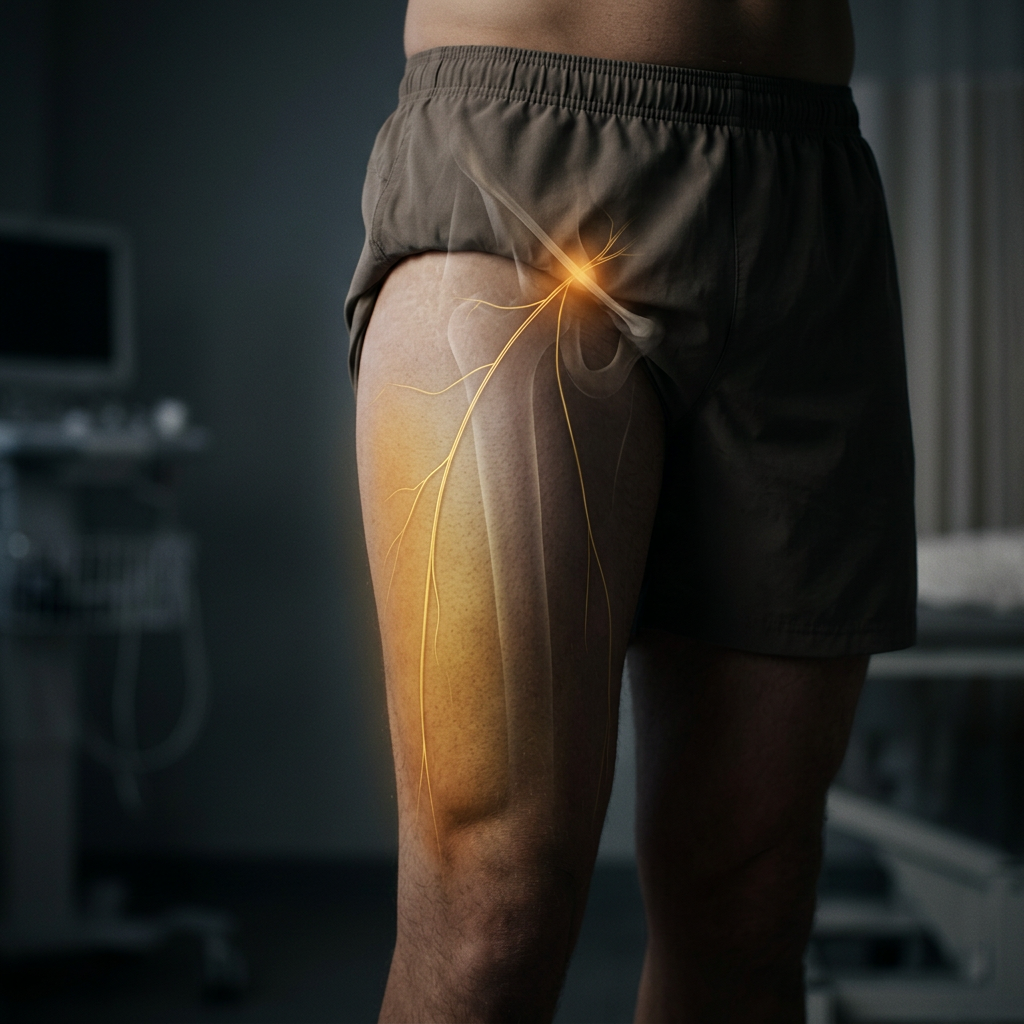
Also known as: Lateral Femoral Cutaneous Nerve Entrapment, Bernhardt-Roth Syndrome Meralgia paresthetica is a condition most people have never heard of until it happens to them — and then they describe it so specifically that the diagnosis becomes almost obvious. The lateral femoral cutaneous nerve (LFCN) is a purely sensory nerve that supplies feeling to the outer thigh. When it gets compressed under the inguinal ligament near the front of the hip, it produces a distinctive burning, tingling, or prickling on the outer thigh with no muscle weakness whatsoever — because this nerve has no motor function. Most cases resolve fully with conservative care once the source of compression is identified.
You'll describe burning, numbness, or hypersensitivity on the outer (anterolateral) thigh — often just on one side. Light touch from clothing or your own hand can feel irritating or strangely unpleasant. Prolonged standing, walking, tight belts, and skinny jeans make it worse; sitting with the hip flexed tends to ease it. There's no leg weakness and no change in reflexes — a useful distinction from lumbar radiculopathy.
Tight waistbands, heavy tool belts, obesity, pregnancy (especially with a support belt worn too tightly), and rapid weight changes are common contributors. Diabetes, recent abdominal or hip surgery, and postural changes can also compress the nerve. It's sometimes called "skinny jeans syndrome" for its association with tight clothing — a name that obscures that it also affects construction workers in heavy tool belts and pregnant people in ill-fitting support garments. Often the first, simplest intervention — identifying and removing the source of compression — produces meaningful improvement before we've done anything else.
We then mobilize the pelvis and lumbar spine to reduce any contribution from L2-L3 nerve-root or SI dysfunction. Targeted soft-tissue release along the inguinal ligament and anterior hip frees the nerve's entry point. LFCN-specific nerve glides restore neural mobility. Class IV laser often calms the sensitized nerve.
Nutrition counseling supports healthy weight management when relevant. Most cases improve meaningfully within four to eight weeks. We may recommend: diversified adjustments, ART, myofascial release, Class IV laser, corrective exercise, nutrition counseling, ergonomic coaching Seek immediate care if: You develop leg weakness, loss of reflexes, bowel or bladder changes, or pain that extends into the low back with neurological deficits — these suggest a different diagnosis requiring further workup.
How We Can Help
At Gentle Care Chiropractic, we take a multi-disciplinary approach — addressing the root cause of your condition, not just the symptoms.
Chiropractic Adjustments
Precise spinal and joint corrections to restore alignment, relieve nerve pressure, and reduce pain — manual or instrument-assisted based on your needs.
Massage Therapy
Therapeutic massage releases muscle tension, improves circulation to injured tissue, and works synergistically with adjustments for faster recovery.
Physical Rehabilitation
Customized exercise programs strengthen supporting muscles, restore range of motion, and help prevent future flare-ups.
Laser Therapy
Cold laser therapy uses targeted light wavelengths to stimulate cellular healing, reduce inflammation, and relieve deep tissue pain without heat or discomfort.
Electrical Stimulation
E-stim therapy reduces pain and muscle spasm, improves circulation, and supports the healing process — especially effective for acute injuries.
Personalized Care Plan
Every patient is different. We combine these therapies in a plan tailored to your diagnosis, goals, and lifestyle for the best possible outcome.
Ready to Find Relief?
You don't have to live with Meralgia Paresthetica. Our team at Gentle Care Chiropractic is here to help you recover and get back to doing what you love.