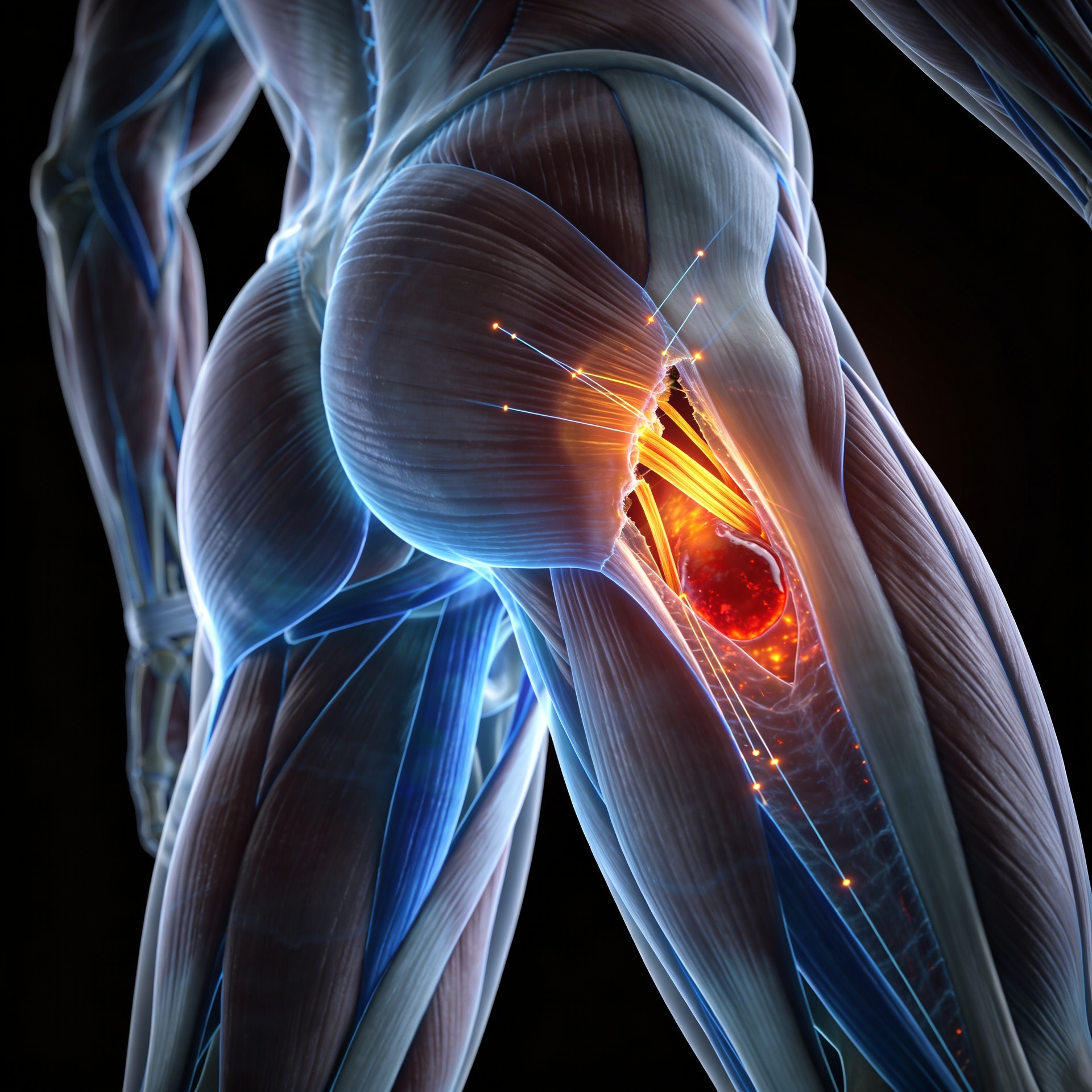

Muscle Strain
Expert care for Muscle Strain at Gentle Care Chiropractic in West Linn, Oregon.
Understanding Muscle Strain
Also known as: Pulled Muscle, Muscle Tear, Grade I/II/III Strain A muscle strain occurs when muscle fibers are forcefully lengthened while contracting, sprinting (hamstring), kicking (quad), a calf push-off, or a cutting move (adductor). The moment is usually unmistakable: a sharp pain in the back of the thigh at full sprint, a pulling sensation in the groin, or a "kick" in the calf when pushing off. Strains are graded I (mild fiber damage), II (partial tear), and III (complete tear). The problem with muscle strains isn't that they're hard to treat, grade I and II heal well with a structured plan.
The problem is their high re-injury rate when athletes return too soon or without proper eccentric strength. Bruising may appear over 24 to 72 hours. Pain is reproducible with stretching and resisted contraction. Severe strains may show a palpable gap.
Prior strain in the same muscle is by far the biggest risk factor for another. Early care follows PEACE & LOVE principles rather than prolonged rest. IASTM and ART guide quality scar tissue formation. Pelvis, hip, and low back adjustments restore symmetrical mechanics.
The graded loading progression (isometric first, then concentric and eccentric, then sport-specific speed and cutting) is critical. Eccentric-focused rehab (Nordic hamstring curls, slow tempo work) dramatically reduces re-injury. Return to sport is criteria-based, not calendar-based. We may recommend: Graston/IASTM, ART, trigger point therapy, diversified adjustments, extremity adjustments, eccentric loading protocol, corrective exercise Seek immediate care if: You felt a pop with sudden severe pain, see a visible gap or deformity in the muscle, or cannot contract the muscle at all: these suggest a grade III tear.
How We Can Help
At Gentle Care Chiropractic, we take a multi-disciplinary approach, addressing the root cause of your condition, not just the symptoms.
Chiropractic Adjustments
Precise spinal and joint corrections to restore alignment, relieve nerve pressure, and reduce pain. Manual or instrument-assisted based on your needs.
Massage Therapy
Therapeutic massage releases muscle tension, improves circulation to injured tissue, and works synergistically with adjustments for faster recovery.
Physical Rehabilitation
Customized exercise programs strengthen supporting muscles, restore range of motion, and help prevent future flare-ups.
Laser Therapy
Cold laser therapy uses targeted light wavelengths to stimulate cellular healing, reduce inflammation, and relieve deep tissue pain without heat or discomfort.
Electrical Stimulation
E-stim therapy reduces pain and muscle spasm, improves circulation, and supports the healing process. Especially effective for acute injuries.
Personalized Care Plan
Every patient is different. We combine these therapies in a plan tailored to your diagnosis, goals, and lifestyle for the best possible outcome.
Frequently Asked Questions
Common questions about Muscle Strain, answered by our team.
How do I know if I have a grade I, II, or III muscle strain without imaging?
The clinical picture gives a good indication. Grade I feels like a pull or tightness but you can continue activity, have no or minimal bruising, and full strength is preserved with some discomfort. Grade II has a more distinct onset, you likely couldn't continue the activity, strength is reduced on resisted testing, and bruising typically develops over 24 to 72 hours. Grade III — a complete tear — produces severe immediate pain, a palpable gap or visible deformity in the muscle belly, and significant loss of function. MRI confirms the extent, but isn't always necessary for grade I and II management.
Why is the re-injury rate for muscle strains so high, and how do I avoid it?
Re-injury rates for hamstring strains range from 15 to 30% in athletes — and sometimes higher in contact sports. The most common reason is returning to full-speed activity before the muscle has regained its tensile strength at end-range, eccentric loading. Pain resolves significantly earlier than strength and tissue quality are restored, creating a false sense of readiness. Criteria-based return to sport — specifically, passing eccentric strength tests at long muscle lengths, like the Nordic hamstring curl — is far more protective than calendar-based return.
Should I ice and rest after a muscle strain, or get moving?
Modern guidance has shifted toward early controlled movement rather than aggressive icing and prolonged rest. The PEACE & LOVE framework recommends protection (avoiding provocative loads) for the first 1 to 3 days, not extended immobilization. Early gentle range-of-motion work and progressive loading as pain allows reduces scar tissue disorganization and speeds return to function. Prolonged icing beyond the first 48 hours may impair the inflammatory phase that initiates repair, and extended rest weakens the healing tissue.
Will I have a permanent weak spot where the muscle tore?
Scar tissue does form at the injury site, and on MRI it can be visible for months or years — even after full, symptom-free return to sport. However, with appropriate eccentric loading during rehabilitation, the scar tissue becomes well-organized and integrated, and the muscle can function at normal strength. The "weak spot" concern is real if rehabilitation was inadequate, but it is not an inevitable outcome of a well-managed strain. Athletes with properly rehabilitated hamstring strains can and do return to prior performance levels.
How long until I can sprint or play sport again after a hamstring or quad strain?
Grade I strains in competitive athletes typically allow return to sprinting in 10 to 21 days with structured care; grade II strains more commonly take 3 to 6 weeks. Research shows mean return-to-sport times of 15 to 86 days across studies depending on grade and sport demands. The more useful benchmark than a calendar is passing a sport-specific functional test — the ability to sprint at 95% or greater of pre-injury pace without pain, asymmetric movement, or apprehension. Returning before that threshold is met is the primary driver of re-injury.
Ready to Find Relief?
You don't have to live with Muscle Strain. Our team at Gentle Care Chiropractic is here to help you recover and get back to doing what you love.