

Neck Pain
Expert care for Neck Pain at Gentle Care Chiropractic in West Linn, Oregon.
Understanding Neck Pain
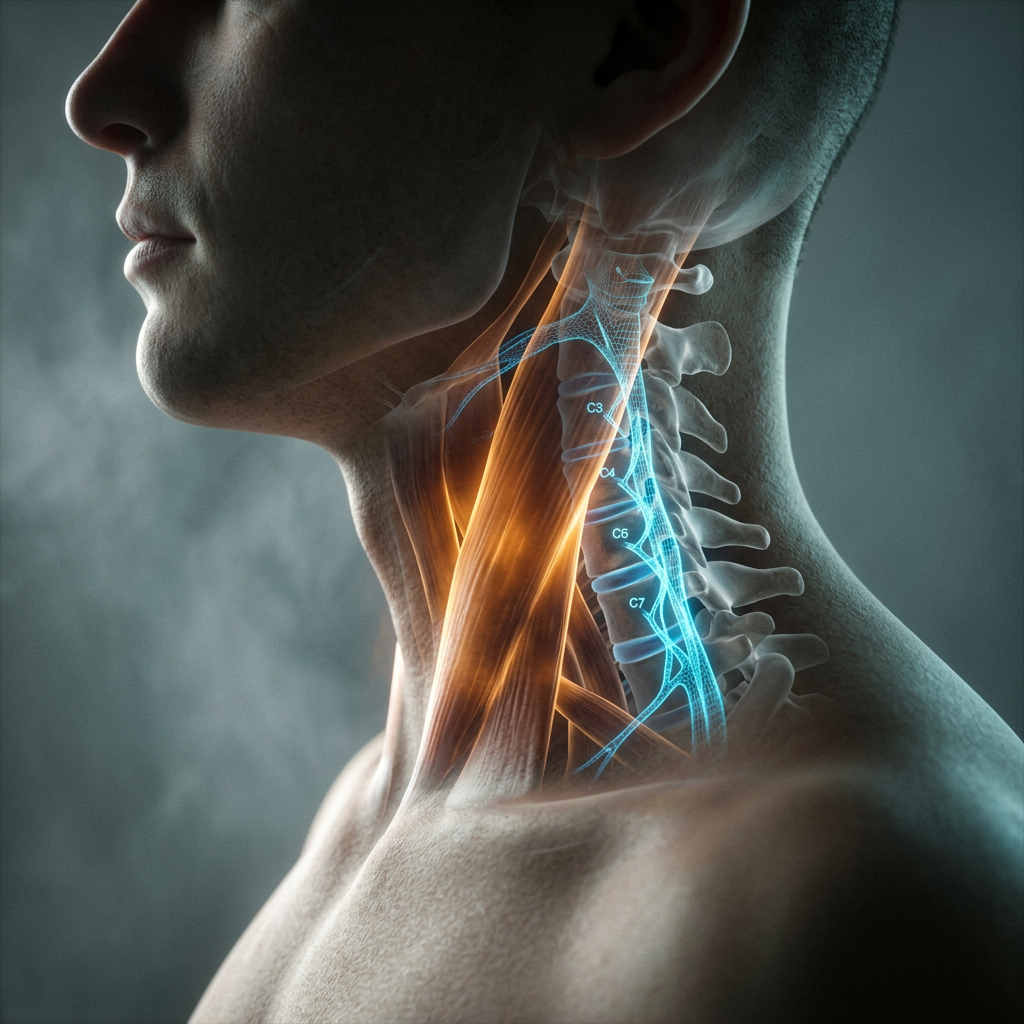
Also known as: Cervicalgia, Stiff Neck, Cervical Strain Here's something I find useful to explain early: your head weighs about ten to twelve pounds, and your cervical spine (seven small vertebrae) holds it up all day, every day, while also allowing it to rotate, flex, and extend in ways that no other part of the spine can. When that system is working well, you don't notice it. When a joint gets stiff, a disc gets compressed, or the surrounding muscles become overloaded, you notice it very much. Most neck pain is "mechanical" (coming from joint stiffness, muscle tension, or postural overload rather than anything structurally sinister) and it responds very well to chiropractic care.
Neck pain typically shows up as a dull ache across the back of the neck and upper shoulders, sharp catches when turning your head, or a deep tightness in the upper trapezius (the muscle that runs from your neck to your shoulder). Rotation and looking upward are often limited, and symptoms tend to worsen after long hours at a computer, driving, or sleeping in an awkward position. Many patients also develop a tension headache that creeps up from the base of the skull. Some notice tingling along the shoulder blade or a clicking sensation when rotating, the clicking is usually harmless, though it's worth evaluating.
The modern lifestyle is the most consistent driver: desk work, prolonged phone use ("text neck"), stress-related clenching, poor pillow support, and previous whiplash injuries all contribute. Deconditioned deep neck flexors (the small muscles at the front of the cervical spine that are supposed to stabilize your head) and rounded shoulders add sustained load to the cervical tissues. The longer these patterns run, the more entrenched they become. We match the technique to what you need.
Traditional cervical adjustments, Activator instrument work, or gentle mobilization restore motion to stiff segments. One thing that often surprises patients: we also adjust the thoracic spine, the mid-back, for neck pain. This is strongly supported by the evidence, the neck and upper back work as a regional unit, and improving thoracic mobility takes a meaningful load off the cervical spine. Soft-tissue work (trigger point therapy, myofascial release, cupping) calms tight traps and scalene muscles.
We teach deep neck flexor training, chin tucks, and workstation ergonomics to keep symptoms from returning. Most patients experience meaningful relief within four to eight visits over three to four weeks. We may recommend: diversified adjustments, Activator, trigger point therapy, myofascial release, cupping, corrective exercise, ergonomic coaching Seek immediate care if: You experience neck pain after significant trauma, a sudden severe "thunderclap" headache, progressive arm weakness, loss of coordination, or symptoms combined with fever and stiffness: these may indicate fracture, vascular injury, or infection requiring urgent care.
How We Can Help
At Gentle Care Chiropractic, we take a multi-disciplinary approach, addressing the root cause of your condition, not just the symptoms.
Chiropractic Adjustments
Precise spinal and joint corrections to restore alignment, relieve nerve pressure, and reduce pain. Manual or instrument-assisted based on your needs.
Massage Therapy
Therapeutic massage releases muscle tension, improves circulation to injured tissue, and works synergistically with adjustments for faster recovery.
Physical Rehabilitation
Customized exercise programs strengthen supporting muscles, restore range of motion, and help prevent future flare-ups.
Laser Therapy
Cold laser therapy uses targeted light wavelengths to stimulate cellular healing, reduce inflammation, and relieve deep tissue pain without heat or discomfort.
Electrical Stimulation
E-stim therapy reduces pain and muscle spasm, improves circulation, and supports the healing process. Especially effective for acute injuries.
Personalized Care Plan
Every patient is different. We combine these therapies in a plan tailored to your diagnosis, goals, and lifestyle for the best possible outcome.
Dealing with this in West Linn, Lake Oswego or Oregon City?
Same-week appointments. PIP and most insurance accepted.
Frequently Asked Questions
Common questions about Neck Pain, answered by our team.
What kind of pillow is best for neck pain?
No single pillow type has been shown to be universally superior in clinical trials — it depends on your sleep position and shoulder width. Side sleepers generally do better with a firmer, thicker pillow that fills the space between ear and shoulder and keeps the cervical spine level. Back sleepers need moderate loft with a contoured support that maintains the natural cervical curve. Stomach sleeping is the most problematic position for the neck because it holds it in prolonged rotation — if you can't break the habit, an extremely thin pillow or no pillow at all is the least-bad option. We can advise on specific options once we've assessed your posture.
Is the clicking sound in my neck dangerous?
Neck clicking or "crepitus" is almost always benign and typically comes from small gas bubbles releasing from within the joint (the same mechanism as knuckle cracking) or from tendons briefly catching over a bony prominence. It becomes worth evaluating when it's accompanied by pain, dizziness, a grinding sensation, or any arm symptoms — those warrant a thorough exam to rule out joint degeneration or instability. Isolated, painless clicking in an otherwise normally moving neck is not a cause for concern and doesn't signal structural damage.
Why does my neck hurt more after sitting at my computer all day but feel fine on weekends?
That pattern is the hallmark of postural overload. When the head drifts forward from the ears — even two to three inches — the effective load on the cervical spine multiplies dramatically, from roughly twelve pounds in neutral to over sixty in a fully forwarded posture. Sustained desk posture also reduces blood flow to the paraspinal muscles and keeps the small cervical facet joints compressed in one position for hours. The weekend improvement reflects unloading, movement variety, and reduced stress — all of which benefit the neck. The fix isn't less computer use; it's improving screen height, chair support, and adding movement breaks every thirty to forty-five minutes.
Can chiropractic care help neck pain that's been there for years?
Yes, and often meaningfully so, even in long-standing cases. Chronic neck pain typically involves a combination of joint stiffness, muscle trigger points, and movement habits that have been reinforced over years — all of which are addressable. The caveat is that very long-standing conditions generally need a longer care course and a committed home exercise component to hold the gains. Patients frequently tell us they'd assumed the stiffness was "just how their neck was now" and are surprised by the improvement they experience. Realistic expectations: most people achieve significant functional improvement; complete resolution of every symptom is less predictable.
My headaches always seem to start at the base of my skull and spread forward. Is that coming from my neck?
Almost certainly. That posterior-to-anterior pattern — starting at the base of the skull or upper neck and spreading toward the eye, temple, or forehead — is the classic referral pattern of cervicogenic headache, which originates in the upper cervical joints and suboccipital muscles rather than in the head itself. It's one of the most satisfying presentations to treat because it typically responds very well to cervical manipulation, suboccipital soft-tissue work, and deep neck flexor strengthening. Many patients who've taken OTC pain relievers for years find that addressing the cervical source reduces their headache frequency dramatically.
Ready to Find Relief?
You don't have to live with Neck Pain. Our team at Gentle Care Chiropractic is here to help you recover and get back to doing what you love.