

Plantar Fasciitis
Expert care for Plantar Fasciitis at Gentle Care Chiropractic in West Linn, Oregon.
Understanding Plantar Fasciitis
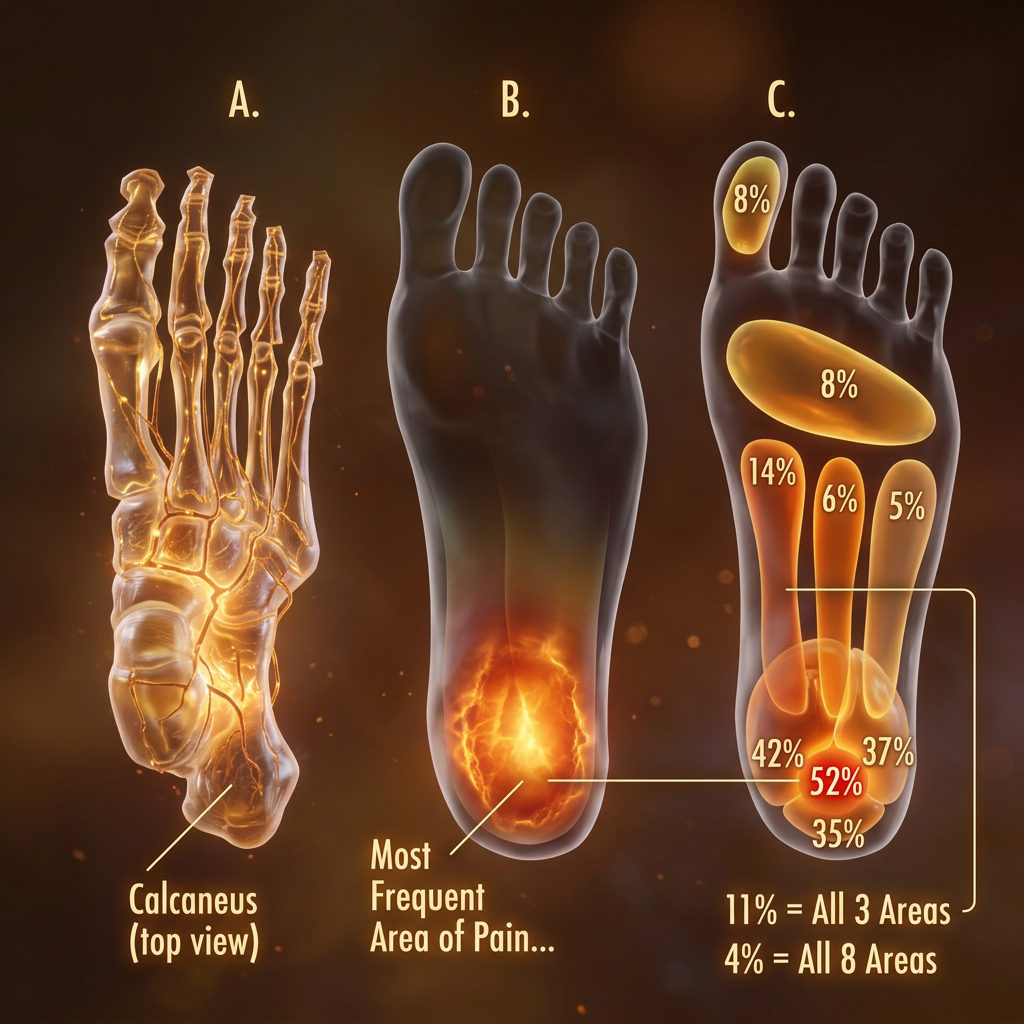
Also known as: Plantar Fasciopathy, Plantar Heel Pain, Policeman's Heel Plantar fasciitis — more accurately plantar fasciopathy — is pain where the plantar fascia, the strong fibrous band along the bottom of your foot, attaches to the heel bone. Repeated loading overwhelms the tissue's capacity to heal, leading to degeneration and pain at the attachment. The classic pattern is unmistakable: stabbing heel pain with the first steps out of bed in the morning, easing as you walk around, then returning late in the day after prolonged time on your feet. It's one of the most common causes of heel pain, and targeted care reliably beats "rest and wait it out.
" Tenderness at the front of the heel bone on the inside of the foot is typical. Sudden increases in standing or walking, tight calves and Achilles, flat feet or high arches, and occupations on hard surfaces all contribute. Runners, warehouse workers, nurses, teachers, and retail workers aged 40 to 60 are the classic population. Our approach combines tissue work, loading, and biomechanical correction.
Graston/IASTM to the plantar fascia and gastrocnemius-soleus complex restores tissue glide. Foot and ankle joint mobilization releases stiff segments. Progressive eccentric calf loading — the Rathleff heel-raise protocol — has strong research support for this condition. Night splints, low-dye taping, and appropriate orthotics offload the fascia.
Shockwave therapy is FDA-cleared for plantar fasciitis and carries strong evidence for stubborn cases. Most patients improve substantially within six to twelve weeks. We may recommend: Graston/IASTM, ART, mobilization, shockwave therapy, eccentric loading protocol, kinesio taping, orthotics, corrective exercise Seek immediate care if: You hear a sudden pop with severe heel pain (possible plantar fascia rupture), or you experience heel pain with fever, redness, warmth, or numbness.
How We Can Help
At Gentle Care Chiropractic, we take a multi-disciplinary approach — addressing the root cause of your condition, not just the symptoms.
Chiropractic Adjustments
Precise spinal and joint corrections to restore alignment, relieve nerve pressure, and reduce pain — manual or instrument-assisted based on your needs.
Massage Therapy
Therapeutic massage releases muscle tension, improves circulation to injured tissue, and works synergistically with adjustments for faster recovery.
Physical Rehabilitation
Customized exercise programs strengthen supporting muscles, restore range of motion, and help prevent future flare-ups.
Laser Therapy
Cold laser therapy uses targeted light wavelengths to stimulate cellular healing, reduce inflammation, and relieve deep tissue pain without heat or discomfort.
Electrical Stimulation
E-stim therapy reduces pain and muscle spasm, improves circulation, and supports the healing process — especially effective for acute injuries.
Personalized Care Plan
Every patient is different. We combine these therapies in a plan tailored to your diagnosis, goals, and lifestyle for the best possible outcome.
Ready to Find Relief?
You don't have to live with Plantar Fasciitis. Our team at Gentle Care Chiropractic is here to help you recover and get back to doing what you love.