

Sacroiliac (SI) Joint Dysfunction
Expert care for Sacroiliac (SI) Joint Dysfunction at Gentle Care Chiropractic in West Linn, Oregon.
Understanding Sacroiliac (SI) Joint Dysfunction
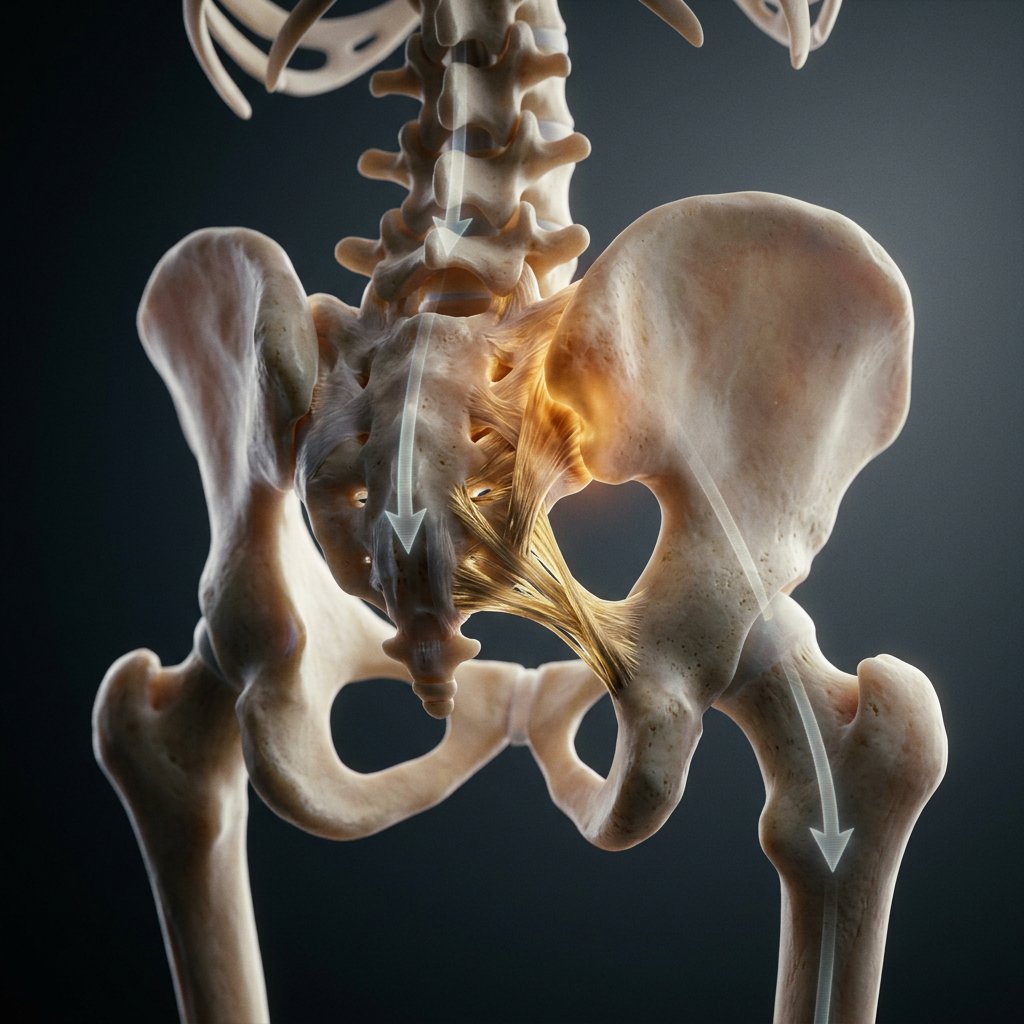
Also known as: SI Joint Pain, SIJ Dysfunction, Sacroiliitis (inflammatory subtype) The sacroiliac joints (the two large joints where the sacrum (base of the spine) meets the pelvis) are among the most underappreciated sources of low back and pelvic pain. Each joint transmits enormous load between the trunk and legs, has limited motion (a few degrees at most), and is stabilized by some of the strongest ligaments in the body. When one side moves too much, too little, or becomes inflamed, it produces a localized pelvic pain pattern that is often mistaken for lumbar disc disease or hip pathology. Research estimates the SI joint accounts for up to 25% of chronic low back pain, a number that's surprisingly high given how infrequently it's diagnosed in primary care settings.
The classic location is a single spot just below and inside the dimple of the pelvis, over the posterior superior iliac spine (PSIS). Patients often point to it precisely, which is itself a useful diagnostic clue. Pain worsens with transitional movements: rolling in bed, getting out of a car, climbing stairs, standing on one leg. Referred pain into the buttock, groin, or upper thigh is common.
Long drives, pregnancy-related loading, and asymmetric activities like running on a cambered road reliably aggravate the joint. Pregnancy-related ligamentous laxity, leg length discrepancy, prior lumbar fusion (which transfers load to the SI joint above), falls onto the buttock, and repetitive single-leg loading are the leading causes. Hip and lumbar dysfunction above and below can load the SI joint asymmetrically. Core and gluteal weakness removes the dynamic support the joint depends on.
Specific SI adjustments (side-posture diversified, Gonstead, drop-table, or pelvic blocking) restore proper joint motion. We address soft-tissue contributors with glute medius, piriformis, and quadratus lumborum release using ART and myofascial work. Rehabilitation focuses on glute activation (clamshells, bridges, single-leg work), core stabilization, and hip mobility. A supportive SI belt can help during pregnancy or acute flares.
Class IV laser helps inflammation settle. Most SI cases improve significantly within four to eight visits. We screen for inflammatory sacroiliitis (a condition like ankylosing spondylitis that produces similar symptoms but requires rheumatologic management) and refer when the clinical picture suggests it. We may recommend: diversified adjustments, Gonstead, myofascial release, ART, corrective exercise, Class IV laser, posture program Seek immediate care if: You develop progressive neurological symptoms, fever with back pain, severe pain following significant trauma, or bowel/bladder changes: these require urgent medical evaluation.
How We Can Help
At Gentle Care Chiropractic, we take a multi-disciplinary approach, addressing the root cause of your condition, not just the symptoms.
Chiropractic Adjustments
Precise spinal and joint corrections to restore alignment, relieve nerve pressure, and reduce pain. Manual or instrument-assisted based on your needs.
Massage Therapy
Therapeutic massage releases muscle tension, improves circulation to injured tissue, and works synergistically with adjustments for faster recovery.
Physical Rehabilitation
Customized exercise programs strengthen supporting muscles, restore range of motion, and help prevent future flare-ups.
Laser Therapy
Cold laser therapy uses targeted light wavelengths to stimulate cellular healing, reduce inflammation, and relieve deep tissue pain without heat or discomfort.
Electrical Stimulation
E-stim therapy reduces pain and muscle spasm, improves circulation, and supports the healing process. Especially effective for acute injuries.
Personalized Care Plan
Every patient is different. We combine these therapies in a plan tailored to your diagnosis, goals, and lifestyle for the best possible outcome.
Frequently Asked Questions
Common questions about Sacroiliac (SI) Joint Dysfunction, answered by our team.
How do I know my pain is actually coming from the SI joint rather than my lumbar spine or hip?
Location and behavior are the best initial clues. SI joint pain is characteristically a single, specific point just medial to the PSIS (the dimple on the back of the pelvis) — patients often point to it with one finger, which itself is a useful diagnostic clue called the "Fortin finger sign." It worsens predictably with one-leg standing, getting out of a car, rolling over in bed, and climbing stairs. Hip pain tends to be groin-dominant with rotation movements. Lumbar pain is typically higher and more diffuse. We use a cluster of provocation tests (FABER, FADIR, thigh thrust, compression) — three or more positive tests together are strongly predictive of SI joint involvement.
Can the SI joint cause pain down the leg, or is that always a spine issue?
It can — SI joint pain frequently refers into the buttock, posterior thigh, and groin, and sometimes as far as the knee. What distinguishes it from lumbar nerve-root pain (sciatica) is the absence of the nerve-following stripe pattern and the typically absent neurological findings: reflexes, strength, and sensation are normal with pure SI joint dysfunction. The referred pain from the SI joint tends to be more diffuse and less sharp or electric than radicular pain. When we see leg pain combined with SI tenderness and positive provocation tests but normal neurological exam, the SI joint is the far more likely source.
I developed SI joint pain during pregnancy. Is it safe to treat, and will it resolve after delivery?
Chiropractic care for pregnancy-related SI joint pain is both safe and effective, and it's one of the conditions we treat most frequently during pregnancy. Pregnancy hormones (particularly relaxin) increase ligamentous laxity in the pelvis, and the shift in center of gravity with a growing belly alters load on the SI joint significantly. We use modified positioning and gentle techniques appropriate for each trimester. Most pregnancy-related SI joint pain does improve significantly after delivery as relaxin levels normalize — but it can persist in the postpartum period, particularly if the birth involved prolonged pushing or a difficult labor, and responds well to treatment then as well.
My pain is on one side only. Does that make it more likely to be the SI joint?
Yes — unilateral pain below the belt line, localized to one side of the sacral dimple, is actually more characteristic of SI joint dysfunction than lumbar disc or muscle sources, which tend to be more central or bilateral. The SI joint transmits load asymmetrically between the two halves of the pelvis, and disruption of that symmetric transfer — from leg length difference, hip asymmetry, or a one-sided activity like running on a cambered road — tends to overload one joint while the other remains symptom-free. Bilateral SI joint pain exists but is less common and sometimes associated with inflammatory conditions like ankylosing spondylitis.
Should I use an SI belt, and will it weaken my muscles if I wear it too much?
An SI belt can be genuinely helpful during acute flares or pregnancy by providing external compression that substitutes for the ligamentous stability the joint currently lacks. It's not a long-term crutch — think of it as a temporary scaffold while the active stability program takes hold. The concern about muscle weakening is real but manageable: we recommend using the belt during provocative activities (long walks, standing for extended periods) while doing your glute and core stabilization exercises without it. This way you're building the dynamic stability that should eventually replace the belt's support, rather than becoming dependent on it.
Ready to Find Relief?
You don't have to live with Sacroiliac (SI) Joint Dysfunction. Our team at Gentle Care Chiropractic is here to help you recover and get back to doing what you love.