

Thoracic (Mid-Back) Pain
Expert care for Thoracic (Mid-Back) Pain at Gentle Care Chiropractic in West Linn, Oregon.
Understanding Thoracic (Mid-Back) Pain
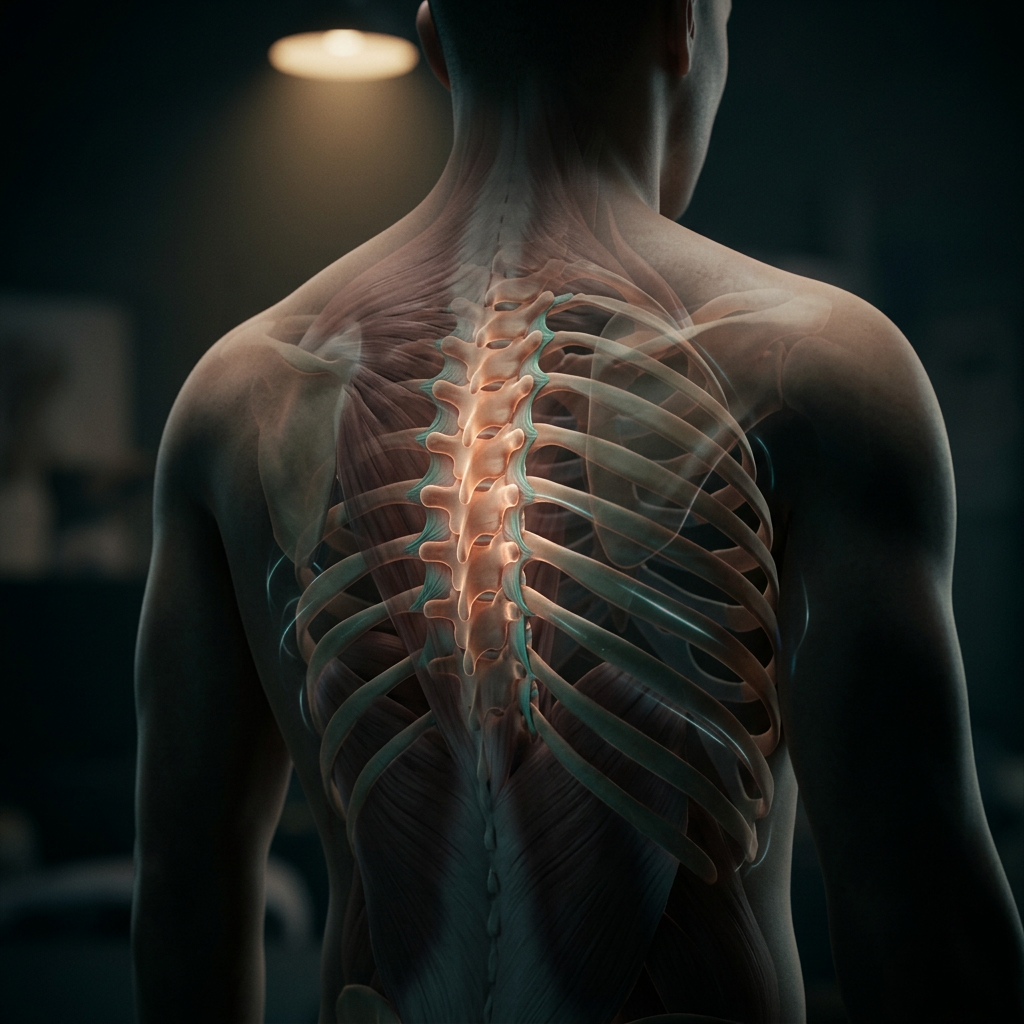
Also known as: Mid-Back Pain, Interscapular Pain, Thoracic Spine Dysfunction The thoracic spine — twelve vertebrae in the mid-back, each attached to a pair of ribs — is built for stability rather than mobility. That architectural choice is what makes it such an effective anchor for breathing and upper-body movement. It also makes stiff, irritated thoracic segments a very common source of pain, because when something in this region locks up, it tends to stay locked up unless you specifically address it. Pain here typically comes from the facet joints, costovertebral joints (where the ribs meet the spine), or the muscles between the shoulder blades.
You may describe a persistent ache or a deep "knot" between the shoulder blades, a sharp catch with rotation or a deep breath, or tightness that worsens after hours at a desk. Some patients feel a burning or band-like sensation wrapping around the ribs. Reaching overhead, carrying a heavy bag, or sleeping on one side may flare it. Many patients press a tennis ball against the sore spot for relief — which tells me exactly where the restricted segment lives before I've even put my hands on the spine.
Rounded-shoulder, head-forward posture from desk work and device use is the dominant driver in the clinic right now. Overhead athletes — swimmers, tennis players — repetitive lifters, and people who carry heavy backpacks are also at high risk. Stress-related shallow breathing (where people breathe primarily into the chest rather than the belly) tightens intercostal and scalene muscles and adds persistent load to the mid-back. Thoracic adjustments are genuinely satisfying — they restore motion quickly, produce that characteristic audible release, and are generally very well-tolerated.
We also use drop-table, Activator, or gentle mobilization when a high-velocity thrust isn't appropriate. Soft-tissue work with Graston/IASTM, trigger point therapy, and cupping addresses rhomboid, trapezius, and rotator cuff tension. Class IV laser can speed recovery for inflamed tissues. We prescribe scapular strengthening, thoracic extension drills, and breathing retraining to restore healthy posture and prevent recurrence.
Most mid-back cases respond within two to four weeks — though we always rule out visceral causes (heart, lungs, gallbladder, aorta) before treating, because mid-back pain has an important differential diagnosis. We may recommend: diversified adjustments, Graston/IASTM, trigger point therapy, cupping, Class IV laser, corrective exercise, posture program Seek immediate care if: Your mid-back pain is associated with chest pain, shortness of breath, pain radiating to the jaw or arm, tearing back pain, fever, or unexplained weight loss — these require emergency evaluation to rule out cardiac, pulmonary, or aortic conditions.
How We Can Help
At Gentle Care Chiropractic, we take a multi-disciplinary approach — addressing the root cause of your condition, not just the symptoms.
Chiropractic Adjustments
Precise spinal and joint corrections to restore alignment, relieve nerve pressure, and reduce pain — manual or instrument-assisted based on your needs.
Massage Therapy
Therapeutic massage releases muscle tension, improves circulation to injured tissue, and works synergistically with adjustments for faster recovery.
Physical Rehabilitation
Customized exercise programs strengthen supporting muscles, restore range of motion, and help prevent future flare-ups.
Laser Therapy
Cold laser therapy uses targeted light wavelengths to stimulate cellular healing, reduce inflammation, and relieve deep tissue pain without heat or discomfort.
Electrical Stimulation
E-stim therapy reduces pain and muscle spasm, improves circulation, and supports the healing process — especially effective for acute injuries.
Personalized Care Plan
Every patient is different. We combine these therapies in a plan tailored to your diagnosis, goals, and lifestyle for the best possible outcome.
Ready to Find Relief?
You don't have to live with Thoracic (Mid-Back) Pain. Our team at Gentle Care Chiropractic is here to help you recover and get back to doing what you love.