

Thoracic Outlet Syndrome
Expert care for Thoracic Outlet Syndrome at Gentle Care Chiropractic in West Linn, Oregon.
Understanding Thoracic Outlet Syndrome
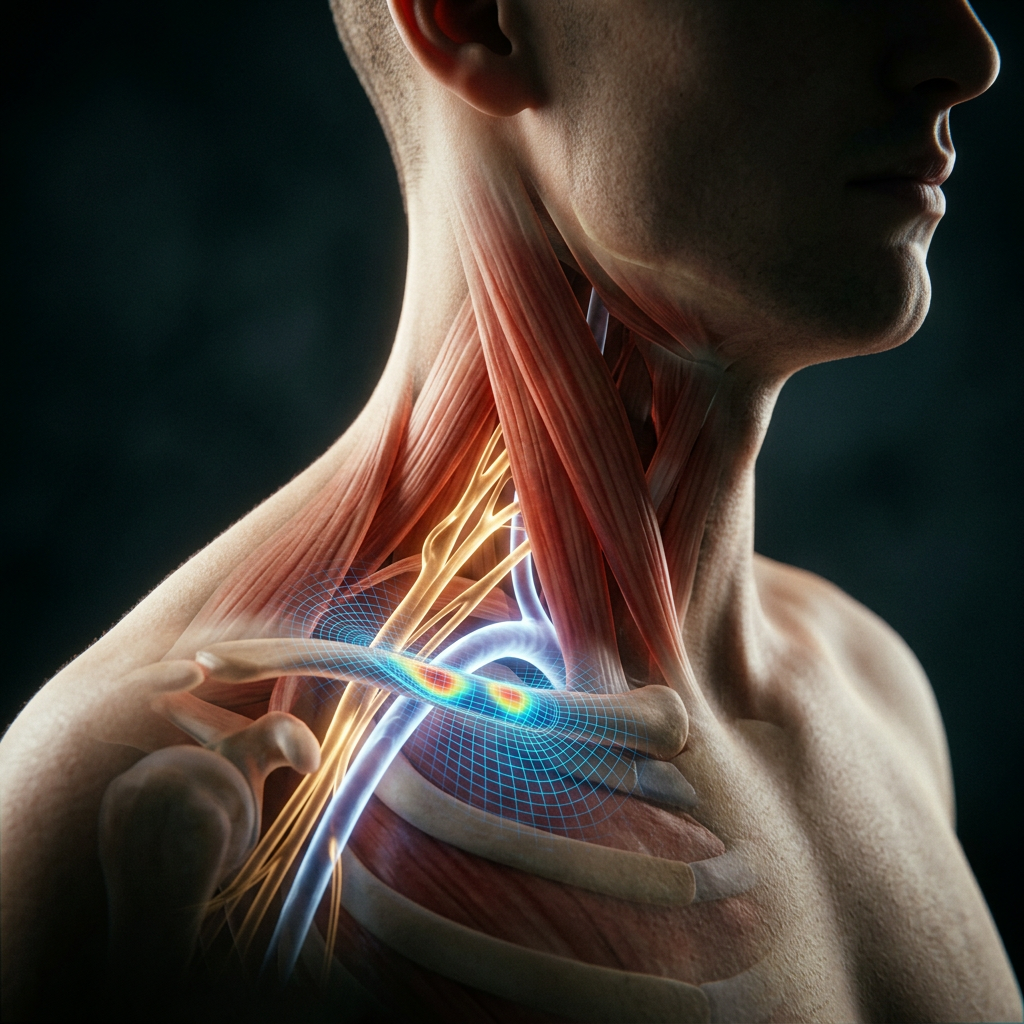
Also known as: TOS, Neurovascular Compression of the Upper Extremity Thoracic outlet syndrome is compression of the nerves or blood vessels that pass between your neck and arm, through a space bordered by the scalene muscles (which run from the cervical spine to the first rib), the first rib, the clavicle, and the pec minor muscle. Neurogenic TOS, involving the brachial plexus (the bundle of nerves supplying the arm), is the most common form. Vascular TOS, involving the subclavian artery or vein, is less frequent but more serious. TOS is one of the most commonly misdiagnosed conditions in the upper extremity, it closely mimics cervical radiculopathy, carpal tunnel syndrome, and rotator cuff pathology, which is why we screen for it systematically in anyone with upper extremity symptoms.
You may describe arm heaviness or fatigue after overhead activity, tingling along the ulnar (pinky) side of the hand, and a dull ache across the shoulder and into the chest. Sleeping with arms overhead, carrying a heavy bag, or working above shoulder height often flares symptoms. Provocative tests (Adson's, Wright's, and the Roos test (holding the arms up in a "stick-up" position for 90 seconds)) typically reproduce the pattern. Forward-head and rounded-shoulder posture shortens the scalenes and pec minor, closing down the thoracic outlet.
Previous whiplash, a cervical rib (a bony anomaly), repetitive overhead work, and hypertrophied neck muscles all raise risk. Pregnancy-related postural changes can also contribute. We open the outlet from multiple angles. First-rib mobilization restores motion to this key structural gate.
Cervical and thoracic adjustments correct the postural patterns that narrow the space. Targeted release of the anterior and middle scalenes, pec minor, and subclavius muscles using ART, myofascial release, and instrument-assisted work relieves soft-tissue compression. Brachial plexus and ulnar nerve glides restore neural mobility. Scapular retraction, deep neck flexor activation, and postural retraining rebuild the structural support.
Most neurogenic TOS improves within eight to twelve weeks. Vascular TOS (with arm swelling, color change, or absent pulse) requires vascular-surgery co-management. We may recommend: diversified adjustments, ART, myofascial release, Graston/IASTM, corrective exercise, Class IV laser, posture program Seek immediate care if: You develop sudden arm swelling, significant color change (pale or blue), coolness, loss of pulse, or severe pain: these can indicate vascular TOS requiring urgent evaluation.
How We Can Help
At Gentle Care Chiropractic, we take a multi-disciplinary approach, addressing the root cause of your condition, not just the symptoms.
Chiropractic Adjustments
Precise spinal and joint corrections to restore alignment, relieve nerve pressure, and reduce pain. Manual or instrument-assisted based on your needs.
Massage Therapy
Therapeutic massage releases muscle tension, improves circulation to injured tissue, and works synergistically with adjustments for faster recovery.
Physical Rehabilitation
Customized exercise programs strengthen supporting muscles, restore range of motion, and help prevent future flare-ups.
Laser Therapy
Cold laser therapy uses targeted light wavelengths to stimulate cellular healing, reduce inflammation, and relieve deep tissue pain without heat or discomfort.
Electrical Stimulation
E-stim therapy reduces pain and muscle spasm, improves circulation, and supports the healing process. Especially effective for acute injuries.
Personalized Care Plan
Every patient is different. We combine these therapies in a plan tailored to your diagnosis, goals, and lifestyle for the best possible outcome.
Dealing with this in West Linn, Lake Oswego or Oregon City?
Same-week appointments. PIP and most insurance accepted.
Frequently Asked Questions
Common questions about Thoracic Outlet Syndrome, answered by our team.
How is thoracic outlet syndrome different from carpal tunnel syndrome if both cause hand tingling?
The distribution of symptoms is the most reliable differentiator. Carpal tunnel compresses the median nerve, producing numbness in the thumb, index, middle, and half of the ring finger. Thoracic outlet syndrome (TOS) most commonly compresses the lower trunk of the brachial plexus (C8-T1 nerve roots), producing symptoms along the ulnar side — the pinky, ring finger, and inner forearm. TOS symptoms also tend to worsen with overhead arm positions and carrying bags, while carpal tunnel is most provoked by wrist flexion and nighttime hand positioning. In some patients, both are present simultaneously.
Can poor posture really compress nerves in that area?
Yes — rounded shoulder posture is one of the primary structural drivers of neurogenic TOS. When the shoulders round forward, the pec minor muscle shortens and the space between the clavicle and first rib narrows, compressing the brachial plexus. The scalene muscles in the neck also shorten, further closing the thoracic outlet. Sustained forward-head position amplifies this. The practical implication is that postural correction isn't just helpful — for many patients, it's the core of why TOS developed in the first place and the key to lasting resolution.
Why does my arm feel heavy and fatigued after using it overhead?
This is characteristic of neurogenic TOS. Holding the arm overhead raises it into a position that narrows the thoracic outlet and stretches already-compressed brachial plexus nerve fibers. The result is rapid fatigue, heaviness, and often a reproduction of tingling symptoms — a pattern that's captured in the Roos test (arms held in a "stick-up" position for 90 seconds). Activities like painting ceilings, overhead filing, or holding a phone to the ear are classic symptom triggers for this reason.
Is TOS always a structural problem, or can muscles alone cause it?
In the majority of cases, muscles and soft tissue are the primary culprits — not bone. Tight scalene muscles, a hypertrophied pec minor, and first-rib restrictions account for most neurogenic TOS presentations. Structural causes like a cervical rib (an extra rib at C7, present in about 1% of the population) are less common but worth ruling out with imaging if symptoms don't respond to conservative care. The good news is that the soft-tissue and postural cause is highly treatable without surgery in most patients.
How long does it realistically take to improve with chiropractic and manual therapy?
Most neurogenic TOS cases improve meaningfully within eight to twelve weeks of consistent care, combining first-rib mobilization, scalene and pec minor release, cervical and thoracic adjustments, brachial plexus nerve glides, and postural retraining. Patients who engage with the home program — particularly scapular retraction and deep neck flexor exercises — tend to improve faster and maintain results better. Vascular TOS (with arm swelling, color changes, or pulselessness) is a different scenario and requires vascular-surgery co-management alongside conservative care.
Ready to Find Relief?
You don't have to live with Thoracic Outlet Syndrome. Our team at Gentle Care Chiropractic is here to help you recover and get back to doing what you love.