

Wrist Pain / TFCC Injury
Expert care for Wrist Pain / TFCC Injury at Gentle Care Chiropractic in West Linn, Oregon.
Understanding Wrist Pain / TFCC Injury
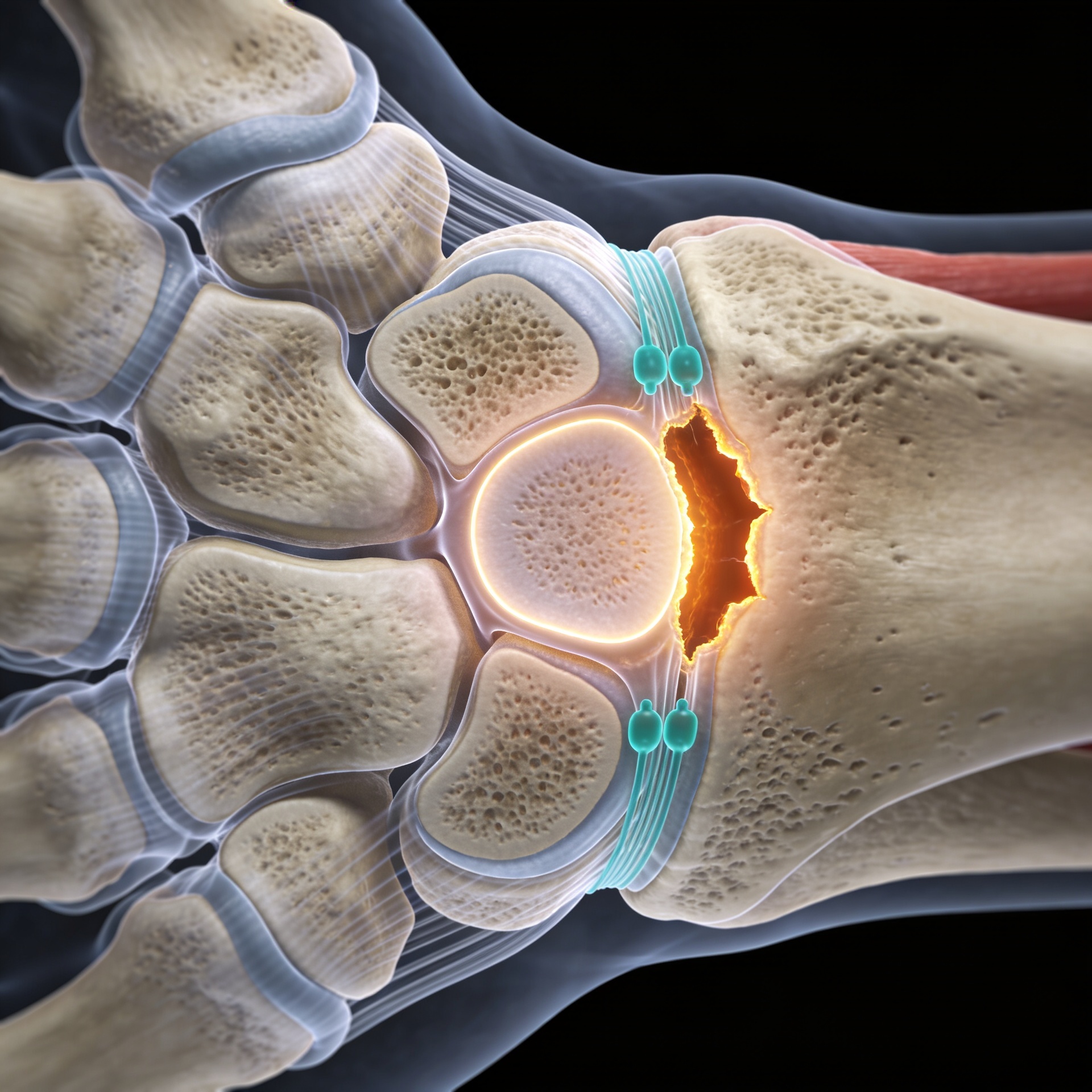
Also known as: Triangular Fibrocartilage Complex Injury, Ulnar-Sided Wrist Pain The triangular fibrocartilage complex (TFCC) is a small but critical structure on the pinky side of your wrist, a disc of cartilage and associated ligaments that cushions the joint, stabilizes the forearm bones where they meet the wrist, and allows smooth rotation. Because it's both small and load-bearing, it's vulnerable to injury from falls, forceful twists, and repetitive rotation under load. TFCC injuries are one of the more frequently missed diagnoses in wrist pain, partly because the structure doesn't show reliably on plain X-rays. Sharp aching on the pinky side of the wrist with rotation, clicking or catching when turning a doorknob or pouring a pitcher, and weakness with gripping are characteristic.
Push-ups, yoga poses, and racquet sports often flare symptoms. Many patients describe a feeling that the wrist "can't trust itself" under load. A fall on an outstretched hand, racquet and stick sports, gymnastics, and repetitive forceful rotation are common triggers. We assess whether pain is primarily cartilage-driven, ligamentous, or joint-surface related.
Gentle carpal and distal radioulnar joint (DRUJ, the joint where the forearm bones meet at the wrist) mobilization restores accessory motion. IASTM addresses restricted soft tissue. Wrist taping offloads the TFCC during healing while we guide progressive wrist and grip strengthening. Class IV laser supports tissue recovery.
Most TFCC irritations respond to six to twelve weeks of structured care. When mechanism or exam suggests fracture, significant ligamentous injury, or instability, we arrange imaging and orthopedic referral promptly. We may recommend: extremity adjustments, mobilization, Graston/IASTM, kinesio taping, Class IV laser, corrective exercise, ergonomic coaching Seek immediate care if: You have significant swelling and deformity after a fall, inability to bear weight or grip, or numbness in the hand.
How We Can Help
At Gentle Care Chiropractic, we take a multi-disciplinary approach, addressing the root cause of your condition, not just the symptoms.
Chiropractic Adjustments
Precise spinal and joint corrections to restore alignment, relieve nerve pressure, and reduce pain. Manual or instrument-assisted based on your needs.
Massage Therapy
Therapeutic massage releases muscle tension, improves circulation to injured tissue, and works synergistically with adjustments for faster recovery.
Physical Rehabilitation
Customized exercise programs strengthen supporting muscles, restore range of motion, and help prevent future flare-ups.
Laser Therapy
Cold laser therapy uses targeted light wavelengths to stimulate cellular healing, reduce inflammation, and relieve deep tissue pain without heat or discomfort.
Electrical Stimulation
E-stim therapy reduces pain and muscle spasm, improves circulation, and supports the healing process. Especially effective for acute injuries.
Personalized Care Plan
Every patient is different. We combine these therapies in a plan tailored to your diagnosis, goals, and lifestyle for the best possible outcome.
Frequently Asked Questions
Common questions about Wrist Pain / TFCC Injury, answered by our team.
How do I know if my ulnar-side wrist pain is a TFCC injury versus something else like a sprain or arthritis?
TFCC injury has a fairly specific signature: pain on the pinky side of the wrist that worsens with rotation (turning a doorknob, wringing a towel), clicking or catching with forearm rotation, and a feeling of instability or "giving way" under load. A sprain tends to follow a clear trauma and localizes differently; arthritis produces more diffuse aching that's worse after prolonged use rather than with rotation specifically. Clinical tests — particularly the ulnar fovea sign and the grind test — help differentiate, though MRI (or MR arthrography for higher accuracy) is the definitive imaging tool when the diagnosis is uncertain.
Do TFCC injuries always need surgery, or can they heal with conservative care?
Most partial or low-grade TFCC injuries respond well to conservative care — typically six to twelve weeks of structured treatment that includes wrist taping or splinting to offload the complex, manual mobilization of the distal radioulnar joint, and progressive grip and wrist strengthening. The TFCC has limited blood supply (similar to other cartilaginous structures), so healing is slower than a muscle strain, but meaningful recovery is realistic without surgery for many patients. Surgery becomes the conversation when there is confirmed instability of the distal radioulnar joint, a complete peripheral tear that won't respond to conservative care, or symptoms that plateau beyond three months of genuine effort.
I fell on an outstretched hand and now have ulnar wrist pain. When should I worry that something is broken rather than just a soft-tissue injury?
Wrist fractures — particularly the distal radius, ulnar styloid, or a small bone called the triquetrum — can mimic soft-tissue TFCC injuries with ulnar-side pain and swelling. Significant bruising, point tenderness directly over a bone, pain that makes weight-bearing or gripping essentially impossible, or deformity are the warning signs that warrant same-day imaging. Plain X-rays rule out most fractures; however, some small styloid fractures and many TFCC tears don't appear on X-ray, so persistent pain after a normal X-ray is still worth evaluating clinically.
My wrist clicks and catches when I rotate it. Is that causing damage every time it happens?
Not necessarily. Clicking with rotation is very common in TFCC problems and usually represents the disc or surrounding ligaments catching momentarily as the joint moves. If the click is painless and the wrist is stable under load, it may be a positional anomaly rather than progressive damage. If the click is painful, reproduces your symptoms, or is accompanied by that giving-way sensation, it's a sign the joint isn't tracking normally and needs to be addressed. The key question is whether the wrist is functionally stable — that's what determines the clinical path forward.
Can activities like yoga, push-ups, or rock climbing make a TFCC injury worse?
Yes — those are among the highest-demand positions for the TFCC because they load the wrist in extension with full body weight or high grip force, compressing and shearing the ulnar side of the joint. During acute or early recovery phases, these activities typically need to be modified significantly: push-up handles or fists reduce the extension load; yoga blocks can adjust hand positions. The goal isn't permanent avoidance but controlled reintroduction as the TFCC and surrounding stabilizers build tolerance. Most patients can return to these activities fully, it just needs to be earned progressively.
Ready to Find Relief?
You don't have to live with Wrist Pain / TFCC Injury. Our team at Gentle Care Chiropractic is here to help you recover and get back to doing what you love.