
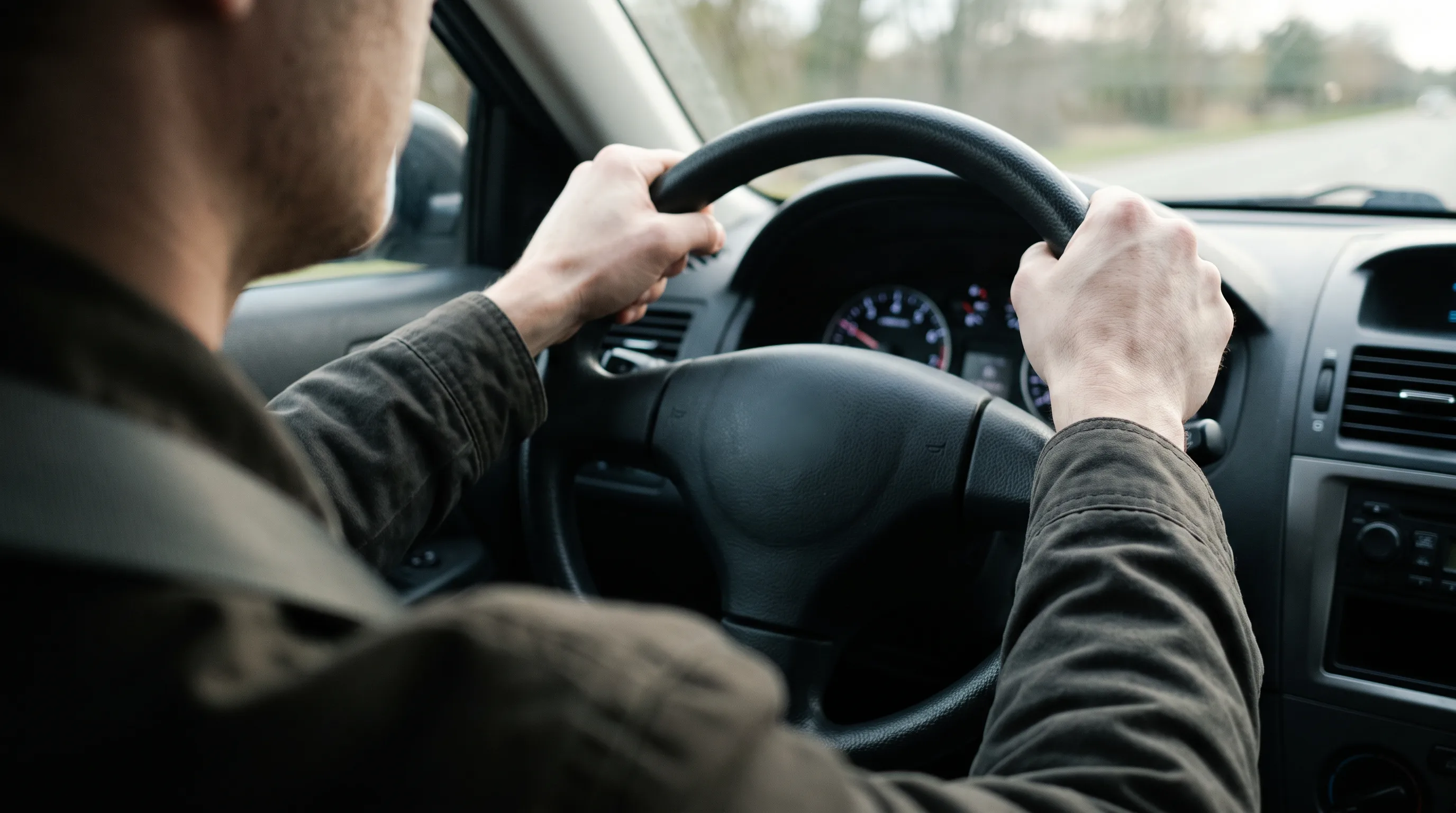
Most people who come to see me after a car accident are focused on their neck and back. That makes sense. Whiplash is what the insurance adjuster asks about, and the spine tends to dominate the conversation. But some of the most overlooked and functionally limiting injuries I treat are in the shoulder. If you were bracing the steering wheel, had your arm raised at impact, or were restrained by a seatbelt across your chest, a shoulder injury car accident presentation is more common than most patients realize.
The shoulder is a ball-and-socket joint with tremendous range of motion and a complex network of tendons, ligaments, and soft tissue structures that make that mobility possible. During a collision, several of those structures can be strained, torn, or destabilized in ways that do not always show up on a standard X-ray. This post covers the three injury patterns I see most often in MVA patients: labral tears, rotator cuff strains and tears, and acromioclavicular (AC) joint sprains.
Why Shoulder Injuries After a Car Accident Are Frequently Missed
Shoulder injuries in car accidents often play second fiddle to the cervical spine in the early clinical picture. In the first few days after a collision, neck pain, headaches, and general body aching can overshadow a shoulder that is sore but still functional. Many patients assume the shoulder pain is just part of the general soreness and will resolve on its own.
It sometimes does. But when it does not, and a patient arrives in my office four to six weeks post-accident still unable to reach overhead or sleep comfortably on their side, I frequently find that the shoulder was injured at the time of impact and simply was not evaluated thoroughly.
A second reason these injuries are missed is imaging. Standard X-rays show bone, not soft tissue. A rotator cuff tear, a labral lesion, or an AC joint ligament sprain will not appear on a plain film. If a patient was cleared by X-ray in the emergency department and told their shoulder was fine, that only tells part of the story. An MRI is the appropriate study when clinical findings suggest a soft tissue injury, and I do not hesitate to refer patients for advanced imaging when examination findings warrant it.
The Three Most Common MVA Shoulder Injury Patterns
Rotator Cuff Strains and Tears
The rotator cuff is a group of four muscles and their tendons that stabilize the ball of the humerus within the shoulder socket. During a collision, a bracing mechanism or a sudden traction force on the arm can strain or tear these tendons, most commonly the supraspinatus.
Clinically, patients present with pain that worsens with overhead reaching, weakness when lifting the arm to the side, and often a distinct arc of pain between 60 and 120 degrees of shoulder elevation. A partial thickness tear may respond well to conservative care: chiropractic treatment, functional rehabilitation, and soft tissue therapy over 8 to 12 weeks. A full thickness tear with significant functional loss typically warrants an orthopedic surgery consultation, and I make that referral early.
Labral Injuries
The labrum is a ring of fibrocartilage that deepens the shoulder socket and serves as an anchor point for several key ligaments. In an MVA, the labrum can be injured when the humeral head is driven into or away from the socket, or when the arm is forced into an extreme position at impact.
SLAP tears (Superior Labrum from Anterior to Posterior) are the most common labral injury in this context. Patients often describe a deep ache inside the shoulder, clicking or catching with movement, and instability during overhead or throwing motions. These symptoms can be subtle early on and become more pronounced as inflammation subsides and the underlying mechanical problem becomes clearer.
Labral repairs sometimes require surgical intervention, but many patients with partial or minor labral lesions do well with a conservative approach that emphasizes shoulder stability training and guided manual therapy. I work closely with the patient’s orthopedic specialist when imaging reveals a significant labral injury.
AC Joint Sprains
The acromioclavicular joint sits at the top of the shoulder where the clavicle meets the acromion. It is stabilized by a small set of ligaments that are directly vulnerable to compression and shearing forces during a collision. A direct blow to the shoulder, contact with the door panel or seatbelt, or a forceful arm extension at impact can sprain or disrupt these ligaments.
Patients with AC joint injuries have localized pain and tenderness directly at the top of the shoulder, often with a visible step deformity in moderate to severe cases. Low-grade sprains respond well to conservative care. Higher-grade separations may require surgical evaluation.
What Chiropractic Care Provides for Shoulder Injury Car Accident Patients
As a shoulder injury car accident chiropractor, my role is to assess the full musculoskeletal picture, coordinate appropriate imaging and referrals, and deliver the conservative care that is often the appropriate first step.
For most post-MVA shoulder injuries, that means a combination of joint mobilization to restore proper shoulder mechanics, targeted soft tissue therapy for the surrounding musculature, and a staged rehabilitation program that rebuilds strength and coordination without aggravating the injured structures.
Cervical and thoracic spine dysfunction frequently accompanies shoulder complaints in accident patients, and addressing both simultaneously produces better outcomes than treating the shoulder in isolation. In our West Linn clinic, we assess the entire kinetic chain because a stiff thoracic spine or an irritated cervical nerve root can slow shoulder recovery significantly.
Documentation is also a central part of what we provide. If you are navigating a personal injury claim or working with an attorney, your chiropractic records need to establish the mechanism of injury, the objective clinical findings, the functional limitations, and the treatment rationale. I take that documentation responsibility seriously at every visit.
Oregon PIP Coverage and Your Shoulder Injury
Oregon’s personal injury protection (PIP) insurance system requires your own auto insurance policy to provide at least $15,000 in medical coverage, regardless of who was at fault in the accident. Chiropractic care for MVA shoulder injuries is a covered PIP benefit. If you have not yet filed a PIP claim, I encourage you to do so and to notify your insurer promptly, as Oregon has deadlines for PIP notifications.
For questions about how your claim is structured or whether you should consult a personal injury attorney, I always recommend speaking with a licensed Oregon PI attorney. Our role is clinical care and documentation. Helping patients understand their coverage options is something we can discuss at your visit.
Realistic Recovery Timelines
Recovery from a shoulder injury car accident depends heavily on what is injured and how severely. A mild rotator cuff strain with no structural tear may resolve well within six to ten weeks of active care. An AC joint sprain at a low grade typically follows a similar timeline. More significant injuries, including confirmed partial tears or labral lesions, often require three to six months of conservative care before a clear picture emerges, and some patients ultimately require surgical consultation at that point.
Milestones I use with patients include: return to pain-free sleep on the affected side (often the first to improve), full restoration of overhead reach, return to driving without discomfort, and return to full work duties, particularly for patients with physically demanding jobs. We track these explicitly because functional restoration is the goal, not just pain reduction.
Frequently Asked Questions
Can a car accident cause a rotator cuff tear even if I had no immediate shoulder pain? Yes. Partial rotator cuff tears in particular can produce delayed or position-dependent pain that becomes more noticeable as swelling from the initial trauma resolves. If your shoulder begins hurting days to weeks after an accident, it is worth having it evaluated. The absence of immediate pain does not rule out a structural injury.
Will my PIP insurance cover chiropractic treatment for a shoulder injury? Oregon PIP benefits cover chiropractic care for injuries arising from a car accident, including shoulder injuries. Your policy provides at least $15,000 in coverage regardless of fault. Contact your insurer to open a PIP claim, and our West Linn office can help with the billing and documentation process.
Do I need an MRI to treat my shoulder after a car accident? Not always immediately, but often yes. If clinical examination suggests a structural injury such as a rotator cuff tear or labral lesion, an MRI is the appropriate next step. I will order or refer for imaging when examination findings warrant it. Starting conservative care while imaging is arranged is appropriate in most cases.
How do I know if my shoulder injury needs surgery? Signs that surgery may be warranted include a confirmed full-thickness rotator cuff tear with functional weakness, a significant labral tear with shoulder instability, or a high-grade AC joint separation. I make orthopedic referrals when those patterns emerge on imaging or in clinical examination. Many patients are relieved to learn that surgery is not the first-line recommendation for most MVA shoulder injuries.
Can a chiropractor document my shoulder injury for a personal injury claim? Yes. Chiropractic records documenting the mechanism of injury, clinical findings, functional impairment, and course of treatment are a standard part of a personal injury case file. I create detailed visit notes at every appointment and can prepare narrative reports for attorneys or adjusters when requested. For questions about the legal strategy of your claim, consult a licensed Oregon personal injury attorney.
If you were recently in an accident and are not sure what your next step should be, we are easy to reach. That is what we are here for.
Dr. Tristan Santiago Maceiras is a Doctor of Chiropractic at Gentle Care Chiropractic in West Linn, Oregon, specializing in musculoskeletal medicine, MVA recovery, and personal injury care.
Dealing with this in West Linn, Lake Oswego or Oregon City?
Same-week appointments. PIP and most insurance accepted.