

Costochondritis / Sternocostal Dysfunction post-MVA
Expert care for Costochondritis / Sternocostal Dysfunction post-MVA at Gentle Care Chiropractic in West Linn, Oregon.
Understanding Costochondritis / Sternocostal Dysfunction post-MVA
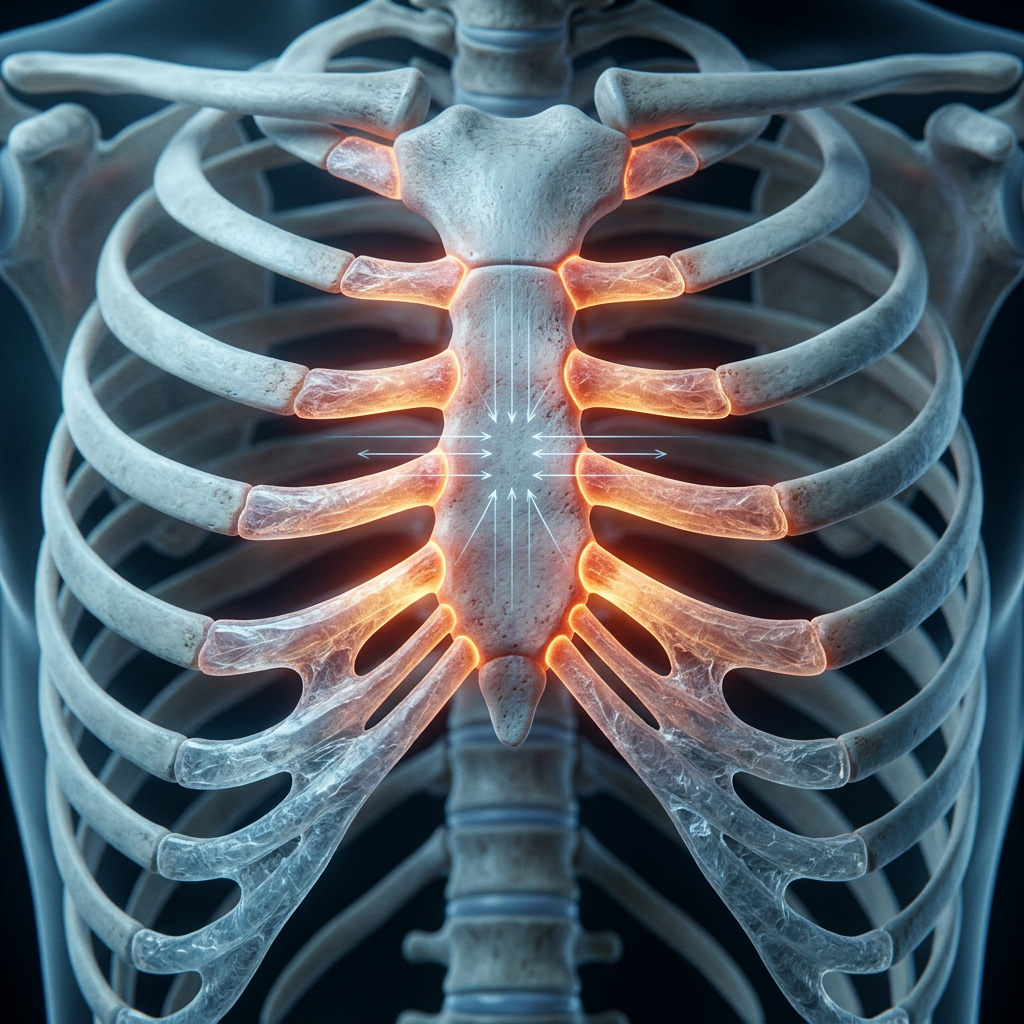
Also known as: Chest Wall Pain, Costosternal Syndrome, Anterior Rib Joint Pain, Seatbelt Chest Pain Costochondritis is inflammation of the costochondral junctions — where your ribs meet the cartilage connecting them to the breastbone (sternum). After an MVA, anterior chest wall injury is common because the seatbelt and airbag concentrate force directly over these joints. The hallmark — and the thing that distinguishes this from cardiac pain — is that the pain is reproducible by pressing along the rib-sternum junctions. Because the pain is in the chest, many patients go to the emergency department first.
That's the right call. Once cardiac causes are cleared, costochondritis becomes the working diagnosis. Sharp, stabbing, or aching pain at the front of the chest worsening with deep breathing, coughing, laughing, or rolling in bed is typical. The seatbelt compresses the anterior chest while the airbag deploys with explosive force, spraining the delicate cartilaginous joints and tearing intercostal and pectoral muscle fibers.
Inflammation typically peaks two to five days after impact. After cardiac and pulmonary clearance (we require ER or PCP clearance when indicated), treatment is gentle and effective: low-force mobilization of the sternocostal and costochondral joints, soft-tissue therapy, diaphragmatic breathing retraining, Class IV laser, and thoracic spine manipulation. Costochondritis from an MVA typically resolves over four to twelve weeks. We may recommend: Activator, myofascial release, trigger point therapy, Class IV laser, low-level laser, PEMF, corrective exercise Seek immediate care if: You have crushing chest pressure, pain radiating to the jaw or left arm, shortness of breath at rest, rapid heartbeat, coughing blood, or fainting — emergency evaluation is required before musculoskeletal care.
How We Can Help
At Gentle Care Chiropractic, we take a multi-disciplinary approach — addressing the root cause of your condition, not just the symptoms.
Chiropractic Adjustments
Precise spinal and joint corrections to restore alignment, relieve nerve pressure, and reduce pain — manual or instrument-assisted based on your needs.
Massage Therapy
Therapeutic massage releases muscle tension, improves circulation to injured tissue, and works synergistically with adjustments for faster recovery.
Physical Rehabilitation
Customized exercise programs strengthen supporting muscles, restore range of motion, and help prevent future flare-ups.
Laser Therapy
Cold laser therapy uses targeted light wavelengths to stimulate cellular healing, reduce inflammation, and relieve deep tissue pain without heat or discomfort.
Electrical Stimulation
E-stim therapy reduces pain and muscle spasm, improves circulation, and supports the healing process — especially effective for acute injuries.
Personalized Care Plan
Every patient is different. We combine these therapies in a plan tailored to your diagnosis, goals, and lifestyle for the best possible outcome.
Ready to Find Relief?
You don't have to live with Costochondritis / Sternocostal Dysfunction post-MVA. Our team at Gentle Care Chiropractic is here to help you recover and get back to doing what you love.