

Post-Traumatic Migraine / Post-Traumatic Headache
Expert care for Post-Traumatic Migraine / Post-Traumatic Headache at Gentle Care Chiropractic in West Linn, Oregon.
Understanding Post-Traumatic Migraine / Post-Traumatic Headache
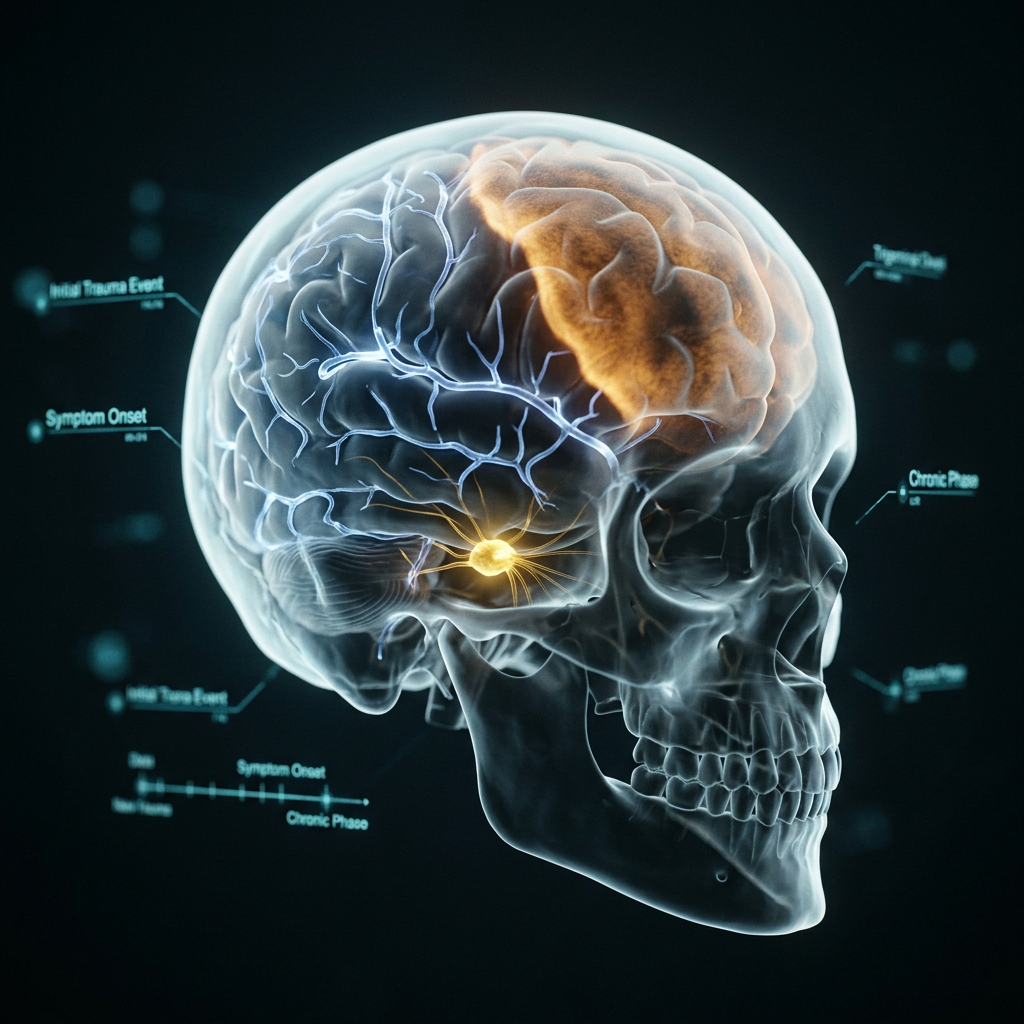
Also known as: PTH, Post-Concussion Headache, Post-MVA Migraine, Post-Accident Headache Post-traumatic headache (PTH) is a headache beginning within seven days of a head or neck injury. It is acute when lasting less than three months, chronic when it persists beyond that. In many patients, an MVA unmasks or significantly worsens a pre-existing migraine tendency through trigeminal sensitization, and under both clinical reasoning and legal standards, that worsening is causally linked to the accident. Untreated neck dysfunction is a major driver of persistent PTH, which is why our role is substantial even in conditions that seem primarily neurological.
PTH can take a migraine-like form (throbbing, photophobia, phonophobia, nausea) or a tension-type form. Neck movement, bright screens, stress, or poor sleep commonly trigger episodes. Patients who began taking rescue medication once or twice often find themselves using it several times a week, which introduces medication-overuse headache, a rebound pattern we monitor deliberately. Our approach is twofold: treat the cervicogenic contribution aggressively (upper cervical manipulation, suboccipital release, deep neck flexor training, and postural correction) because unresolved neck dysfunction perpetuates PTH.
And coordinate closely with neurology for migraine-specific pharmacology and medication overuse monitoring. We address lifestyle contributors and document headache frequency, intensity, and disability with validated tools for your medical record and attorney. We may recommend: diversified adjustments, Activator, cervical traction, myofascial release, trigger point therapy, Class IV laser, low-level laser Seek immediate care if: You have a "worst headache of your life" that peaks suddenly, headache with fever and neck stiffness, new focal neurologic signs, or headache with confusion or seizure: these require emergency evaluation.
How We Can Help
At Gentle Care Chiropractic, we take a multi-disciplinary approach, addressing the root cause of your condition, not just the symptoms.
Chiropractic Adjustments
Precise spinal and joint corrections to restore alignment, relieve nerve pressure, and reduce pain. Manual or instrument-assisted based on your needs.
Massage Therapy
Therapeutic massage releases muscle tension, improves circulation to injured tissue, and works synergistically with adjustments for faster recovery.
Physical Rehabilitation
Customized exercise programs strengthen supporting muscles, restore range of motion, and help prevent future flare-ups.
Laser Therapy
Cold laser therapy uses targeted light wavelengths to stimulate cellular healing, reduce inflammation, and relieve deep tissue pain without heat or discomfort.
Electrical Stimulation
E-stim therapy reduces pain and muscle spasm, improves circulation, and supports the healing process. Especially effective for acute injuries.
Personalized Care Plan
Every patient is different. We combine these therapies in a plan tailored to your diagnosis, goals, and lifestyle for the best possible outcome.
Dealing with this in West Linn, Lake Oswego or Oregon City?
Same-week appointments. PIP and most insurance accepted.
Frequently Asked Questions
Common questions about Post-Traumatic Migraine / Post-Traumatic Headache, answered by our team.
I never had migraines before — why do I have them now after the crash?
An MVA can lower the threshold for migraine through trigeminal sensitization: the crash-related neck injury, brain microtrauma, and pain itself upregulate the trigeminal pain system that drives migraine. This is called "unmasking" a pre-existing susceptibility, and it counts as a crash-caused condition. Many patients who had occasional mild headaches before the accident now meet full migraine criteria afterward.
How is post-traumatic headache different from just a regular headache after an injury?
Post-traumatic headache (PTH) is defined as a headache that begins within seven days of a head or neck injury and may take on different features — some PTH behaves like tension headache (bilateral, pressing), while others develop a migraine-like character (throbbing, unilateral, with light and noise sensitivity). What makes it post-traumatic is the clear causal timeline and the crash as the clinically relevant trigger, even if the headache type wasn't present before.
I've been taking pain relievers almost every day for my headaches — is that a problem?
Yes, and it's worth knowing early. Using pain-relief medication (including over-the-counter options like ibuprofen or acetaminophen) more than ten days per month regularly can produce medication-overuse headache — a rebound cycle that paradoxically increases headache frequency over time. We track this deliberately. Treating the underlying cervicogenic and neurological drivers reduces your need for rescue medication, which is one of the most clinically meaningful improvements we can offer.
What role does the neck play in post-traumatic migraines?
A significant one. Unresolved upper cervical joint injury is a major perpetuating driver of PTH. The upper cervical nerves (C1-C3) share a brainstem relay with the trigeminal nerve, so cervical dysfunction essentially "feeds" into the migraine trigger system. Treating the cervicogenic contribution — through upper cervical manipulation, suboccipital release, and deep neck flexor training — meaningfully reduces migraine burden even when the condition also requires neurological co-management.
When should I see a neurologist in addition to a chiropractor?
Anytime migraine-specific medication (triptans, CGRP antagonists, preventives like topiramate or amitriptyline) might be indicated, or when headaches are frequent enough to be disabling and the cervicogenic component alone doesn't explain the full picture. We co-manage with neurology routinely for post-traumatic migraine — chiropractic care and pharmacology work well together, not in competition.
Ready to Find Relief?
You don't have to live with Post-Traumatic Migraine / Post-Traumatic Headache. Our team at Gentle Care Chiropractic is here to help you recover and get back to doing what you love.