

Shoulder Impingement Syndrome
Expert care for Shoulder Impingement Syndrome at Gentle Care Chiropractic in West Linn, Oregon.
Understanding Shoulder Impingement Syndrome
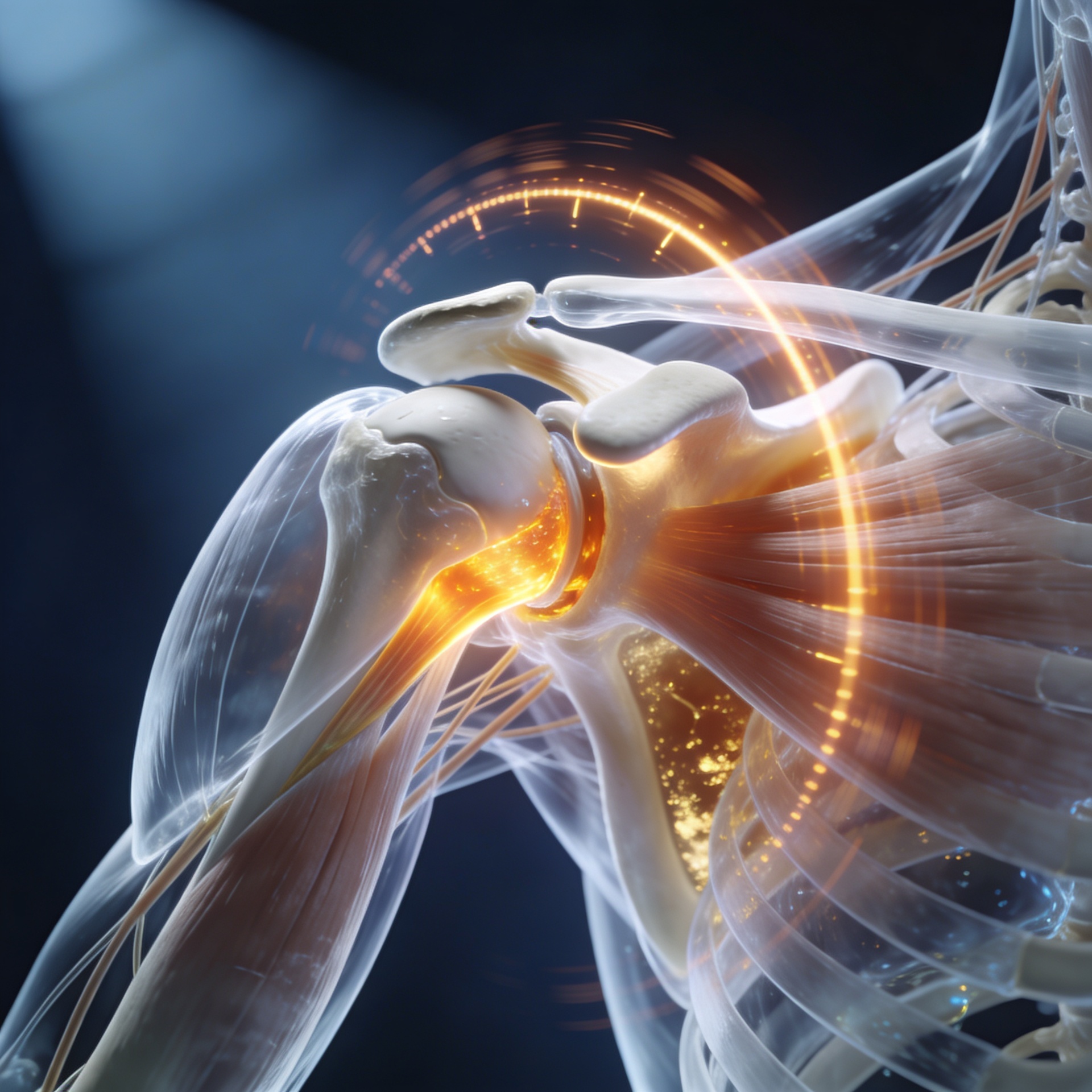
Also known as: Subacromial Impingement, Swimmer's Shoulder, Thrower's Shoulder Most people with shoulder impingement describe the same frustrating arc: lifting the arm feels fine at first, then catches somewhere between 60 and 120 degrees, and then feels fine again above that range. That "painful arc" is the calling card of impingement, the tendons and bursa (a fluid-filled cushioning sac) beneath the top of the shoulder blade getting pinched between the ball of the humerus and the overlying acromion as the arm lifts. What drives that pinching, usually, is not a structural problem with the shoulder itself but a functional one: poor shoulder blade mechanics, muscle imbalance, or postural changes that narrow the subacromial space. Address those drivers, and the shoulder typically recovers well without surgery.
You may struggle to reach a seatbelt, tuck in a shirt, or sleep on that side at night. Overhead reaching, throwing, and washing your hair worsen it. Some patients notice aching that radiates down the outside of the upper arm. Overhead workers (painters, electricians, stockers) and athletes in swimming, tennis, and throwing sports are most affected, as are patients with rounded-shoulder posture from desk work.
Our approach targets the entire shoulder complex. We use glenohumeral, AC, and SC joint mobilization, thoracic spine adjustments to restore upright posture, and targeted soft-tissue work on tight pectorals and upper traps. We then rebuild the foundation with scapular stabilization drills (serratus anterior and lower trapezius work) and rotator cuff strengthening. Class IV laser calms tendon inflammation.
Most patients see meaningful improvement within four to eight weeks. If pain persists or weakness is significant, we coordinate imaging and orthopedic consultation to rule out a structural tear. We may recommend: extremity adjustments, diversified adjustments, mobilization, Graston/IASTM, ART, Class IV laser, corrective exercise, ergonomic coaching Seek immediate care if: You experience sudden severe shoulder weakness after trauma, cannot lift your arm at all, or have numbness and tingling radiating into the hand.
How We Can Help
At Gentle Care Chiropractic, we take a multi-disciplinary approach, addressing the root cause of your condition, not just the symptoms.
Chiropractic Adjustments
Precise spinal and joint corrections to restore alignment, relieve nerve pressure, and reduce pain. Manual or instrument-assisted based on your needs.
Massage Therapy
Therapeutic massage releases muscle tension, improves circulation to injured tissue, and works synergistically with adjustments for faster recovery.
Physical Rehabilitation
Customized exercise programs strengthen supporting muscles, restore range of motion, and help prevent future flare-ups.
Laser Therapy
Cold laser therapy uses targeted light wavelengths to stimulate cellular healing, reduce inflammation, and relieve deep tissue pain without heat or discomfort.
Electrical Stimulation
E-stim therapy reduces pain and muscle spasm, improves circulation, and supports the healing process. Especially effective for acute injuries.
Personalized Care Plan
Every patient is different. We combine these therapies in a plan tailored to your diagnosis, goals, and lifestyle for the best possible outcome.
Dealing with this in West Linn, Lake Oswego or Oregon City?
Same-week appointments. PIP and most insurance accepted.
Frequently Asked Questions
Common questions about Shoulder Impingement Syndrome, answered by our team.
Does shoulder impingement ever heal on its own, or do most people end up needing surgery?
The vast majority of cases resolve without surgery — estimates consistently put this at 70–90% of patients who pursue structured conservative care. The key is addressing the underlying drivers: poor scapular mechanics, tight pectorals, and rotator cuff weakness that narrow the subacromial space. Rest alone doesn't fix those, but a targeted rehab program that restores shoulder blade control and cuff strength usually does. Surgery is considered when pain and functional limitation persist after four to six months of genuine conservative effort.
Why does my shoulder hurt most at night, especially when I roll onto that side?
At night, the subacromial space narrows slightly as muscle tone relaxes and the shoulder falls into a internally-rotated position, compressing the already-irritated bursa and tendon against the acromion. Fluid that would normally disperse with movement can also pool in the joint. Sleeping on your back with the arm supported, or on the opposite side with a pillow propping up the top arm, takes the shoulder out of that compressed position and usually makes nights more tolerable while you're working through treatment.
I've heard I should "just rest it" — but I've been resting for weeks and it isn't getting better. Why?
Impingement is overwhelmingly a mechanical problem, not an injury that heals with passive rest. If the scapula isn't tracking well and the rotator cuff is underloaded, the subacromial space stays narrow regardless of how much you rest. What's actually needed is restoring the movement patterns that create space: serratus anterior and lower trapezius activation, thoracic extension, and progressive cuff strengthening. Resting also quietly de-conditions the cuff muscles, which makes the problem worse over time.
What's the difference between shoulder impingement and a rotator cuff tear, and does that change my treatment?
Impingement describes tendons and bursa getting pinched as the arm lifts — it's a mechanical and functional problem with intact tissue. A rotator cuff tear means one or more of those tendons has partially or fully separated. The two can coexist and share symptoms (painful arc, night ache, outer-shoulder pain), but a tear involves structural damage that sometimes requires imaging to detect. Treatment overlaps significantly in early stages, but a full-thickness tear with significant weakness shifts the conversation toward orthopedic evaluation, while most partial tears and impingement cases do very well with manual therapy and progressive loading.
How does working on my thoracic spine and posture help a shoulder problem?
The shoulder blade sits on the thoracic cage and must tilt and rotate smoothly as the arm lifts — if the mid-back is stiff and rounded forward, the blade can't move well, and the subacromial space closes down. Thoracic spine adjustments restore extension and rotation, which lets the scapula move freely and the shoulder swing through its full arc without pinching. Many patients find that addressing the thoracic spine speeds shoulder recovery noticeably, even before any direct shoulder work is done.
Ready to Find Relief?
You don't have to live with Shoulder Impingement Syndrome. Our team at Gentle Care Chiropractic is here to help you recover and get back to doing what you love.