

Whiplash / Whiplash-Associated Disorder
Expert care for Whiplash / Whiplash-Associated Disorder at Gentle Care Chiropractic in West Linn, Oregon.
Understanding Whiplash / Whiplash-Associated Disorder
Also known as: Cervical Acceleration-Deceleration Injury, Neck Sprain, WAD, Car Accident Neck Injury Most patients who come in after a car accident describe the same thing: "I felt okay at first, and then it hit me. " That delayed onset is completely normal, and understanding why it happens changes how seriously you take early treatment. Whiplash is injury to the neck caused by a sudden back-and-forth motion of the head, producing what clinicians call a cervical acceleration-deceleration (CAD) injury, or Whiplash-Associated Disorder (WAD). The Quebec Task Force classifies WAD from grade 0 (no complaints, no signs) to grade IV (fracture or dislocation), which helps guide the intensity and approach of care.
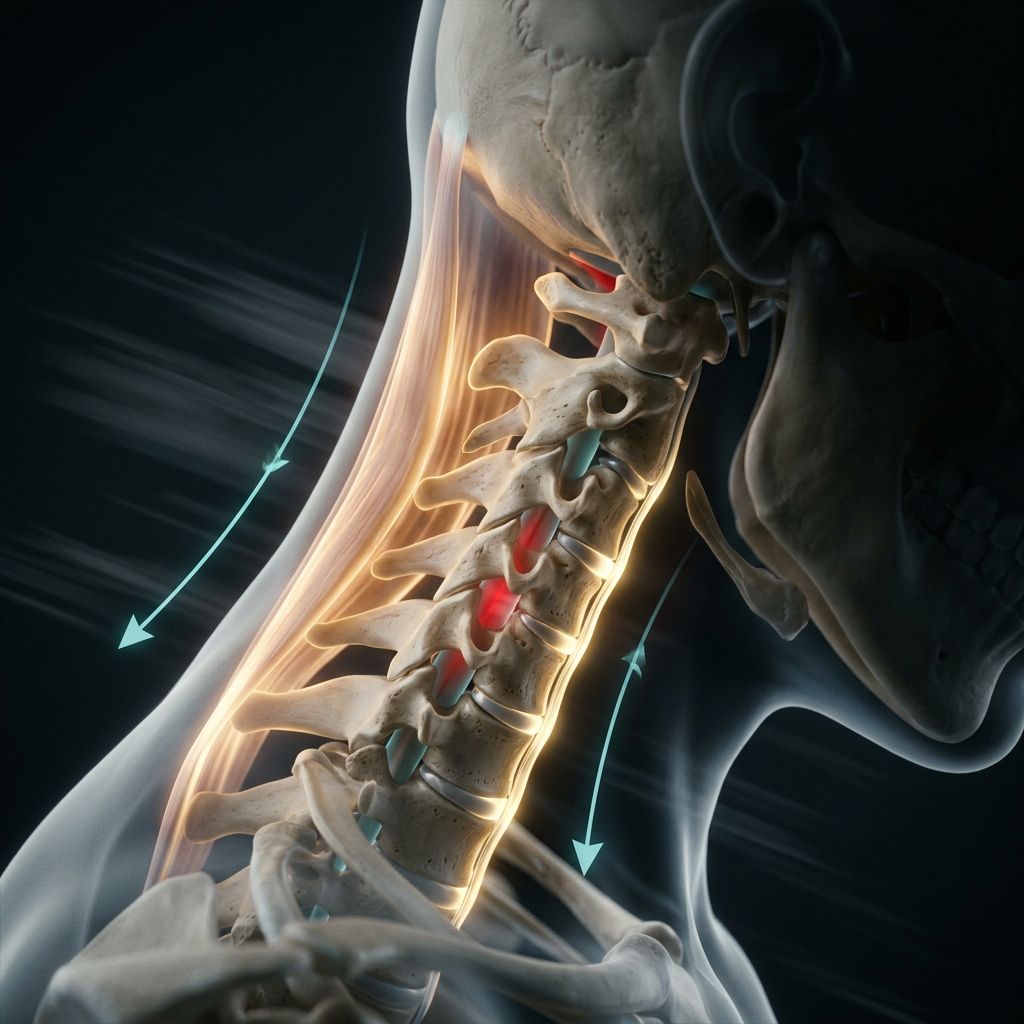
The rapid motion stretches and strains muscles, ligaments, discs, facet joints, and nerves of the cervical spine, often all at once. In the first hours, you may notice neck stiffness, headache at the base of the skull, and difficulty turning your head. What surprises people is that pain, jaw soreness, dizziness, arm tingling, fatigue, and mental cloudiness often appear 24 hours to two weeks later, after the adrenaline fades and inflammation peaks. This delay is not unusual; it's the expected biology of a soft-tissue injury.
In a rear-end crash, your torso is driven forward by the seat while your head lags behind, creating an abnormal S-shaped curve in the neck within about 150 milliseconds, faster than any muscle can react to protect you. Importantly, property damage is a poor predictor of injury severity. Low-speed crashes at five to ten mph generate enough cervical force to injure soft tissue. Your first visit includes a thorough neurological, orthopedic, and cervical examination with detailed documentation, for your medical record, your insurance claim, and your attorney if needed.
Evidence supports early, active care: gentle spinal manipulation or mobilization, graded range-of-motion work, deep neck flexor strengthening, postural re-education, and soft-tissue therapy. We often add Class IV laser or electrical stimulation to calm acute inflammation. Prolonged rest and soft collars are deliberately avoided, they slow recovery. We coordinate with your primary care physician, imaging specialists, and legal team throughout care.
Roughly half of patients recover within three months with consistent treatment; early, appropriate care significantly reduces the risk of becoming chronic. We may recommend: diversified adjustments, flexion-distraction/Cox, cervical traction, Graston/IASTM, trigger point therapy, Class IV laser, corrective exercise Seek immediate care if: You experience severe headache that worsens, new weakness or numbness in the arms or legs, loss of bladder or bowel control, difficulty speaking or swallowing, or severe midline neck tenderness after the accident: these may indicate fracture, dislocation, or spinal cord involvement requiring emergency evaluation.
How We Can Help
At Gentle Care Chiropractic, we take a multi-disciplinary approach, addressing the root cause of your condition, not just the symptoms.
Chiropractic Adjustments
Precise spinal and joint corrections to restore alignment, relieve nerve pressure, and reduce pain. Manual or instrument-assisted based on your needs.
Massage Therapy
Therapeutic massage releases muscle tension, improves circulation to injured tissue, and works synergistically with adjustments for faster recovery.
Physical Rehabilitation
Customized exercise programs strengthen supporting muscles, restore range of motion, and help prevent future flare-ups.
Laser Therapy
Cold laser therapy uses targeted light wavelengths to stimulate cellular healing, reduce inflammation, and relieve deep tissue pain without heat or discomfort.
Electrical Stimulation
E-stim therapy reduces pain and muscle spasm, improves circulation, and supports the healing process. Especially effective for acute injuries.
Personalized Care Plan
Every patient is different. We combine these therapies in a plan tailored to your diagnosis, goals, and lifestyle for the best possible outcome.
Frequently Asked Questions
Common questions about Whiplash / Whiplash-Associated Disorder, answered by our team.
Why didn't I feel pain right after the crash — does that hurt my injury claim?
Delayed onset is the rule, not the exception, with whiplash. Adrenaline and cortisol flood the body immediately after impact and suppress pain signals for hours or even days. The inflammation that causes most of your symptoms peaks 24 to 72 hours after the crash, and some symptoms like dizziness, jaw soreness, and arm tingling may not appear for one to two weeks. Insurance companies sometimes argue that delayed pain means no injury; that argument doesn't hold up to the biology, and documenting your symptoms as they develop builds the strongest possible record.
How soon after the accident should I be seen by a chiropractor?
Within the first 24 to 72 hours if at all possible, even if you feel "okay." Oregon PIP insurance — the mandatory coverage on every auto policy — covers chiropractic care from the first visit, with no copay and no deductible required in most cases. Early evaluation establishes a baseline, begins treatment before inflammation peaks, and creates the documentation your attorney and PCP will rely on. Waiting several weeks makes it harder to connect your symptoms to the accident and harder to recover fully.
Why does the crash speed matter so much — can a low-speed crash really cause this much pain?
It can, and this surprises most people. Low-speed rear-end collisions in the 5–10 mph range generate enough cervical acceleration to injure soft tissue, particularly when the occupant isn't braced for impact. At those speeds, modern bumpers often absorb the crash energy rather than deforming — meaning more force passes through the vehicle into your spine. Property damage is consistently a poor predictor of injury severity, which is why a minor-looking fender-bender can produce significant neck pain.
What is the difference between WAD grades and why does it matter for my treatment?
The Quebec Task Force grading scale (WAD 0–IV) tells your clinician how serious the injury is and guides treatment intensity. WAD I means neck pain or stiffness with no physical signs. WAD II means the same but with reduced range of motion or point tenderness — the most common presentation. WAD III adds neurological signs like arm numbness or weakness, indicating nerve involvement. WAD IV involves fracture or dislocation, requiring emergency management. Your grade shapes how aggressively we treat, what imaging we pursue, and what documentation we generate for your case.
Roughly half of whiplash patients recover in three months — what happens to the other half?
A meaningful subset of patients develop chronic symptoms that persist beyond three months, most commonly because of untreated facet joint injury, unresolved disc involvement, or undertreated psychological stress from the accident itself. Risk factors for a longer recovery include higher pain intensity in the first week, pre-existing neck degeneration, psychological distress, and passive care approaches like prolonged collar use. Early, active, structured treatment — not rest — is consistently associated with better outcomes, which is why we start movement and strengthening work early rather than waiting for pain to fully resolve.
Ready to Find Relief?
You don't have to live with Whiplash / Whiplash-Associated Disorder. Our team at Gentle Care Chiropractic is here to help you recover and get back to doing what you love.