
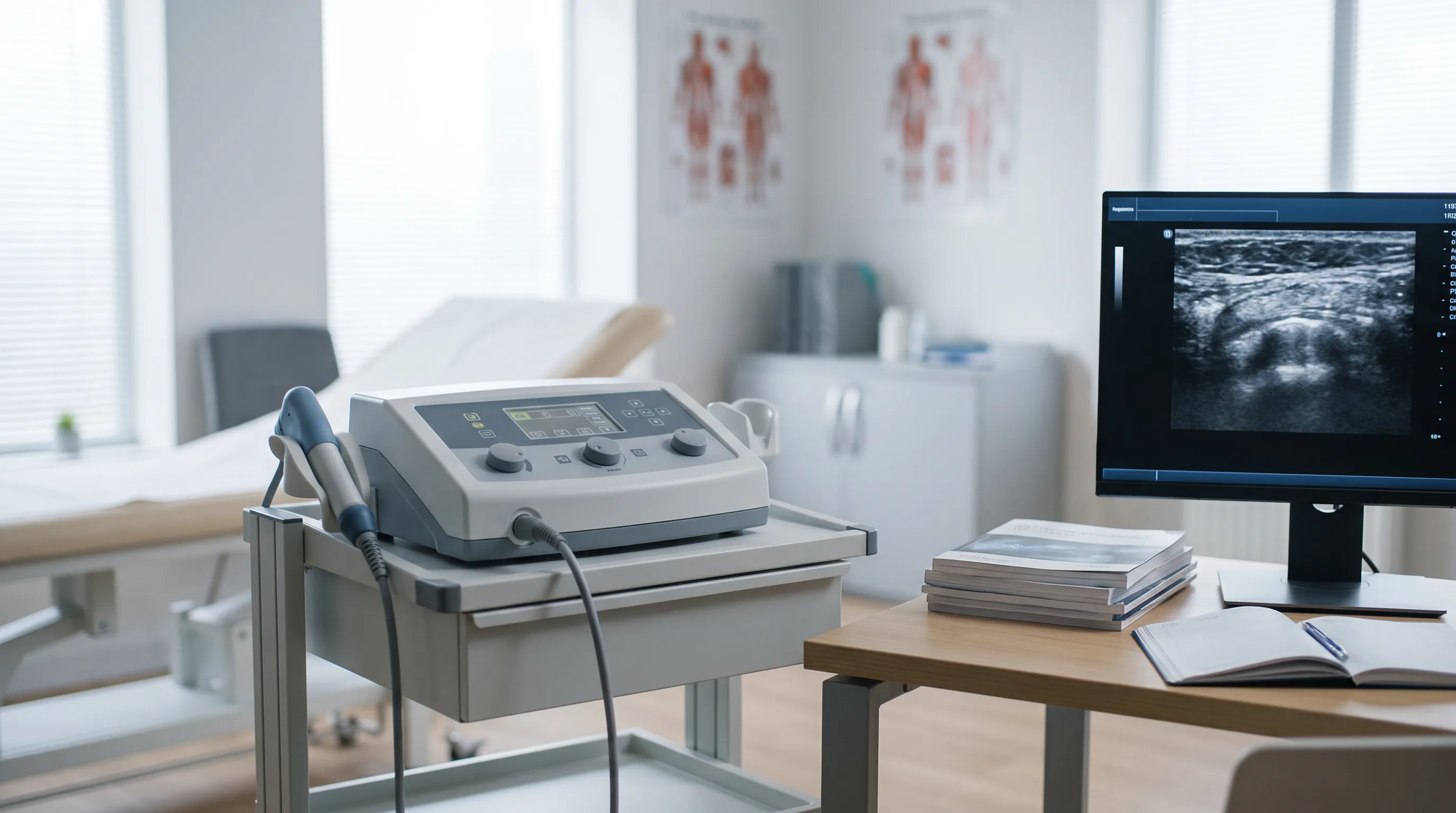
Here is something I run into regularly in practice: a patient has been told by a well-meaning provider that shockwave therapy is “experimental” or “not well studied.” That framing was somewhat fair a decade ago. It is not accurate anymore. The volume and quality of extracorporeal shockwave therapy studies published in 2024 and 2025 alone would fill a substantial reading list, and the findings across conditions are consistent enough that clinicians who are still on the fence are behind the curve.
This is my 2026 SoftWave TRT research roundup: four studies and reviews that either shifted how I think about something clinically or confirmed what I was already seeing in patients. I also address where the evidence still has limits, because that matters too.
What the 2024 Tendinopathy Meta-Analysis Settles
A 2024 systematic review and meta-analysis published in BMC Sports Science, Medicine and Rehabilitation pooled randomized controlled trial data on extracorporeal shockwave therapy across patellar tendinopathy, Achilles tendinopathy, and plantar fasciitis. The conclusion was unambiguous: ESWT produced statistically and clinically significant reductions in pain compared to sham treatment and to conservative care alone, with effect sizes that held at 3-month and 6-month follow-up.
The sustained benefit is the clinically important finding. Critics have argued that short-term shockwave therapy results reflect placebo. Improvements lasting six months are not consistent with that explanation. When benefit tracks tissue remodeling timelines rather than immediate symptom suppression, something structural is happening.
The mechanism: acoustic pressure waves activate mechanosensitive receptors in tendon fibroblasts, triggering upregulation of TGF-beta1, IGF-1, and VEGF. Those signals drive collagen synthesis in degenerative tendon tissue and stimulate neovascularization, the regrowth of blood vessels into chronically hypovascular tissue. In practical terms, the waves tell injured tendon cells to start rebuilding. Pain relief follows the repair, which is why benefit outlasts the treatment course.
Shockwave Therapy vs. Dry Needling: A Head-to-Head Result
A 2025 systematic review and meta-analysis indexed in PubMed Central compared ESWT head-to-head against dry needling for tendinopathy. Both interventions have genuine mechanisms and legitimate clinical track records. The result favored ESWT on pain reduction and functional recovery, with the advantage most pronounced at follow-up beyond 8 weeks.
Dry needling produced comparable short-term outcomes in some subgroups, but shockwave therapy showed more durable improvements over time. The likely explanation is vascular: shockwave therapy stimulates VEGF upregulation and neovascularization more robustly than needling does. Chronic tendinopathies lose blood supply, which is why they resist healing on their own. Restoring vascularity is a specific biological advantage of ESWT and it appears to matter for long-term outcomes.
SoftWave Research on Knee Osteoarthritis Is Catching Up
A 2024 umbrella review and a September 2024 study published in Heliyon both examined ESWT for knee osteoarthritis. This is a different biological challenge than tendinopathy: osteoarthritis involves cartilage breakdown, subchondral bone changes, and chronic synovial inflammation. The question was whether shockwave therapy’s soft-tissue effects translate to a joint-disease context.
The 2024 data gives a cautiously favorable answer. Patients with mild to moderate knee osteoarthritis showed significant improvements in pain scores and functional measures, including walking speed and stair-climbing performance, compared to controls. The proposed mechanism involves modulation of pro-inflammatory cytokines (substance P, TNF-alpha) within the joint environment, reducing chronic low-grade inflammation that accelerates cartilage loss.
The necessary caveat: shockwave therapy for osteoarthritis is not regenerating cartilage. Once articular cartilage is gone, no conservative treatment currently brings it back. What the research supports is meaningful pain reduction and functional improvement in patients who still have viable joint tissue. For advanced bone-on-bone OA, the bar for realistic expectations needs to be stated clearly upfront.
In my practice in West Linn, I use SoftWave TRT for knee pain patients alongside a biomechanical assessment, because the load patterns that drove the osteoarthritis still need to be addressed. The modality is one part of a larger plan.
Plantar Fascia Thickness: An Objective Marker Shows Structural Change
A 2024 systematic review in Archives of Orthopaedic and Trauma Surgery (Springer) examined plantar fascia thickness measured by diagnostic ultrasound before and after ESWT. Fascial thickness is an objective, imaging-based marker of chronic inflammatory and degenerative change, independent of patient pain reports. The analysis found that ESWT produced measurable reductions in plantar fascia thickness that correlated with functional improvement.
When structural change is visible on imaging, not just reported by patients, it is harder to attribute results to expectation alone. The mechanism behind the early pain relief (often noticed in the first session or two) differs from the structural benefit: substance P reduction at local nociceptors provides direct anti-nociceptive effect before tissue remodeling is complete. Patients often ask why they feel better quickly if healing takes weeks. That is the answer. The two processes run in parallel, not in sequence.
Where the Extracorporeal Shockwave Therapy Evidence Still Has Limits
Intellectual honesty about SoftWave research requires naming the gaps.
Optimal dosing is not standardized. Most trials used 3 to 6 sessions at weekly intervals, and that range is clinically appropriate. But the energy levels, pulse counts, and session timing vary enough across studies that a definitively optimal protocol for each condition is not yet established. Clinical experience supplements the literature here.
Long-term follow-up data beyond 12 months is sparse for some conditions, particularly the osteoarthritis applications. The 6-month data is solid. Beyond that, we are working with less.
Not every patient responds equally. Meta-analyses show group-level benefits that are robust and reproducible. At the individual level, chronicity of injury, vascular status, systemic inflammation, and mechanics all influence tissue response. Expectations need to match the clinical picture.
Absolute contraindications: shockwave therapy is not applied over active malignancy, over pacemakers or implanted electrical devices, over active infection, in pregnant patients, or over pediatric growth plates. These are firm clinical limits.
What This Means for Your Care Plan
The shockwave therapy evidence base that has accumulated through 2025 and into 2026 is not fringe or preliminary. It is multi-study, multi-condition, and mechanistically well-characterized. When a clinical picture fits, the evidence behind a SoftWave TRT recommendation is solid.
If you have questions or want to find out whether SoftWave therapy is a good fit for your care plan, we’re easy to reach. That’s what we’re here for.
Frequently Asked Questions
Is SoftWave TRT the same thing as extracorporeal shockwave therapy (ESWT)? SoftWave TRT is a specific device platform that delivers unfocused, parallel acoustic waves. Most peer-reviewed extracorporeal shockwave therapy studies cover the broader ESWT category, which includes focused and radial devices. The biological mechanisms are shared across device types. The research findings apply to the treatment category as a whole, and SoftWave’s platform falls within it.
How many sessions does the shockwave therapy evidence support? Most RCTs that showed significant benefit used 3 to 6 sessions spaced 1 to 2 weeks apart. Session count is determined by your specific condition and how your tissue is responding. Some chronic or calcific conditions benefit from additional sessions with continued incremental improvement.
How long before I notice results from SoftWave therapy? The direct anti-nociceptive effect (substance P reduction) can produce noticeable pain relief within the first 1 to 2 sessions. Structural remodeling effects (neovascularization, collagen synthesis) take 4 to 12 weeks to fully develop. Most patients notice meaningful improvement within 4 weeks of beginning treatment, with continued improvement over the following months.
What conditions does the 2024-2026 shockwave therapy research cover? The strongest evidence is for tendinopathies: Achilles, rotator cuff, patellar tendinopathy, and plantar fasciitis. Knee osteoarthritis evidence strengthened significantly in 2024-2025. Research on peripheral neuropathy, calcific tendinitis, carpal tunnel syndrome, and chronic low back pain is active and shows favorable trends. Condition-specific posts on this site cover the evidence in more detail for each.
Where can I get SoftWave therapy near me in West Linn? We offer SoftWave TRT at Gentle Care Chiropractic. An initial consultation includes a clinical evaluation, a review of the relevant evidence for your diagnosis, and honest guidance on realistic outcomes. Reach us through the contact form on this site.
Dr. Tristan Santiago Maceiras is a Doctor of Chiropractic at Gentle Care Chiropractic in West Linn, Oregon, specializing in musculoskeletal medicine, SoftWave therapy, and integrated care.
Dealing with this in West Linn, Lake Oswego or Oregon City?
Same-week appointments. PIP and most insurance accepted.